
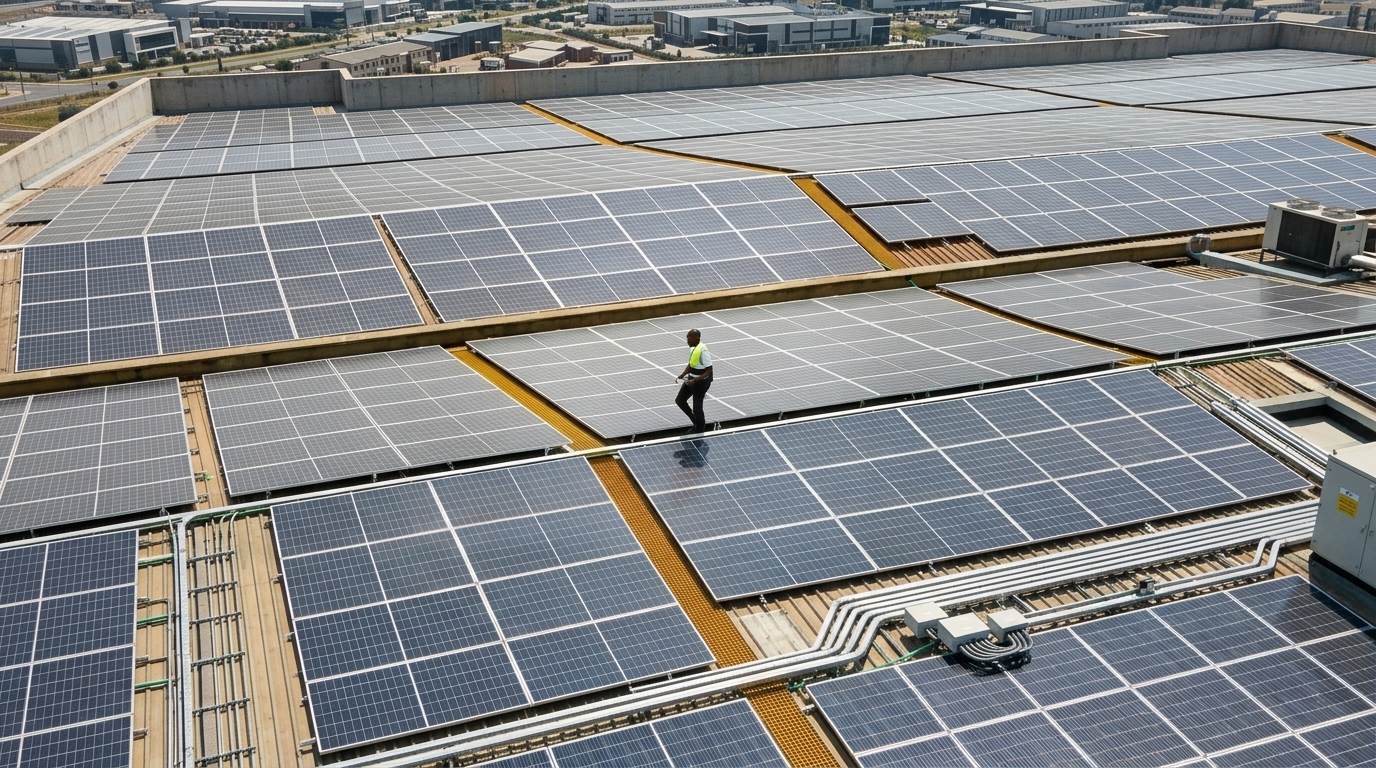


Africa Installs 100,000 Solar Panels Daily in Record 2026 Energy Boom
African nations are currently installing roughly one hundred thousand solar panels every single day as cheaper hardware spreads rapidly across the entire continent this year.
Umar Abubakar | 1 Sept. 2026 · 5 min read

Africa expects to install a record breaking 17 gigawatts of solar power capacity before 2026 ends. A joint report published by the global energy think tank Ember and the African Tech Futures Lab reveals that the continent is adding approximately 100,000 solar panels every single day. This rapid deployment represents a 45 percent increase compared to the previous year. It follows a 51 percent jump in 2025 and a 25 percent bump in 2024. These numbers point to an accelerating trend that shows no signs of slowing down anytime soon.
Much of this growth comes directly from Chinese exports, which recently reached levels similar to shipments heading toward the Middle East and Latin America. The sheer volume of hardware arriving at African ports proves that clean energy adoption is scaling up massively. You can read the original analysis regarding the daily panel statistic directly on Forbes Africa or view the full import methodology inside the Ember energy report.
South Africa Loses Its Crown
Historically, South Africa dominated renewable energy installations across the region. That monopoly is officially ending. For the first time since 2019, South Africa will account for less than 20 percent of all new installations on the continent. The hardware is spreading to new territories at an incredible speed. Out of 54 African countries, 36 expect to install record amounts of solar capacity this year.
Nineteen of those nations recorded triple digit percentage growth compared to their previous numbers. The Democratic Republic of the Congo saw installations spike by 544 percent. Zimbabwe recorded a 282 percent increase, Egypt jumped by 176 percent, and Zambia grew by 117 percent. This decentralization proves that clean energy is no longer restricted to just the wealthiest economies in the region. The hardware is becoming affordable enough for mass adoption across multiple developing markets.
Bypassing the Main Grid
The World Bank and African Development Bank recently announced a joint effort to supply electricity to 300 million people by 2030. Achieving that goal requires enormous amounts of new hardware. Because waiting for national grid expansions takes years, citizens are taking matters into their own hands. A massive portion of these new panels will never connect to a national power grid.
The researchers estimate that three quarters of the installations over the past three years belong to the distributed solar category. This means homeowners, small businesses, and local farmers are mounting panels directly on their roofs. They are generating their own electricity to bypass unreliable national utility companies. According to Joel Nana, a project manager at Sustainable Energy Africa, this transition is highly disruptive and operates completely outside of official government plans. Since people are buying and setting up their own private hardware, official government statistics miss more than half of the actual capacity being added.
Meeting the Electricity Demand
Even though these panels operate independently, their combined output is massive. The 17 gigawatts added this year will generate about 23 terawatt hours of electricity annually. That equals roughly 2.3 percent of the entire electricity generation on the continent. While 2.3 percent sounds small, it actually exceeds the historical average annual electricity demand growth recorded between 2014 and 2024.
To state it plainly, solar additions are currently outperforming the pace at which the population increases its power usage. Ten countries will see this new hardware add more than 10 percent to their annual grid generation. Sierra Leone leads that list, expecting a 97 percent boost to its total generation capacity. Senegal will add capacity equivalent to almost 80 percent of its entire 2023 grid capacity, while Kenya and the Democratic Republic of the Congo will each add capacity equivalent to more than half of their previous grid sizes.
Economic Triggers
People are not rushing to buy these panels strictly for environmental reasons. Economics dictate these purchasing decisions. Fuel prices surged by as much as 81 percent in some regions recently, making diesel generators incredibly expensive to operate. The $2.4B spent on solar hardware across the continent during the first half of this year equals what it would normally cost to run diesel generators for just three months.
As panel prices drop globally, individuals realize that buying renewable hardware provides a cheaper long term solution compared to burning liquid fuel. You can read more about how global supply chains affect local hardware pricing by checking out this funding announcement regarding hardware infrastructure.
Local Manufacturing Plans
While Chinese imports dominate the current market, local production is preparing for a massive jump. Factory output across the continent should quadruple to reach 3.5 gigawatts by the end of 2026. New assembly plants are opening in Egypt and Tanzania. But these locally assembled units are not staying in Africa. Factory owners plan to export most of this new inventory to the United States.
Right now, imported Chinese panels account for 94 percent of all installations across the African continent. Establishing a domestic supply chain that actually serves local buyers remains a massive hurdle for industry planners. For context on how manufacturing impacts global technology markets, take a look at how major silicon companies forecast their own hardware sales.
The Need for Better Data
The lack of accurate tracking creates a blind spot for governments trying to manage national power grids. Only South Africa, Tunisia, and Tanzania publish capacity data on a frequent basis. Researchers could only find official reports for 36 out of 54 countries, and many of those reports used outdated numbers from 2025. Without knowing how many citizens generate their own power, utility companies struggle to plan infrastructure upgrades or battery storage projects.
Ember analyst Dave Jones noted that national governments must improve their data collection methods. If leaders understand exactly where these private installations are happening, they can better manage the transition away from fossil fuels.
Financial Barriers
Buying a home system still requires a large upfront cash payment. Because many citizens lack access to traditional banking services, securing a loan to buy a rooftop setup is difficult. Analysts suggest that improving credit access could help maintain this rapid growth rate. If banks offer friendly loan terms, more households and small businesses will abandon their diesel generators. The shift toward clean energy requires both affordable hardware and accessible funding to succeed.
Read More on TechRobust:

Umar Abubakar
 LinkedIn
Umar Abubakar
Expertise:Editorial Leadership, Product Design (UI/UX), Digital Media Strategy, Technology Systems, Product Architecture
Award:TechRobust Visionary Leader of the Year 2025
Umar serves as Editor-In-Chief and CEO of TechRobust, combining editorial vision with senior product design expertise to shape how modern technology stories are built, packaged, and told. Overseeing all editorial verticals, he directs coverage across global and regional tech landscapes while applying deep design thinking to publication strategy and reader experience.