
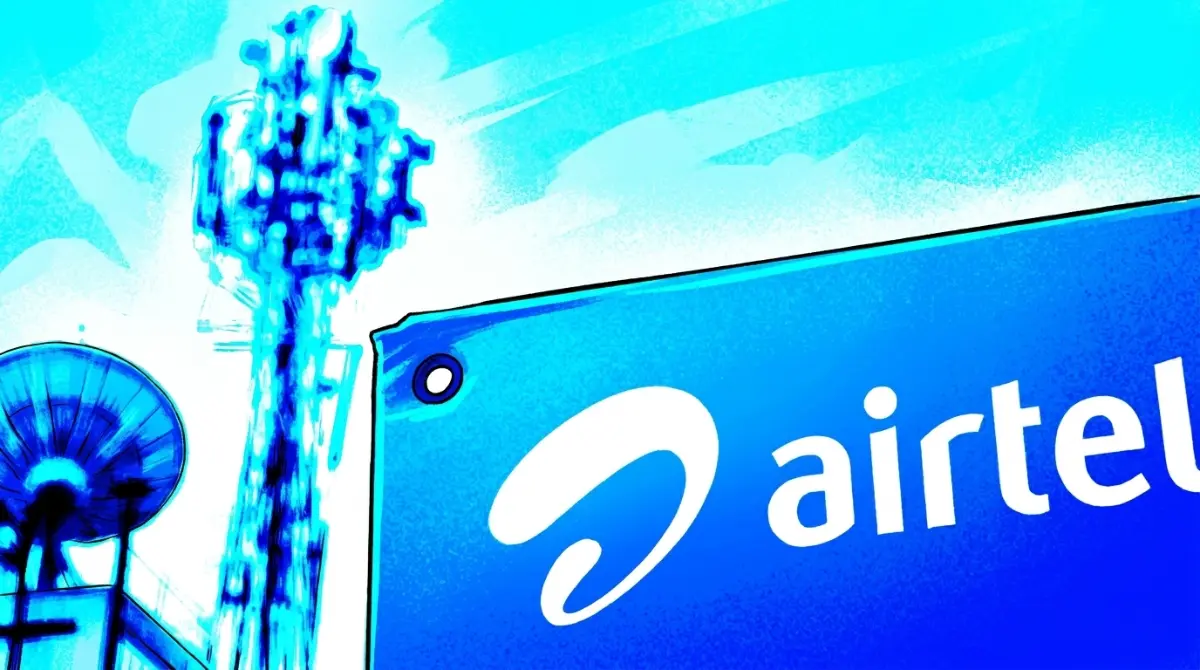


Airtel Africa Plans $1.1B Investment to Meet Rising Data Demand
The telecommunications company is directing a massive $1.1B toward fiber infrastructure and spectrum acquisition across fourteen African nations to support rapidly increasing internet consumption.
Inioluwa Ademidun | 3 Sept. 2026 · 4 min read

Airtel Africa announced a $1.1B capital expenditure plan for 2026. The company wants to upgrade its network equipment across fourteen different African countries. Chief Executive Officer Sunil Taldar shared these details during a recent television interview. He explained that the funds will mostly cover new fiber optic cables and spectrum licenses. This money prepares the business for a heavy wave of internet usage as more people buy smartphones and rely on fast connections for daily tasks. Subscribers need stable 4G and 5G networks to watch videos and run modern applications, forcing operators to spend heavily on better equipment.
Before announcing this spending plan, the company reported very strong financial numbers. During the second quarter of 2026, total revenue reached $1.85B. That represents a 31 percent increase compared to the previous year. Data usage generated $750M, passing voice calls which brought in $640M. At the same time, the total number of people using the network grew from 169.4M to 189M. Nearly 90M of those users pay specifically for internet access. The average amount of money collected from each user also went up, moving from $2.80 to $3.30. This financial success gives the leadership team the cash required to build new cellular towers.
Upgrading the Nigerian Network
A large portion of this new budget goes directly to Nigeria. The Nigerian Communications Commission recently approved a spectrum license renewal for the local Airtel subsidiary. The company paid $37M (about N50.5B) to secure the 900MHz spectrum for another ten years. The new agreement runs from December 2031 until November 2041. By locking in these operating rights early, the organization guarantees it can keep providing uninterrupted service in its most profitable region. If you track how telecom brands operate in this specific region, you can review our coverage of how Airtel Africa declared Nigeria its most lucrative market.
Preparing for Heavy Computing Needs
Taldar pointed out that internet traffic across the entire network is expanding by more than 50 percent right now. Customers want faster connections to run more demanding software. The company is actively building new data centers and creating specific services for other businesses. These upgrades lay the physical foundation for running complex computing tools locally. This matches what other regional competitors are doing to secure their own computing power. We recently documented this trend when MTN partnered with a UAE investor to build 150MW AI data centers in Africa.
Partnering with Starlink for Rural Coverage
Building physical towers and burying fiber cables costs a lot of money, especially in remote areas. To reach customers living far away from major cities, Airtel signed a direct agreement with Starlink. This satellite connection helps the telecom brand offer internet access where traditional building methods cost too much. By sharing the workload with a satellite operator, the company avoids wasting money on duplicated building efforts while still reaching new customers. The partnership supports direct-to-device connectivity in places that remain completely unserved by regular cell towers.
Dealing with Vandalism and Power Costs
The company faces very real physical hurdles while building this new equipment. Taldar noted that workers deal with an average of 500 fiber cable cuts every single week. When people damage these lines, entire neighborhoods lose their internet connection, hurting the local economy. Supplying power to the towers presents another heavy burden. Because the regular electrical grid is unreliable, the company must run diesel generators to keep the cell towers active. Operating a tower on diesel costs almost four times as much as using grid power. In Nigeria, the price of diesel nearly doubled over the last nine months, creating heavy financial pressure on the operating budget. The CEO warned that telecom operators are turning into power generators, which distracts from their main job of connecting people.
The Upcoming Mobile Money IPO
Beyond physical internet connections, the company is preparing for a major financial event. Taldar confirmed that the organization still plans to list its Airtel Money division on the London Stock Exchange before the end of 2026. The leadership team chose London because the investors there understand financial technology companies very well. The mobile money division continues to grow rapidly as more people use their phones to transfer cash and pay for goods instead of carrying physical currency. Providing mobile money accounts helps connect millions of unbanked citizens to the formal economy.
Conclusion
The company also directs money toward social programs. The Airtel Africa Foundation has provided free internet access to roughly 2.1M children across the continent, including 1.4M in Nigeria alone. The organization connected 3,300 schools to the internet and trained 74,000 teachers to use modern educational software. By spending $1.1B on raw physical equipment and supporting local education, the company is making a very clear bet on the African internet economy. The demand for fast internet is clearly passing the demand for traditional voice calls. Even with the high costs of diesel fuel and physical vandalism, the heavy increase in paying customers justifies the high price of building new networks.
Read More on TechRobust:
Inioluwa Ademidun
 LinkedIn
Inioluwa Ademidun
Expertise:African Tech Ecosystem, Early-Stage Startups, Emerging Market Dynamics, Venture Capital & Tech Reporting, Product Management
Award:TechRobust Contributor of the Year 2025
Inioluwa is a Senior Product Manager by day and an investigative technology reporter by night, bridging the gap between scalable software architecture and high-impact journalism. She delivers deep-dive analysis on venture-backed founders, regulatory shifts, and grassroots tech ecosystems across Africa and global emerging markets.