
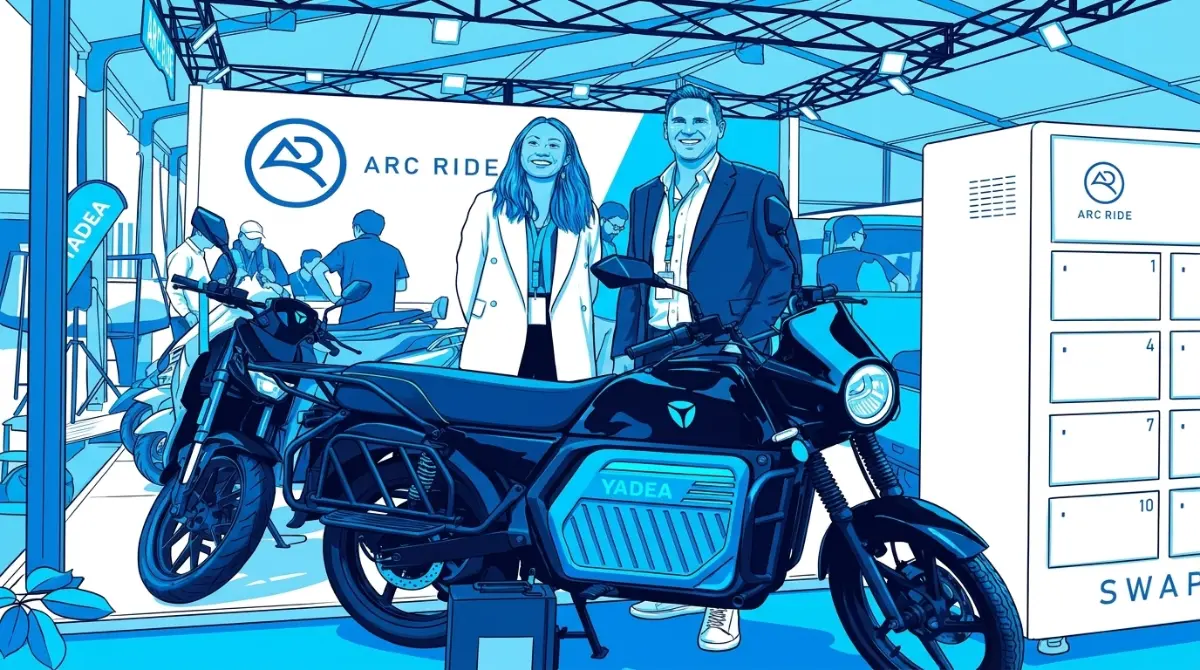


ARC Ride Secures $33.3M to Scale African EV Battery Swapping
Kenyan electric mobility startup ARC Ride landed massive new capital to deploy thousands of electric motorcycles and scale its battery swapping network across multiple African nations.
Inioluwa Ademidun | 8 Sept. 2026 · 4 min read

I have tracked the electric mobility sector across the African continent for years, watching companies struggle with a massive barrier to entry. Selling an electric motorcycle to a delivery driver usually fails because the battery makes the vehicle too expensive upfront. A startup named ARC Ride figured out how to remove that barrier completely, and investors just gave them the capital to scale their solution globally. The Kenyan firm recently secured $33.3M in a mixture of equity and debt financing, signaling a massive vote of confidence in the battery-as-a-service model.
Founded in 2019 by British entrepreneur Joseph Hurst-Croft, the mobility startup built its entire business around separating the vehicle from the energy source. When a rider purchases an ARC Ride motorcycle, they do not buy the battery. Instead, they subscribe to a swapping network. When their battery runs low, the rider visits an automated station, drops off the depleted unit, and grabs a fully charged replacement in less than two minutes. This approach drastically lowers the purchasing price of the physical motorcycle, putting electric transport within reach for thousands of independent logistics workers.
Financial Backing and Structural Debt
The financial breakdown of this $33.3M round reveals how institutional lenders now view African clean technology as a safe bet. Norrsken22 and Novastar Ventures co-led the equity portion, bringing in heavy global players like the International Finance Corporation and Proparco. Previous backers, including Japanese automotive giant Musashi Seimitsu and impact investor Talanton, also increased their financial commitments.
What caught my eye, however, is the debt structure. British International Investment provided capital through its Kinetic programme, alongside additional debt from Mirova. Securing commercial debt means the startup possesses physical assets that banks trust. We often see startups rely purely on venture capital, but financing physical swapping stations and thousands of batteries requires traditional banking support. You can see similar infrastructure financing patterns happening across the continent right now. I recently documented how Africa installs thousands of solar panels daily to support a record energy boom, proving that clean technology is attracting serious institutional debt.
Expanding the Footprint Beyond Kenya
Until now, ARC Ride concentrated its efforts heavily inside Kenya, building dense swapping networks in Nairobi and the Western regions. With this fresh $33.3M injection, the company plans to push outward aggressively. Management confirmed they are expanding operations into Ghana, Tanzania, and Uganda. The most aggressive push, however, is targeted at South Africa.
The company already concluded a successful pilot program in Cape Town and is currently rolling out vehicles in the Gauteng province. South Africa presents a totally different logistical environment compared to East Africa. The distances are longer, and the power grid famously suffers from rolling blackouts. Setting up a battery swapping network in a country that struggles to keep the lights on requires massive logistical planning. The company must ensure its swapping stations hold enough backup power or renewable generation capacity to charge batteries even when the national grid fails.
The Battle for an Open Standard
When I speak to mobility experts in Nairobi, one topic always dominates the conversation. Everyone wants to know if a universal battery standard will ever emerge. Right now, different electric vehicle manufacturers use different battery sizes and connectors. Ngetha Waithaka, a partner at Norrsken22, specifically highlighted this issue when discussing the investment. He noted that the technology and data accumulated by ARC Ride give the company a realistic chance at becoming the open standard that other manufacturers plug into.
The startup already counts Yadea, one of the largest electric vehicle manufacturers in the world, as a client. If ARC Ride can convince other hardware brands to design motorcycles that accept its specific battery shape, the company will secure a monopoly over the physical charging infrastructure. They will not just sell motorcycles; they will own the digital gas stations of the future. The entire African transportation sector is shifting toward clean energy solutions, a topic that will be heavily debated when Nairobi hosts the upcoming Greenshift forum later this year.
Putting 5,000 More Bikes on the Road
The immediate physical goal tied to this funding is aggressive. The company promised to add 5,000 new electric motorcycles to its fleet while simultaneously expanding the network of smart swapping cabinets. Hurst-Croft stated his ambition is to make electric mobility the default choice for riders by making it more affordable and practical than petrol alternatives.
For a delivery rider spending hours in traffic, time is literally money. Waiting hours for a motorcycle to charge from a standard wall plug destroys their daily earnings. The two minute swap changes the economic reality of the job. As the network grows denser, range anxiety disappears. If a rider knows they are never more than a few kilometers away from a fresh battery, they will completely abandon expensive petrol engines.
This $33.3M funding round is not just about manufacturing more batteries. It is a calculated move to rewrite how urban transportation operates across multiple African borders. The hardware works, the unit economics make sense, and the institutional banks are finally writing the checks needed to scale the operation. The only remaining question is how fast the team can install the cabinets before competitors attempt to copy the model.
Read More on TechRobust:

Inioluwa Ademidun
 LinkedIn
Inioluwa Ademidun
Expertise:African Tech Ecosystem, Early-Stage Startups, Emerging Market Dynamics, Venture Capital & Tech Reporting, Product Management
Award:TechRobust Contributor of the Year 2025
Inioluwa is a Senior Product Manager by day and an investigative technology reporter by night, bridging the gap between scalable software architecture and high-impact journalism. She delivers deep-dive analysis on venture-backed founders, regulatory shifts, and grassroots tech ecosystems across Africa and global emerging markets.