


Equinix Faces Heavy Pushback Over Cape Town Data Center
A proposed American hyperscale server farm in South Africa ignites intense protests from local activists worried about severe water shortages and rolling electricity blackouts returning.
Inioluwa Ademidun | 13 Sept. 2026 · 9 min read

I stood near the edge of the Theewaterskloof Dam a few years ago when the dirt literally cracked beneath my boots. The reservoir was nearly empty. The city of Cape Town was counting the hours until the municipal taps ran completely dry. Residents bathed out of buckets and stockpiled bottled water in their living rooms. The government called it Day Zero. The rains eventually returned and saved the city from total collapse, but the psychological scar left on the population remains incredibly deep. Today, a new kind of thirst has arrived in the Western Cape, and it does not come from a drought. It comes from Silicon Valley.
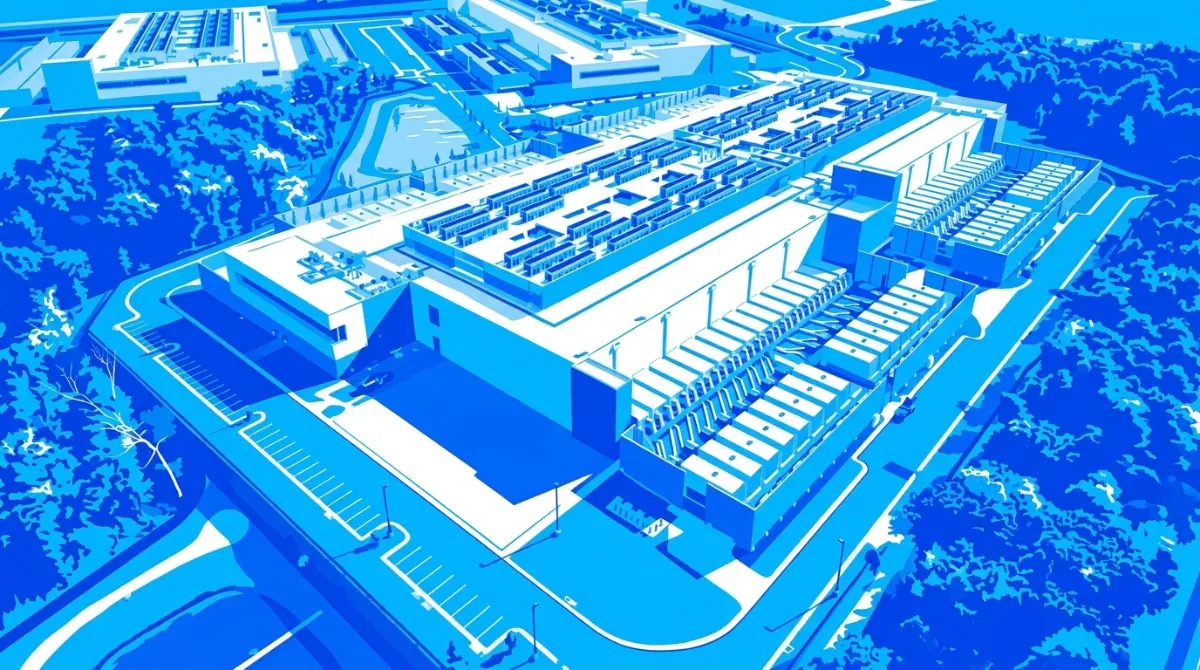
United States technology giant Equinix faces a massive public challenge regarding a proposed hyperscale computing facility in Cape Town. Corporate planners want to build two massive server farms capable of drawing up to 160 megawatts of power. The sheer scale of that electrical demand is difficult to comprehend until you compare it to the surrounding environment. We are talking about a facility that requires the same amount of electricity as tens of thousands of local homes. To keep thousands of tightly packed processors from melting under the strain of heavy computational workloads, these buildings also require millions of gallons of continuous water circulation. This physical reality creates an immediate, highly volatile conflict between global technology expansion and basic human survival in the global south.
The Collision of Artificial Intelligence and Local Resources
I have spent the past month tracking the growing opposition to this specific project. The Housing Assembly, a grassroots social movement representing over twenty working-class communities across the Western Cape, joined forces with Foxglove, a non-profit legal advocacy group based in the United Kingdom. Together, they lodged a formal objection to halt the development. Their central argument cuts straight to the heart of modern technological imperialism. They demand that local authorities refuse any construction permits until the American corporation provides exact, mathematically sound disclosures detailing the expected water consumption, electricity usage, local emissions, and noise pollution.
The activists point out a glaring flaw in the current regulatory process. Right now, international server operators do not have to provide granular environmental impact assessments before buying up prime industrial real estate. Rosa Curling, the co-director at Foxglove, publicly noted the severe lack of available facts regarding a construction effort of this magnitude. She highlighted unanswered questions concerning backup diesel generators, local air quality degradation, and the exact structural blueprints needed to run a 160-megawatt cooling system in a water-scarce region.
The timing of this corporate expansion feels incredibly tone-deaf to the average South African citizen. The entire nation spent the last fifteen years suffering through a continuous energy crisis. The national utility company, Eskom, enforced strict rolling blackouts known locally as load shedding. Homes and businesses routinely went without power for up to ten hours a day. While the grid stability has improved in recent months, the anxiety remains high. The idea that a foreign corporation can quietly secure enough electricity to power a small city just to train statistical algorithms feels like a direct insult to the people who recently sat in the dark. As the grid failed, citizens have resorted to building their own electrical security through expensive private solar installations, forcing families to take on debt just to keep their refrigerators running.
The Corporate Defense and the Regulatory Vacuum
I reached out to industry analysts who track Equinix and their global real estate portfolio. The company holds a massive footprint, operating hundreds of server facilities across dozens of countries. Their official response to the Cape Town backlash relied on corporate technicalities. A representative confirmed that the company recently finalized the purchase of local land but insisted that no formal planning applications have actually been submitted to the municipal government yet. The corporation promised full transparency and timely communication with local residents if the construction plans move forward.
This "trust us" approach no longer works in emerging economies. The South African Human Rights Commission stepped into the debate earlier this year. After asking the public for their views on the rapid expansion of digital infrastructure, the commission received more than two hundred and fifty detailed submissions. The responses revealed a deeply anxious population. Citizens repeatedly expressed fears that international companies were hiding the true environmental costs of these buildings behind legal jargon and non-disclosure agreements. Activists do not necessarily want to ban computers from the continent. They simply want a clear, enforceable framework that protects local water supplies and municipal power grids before the concrete trucks arrive.
South Africa occupies a very strange geopolitical position right now. The national government desperately wants to brand the country as the ultimate technology and investment hub for the African continent. Politicians court foreign direct investment by promising fast internet cables, cheap labor, and compliant local zoning boards. They look at the sudden rush to secure server capacity across the continent and see dollar signs. The state views these massive concrete boxes as proof of economic progress.
A Global Backlash Taking Shape
To truly understand the Cape Town situation, we must zoom out and look at the global map. The resistance against hyperscale computing facilities is not isolated to South Africa. A highly coordinated pushback is currently happening in several international jurisdictions. In Thailand, local communities recently demanded a total pause on server construction due to severe stress on their national water tables. In Ireland, the national power grid became so overwhelmed by corporate server farms that the government practically banned new developments in the Dublin metropolitan area. Even within the United States, wealthy suburban neighborhoods in Virginia and Texas are fighting zoning battles against technology companies, citing the deafening hum of commercial cooling fans and the strain on local utilities.
The core issue revolves around the physical nature of modern software. We spent two decades convincing the public that the internet lives in a magical, invisible place called the cloud. We stripped the physical weight away from our digital actions. That illusion is finally breaking. The cloud is not floating in the sky. The cloud is a massive, heavily guarded warehouse constructed out of steel and concrete, drawing millions of watts of electricity, and drinking millions of gallons of purified water. When a user generates an image or asks a chatbot to write a poem, they force a distant server to generate intense heat. That heat must be neutralized.
The activists in Cape Town understand this physical transaction perfectly. They refuse to let their local aquifers drain just so an American software company can offer slightly faster video rendering or better language translation tools to clients in New York and London. For them, the issue is not about rejecting modernity. It is about demanding strict resource sovereignty.
The True Cost of the Artificial Intelligence Boom
The financial mechanics driving this infrastructure boom deserve heavy scrutiny. The largest technology firms on the planet are currently locked in a brutal arms race to dominate the artificial intelligence sector. They are securing private loans and issuing corporate bonds simply to buy enough graphical processing units to stay relevant. Building the physical houses for these chips is a secondary, highly chaotic scramble. Equinix and their competitors operate as the landlords of the digital age. They buy cheap land, negotiate heavy discounts on industrial electricity rates, and rent the cooled server racks back to the software giants.
When you introduce this aggressive, high-speed financial model into a country recovering from decades of structural inequality, the friction is immediate. South Africa still struggles to provide basic sanitation and reliable drinking water to millions of citizens living in informal settlements on the edge of major cities. Watching a foreign entity purchase prime real estate with the intention of securing 160 megawatts of uninterrupted power forces a painful moral reckoning. Who exactly does this technology serve? If the local population cannot guarantee their own access to clean water, why should a server farm get priority access to the municipal pipes?
The developers argue that their facilities create jobs and stimulate the local economy. I have covered the technology sector long enough to know that this argument relies on heavy exaggeration. Building a massive server facility creates a temporary spike in construction jobs, but once the building goes online, it operates like a ghost town. A facility the size of a shopping mall might only employ thirty permanent security guards and a handful of highly specialized network engineers. The wealth generated inside the building flows directly outward to shareholders sitting thousands of miles away. It does not circulate through the local neighborhood.
The Need for a New Development Framework
The civil society groups in South Africa are pushing for a temporary construction pause across the entire sector. They want the national government to hit the brakes and establish mandatory resource assessments before any more land gets cleared. This proposed pause would force companies like Equinix to publicly prove that their cooling systems operate on closed-loop, water-neutral architectures. It would force them to invest directly in renewable energy generation rather than leeching off an already fragile national grid.
If the South African government ignores the activists and rushes the approval process to please foreign investors, they risk triggering widespread social unrest. Water is not a luxury item. Electricity is not a discretionary expense. When the local municipality tells a struggling family to reduce their shower time to two minutes to save the reservoir, while simultaneously allowing a corporate data facility to pump millions of liters for air conditioning, the social contract breaks entirely.
We are witnessing the early stages of a very long, very bitter geopolitical fight over the physical resources required to run the modern internet. The days of tech companies quietly building their infrastructure without public oversight are officially over. The citizens of Cape Town successfully forced a massive multinational corporation into a defensive posture simply by demanding the math. If Equinix wants to expand their footprint across the African continent, they must realize that the ground beneath their servers belongs to people who remember exactly what it feels like when the water stops flowing.
The situation in the Western Cape serves as a massive warning sign for the rest of the technology industry. You cannot separate the digital economy from the physical realities of the planet. As the computational demands of the modern era continue to skyrocket, the friction between corporate ambition and community survival will only intensify. The outcome of this specific zoning dispute in South Africa will likely set a lasting precedent for how emerging markets negotiate with the giants of Silicon Valley.
Read More on TechRobust:

Inioluwa Ademidun
 LinkedIn
Inioluwa Ademidun
Expertise:African Tech Ecosystem, Early-Stage Startups, Emerging Market Dynamics, Venture Capital & Tech Reporting, Product Management
Award:TechRobust Contributor of the Year 2025
Inioluwa is a Senior Product Manager by day and an investigative technology reporter by night, bridging the gap between scalable software architecture and high-impact journalism. She delivers deep-dive analysis on venture-backed founders, regulatory shifts, and grassroots tech ecosystems across Africa and global emerging markets.