
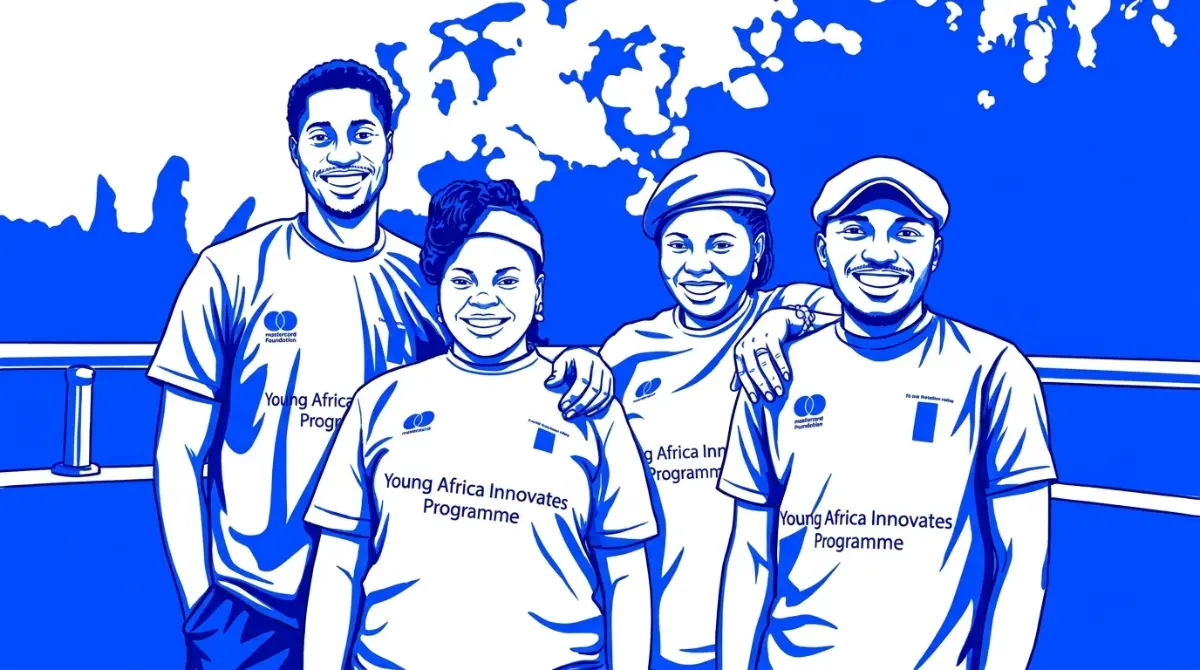


UNDP and Mastercard Foundation Open Cohort 2 Applications for Young Africa Innovates
The United Nations Development Programme and the Mastercard Foundation are accepting applications for a new program designed to support early stage Nigerian technology creators.
Inioluwa Ademidun | 2 Sept. 2026 · 6 min read

The United Nations Development Programme and the Mastercard Foundation recently announced the official opening of applications for the second cohort of the Young Africa Innovates Programme. Set to run through the fall of 2026, this initiative targets early stage Nigerian entrepreneurs who possess creative ideas but lack the financial backing required to turn those ideas into profitable businesses. The application window opened on September 1, 2026, and gives young adults across specific regions a direct path toward securing mentorship, product incubation, and direct capital.
This program focuses heavily on identifying individuals who typically fall outside the traditional venture capital network. The organizers specifically want applications from young women, persons with disabilities, and individuals living in underserved communities. By targeting these specific groups, the organizers hope to discover fresh solutions to local problems that mainstream investors often ignore.
Expanding the Geographic Reach
During its first iteration, the program operated across seven Nigerian states, including Lagos, Kaduna, and Borno. After reviewing the results from that initial group, the organizers decided to expand the footprint significantly for the second round. The current application phase targets residents in Abia, Akwa Ibom, Cross River, Katsina, Niger, Plateau, and Taraba states.
This geographic expansion is highly intentional. Most technology funding in Nigeria concentrates heavily inside Lagos. By pushing the application requirements into regions like Taraba and Katsina, the United Nations Development Programme forces the technology sector to look beyond the usual urban centers. The organizers aim to build a truly national network of creators capable of solving problems that are unique to their specific geographic locations. The total program eventually plans to reach thirteen states across all six geopolitical zones before the end of 2027.
What Selected Candidates Receive
The Young Africa Innovates initiative provides much more than a simple cash grant. It offers a highly structured, year long curriculum designed to move a raw concept into a commercial product. Candidates who pass the initial screening phase will enter a specialized bootcamp scheduled for September and October 2026.
Following the bootcamp, the most promising candidates will advance into the formal incubation stage, which runs from November 2026 through January 2027. During this period, participants receive direct technical mentorship, business advisory services, and help with product refinement. The engineering and design experts involved in the program will help founders build working prototypes that are ready for the consumer market. You can read more about how major organizations structure these early stage support systems by visiting the official United Nations Development Programme website.
Once a product reaches market readiness, the program connects the founders with potential buyers, outside investors, and grant networks. The organizers also provide direct financial backing to selected individuals to help them manufacture their prototypes and register their businesses formally.
Building on Previous Success
The decision to expand into new states follows a highly active first year. During the inaugural cohort, the program received over 9,000 applications from across the country. The selection committee invited 1,348 individuals to attend regional bootcamps. From that group, 205 participants moved into the final incubation phase. The first cohort directly contributed to the creation of over 800 working opportunities within the local economy.
For the second round, the organizers set even higher targets. They plan to identify 10,000 fresh concepts, provide direct support to 1,500 individuals, and fully incubate 400 new ventures. This massive increase in scale requires heavy coordination between state governments, private sector partners, and local universities. Securing early capital remains difficult for many founders, a reality we discussed when tracking startup grant and pitch competitions opening in September 2026.
Strict Eligibility Requirements
The application process comes with strict eligibility rules. Interested individuals must be between the ages of 18 and 35 at the time they submit their paperwork. Furthermore, applicants must physically reside in one of the seven approved states (Abia, Akwa Ibom, Cross River, Katsina, Niger, Plateau, or Taraba). The selection committee judges applications based on actual physical residency, not the state of origin or where a business might be legally registered.
Beyond the demographic requirements, applicants must demonstrate that they have already started working on their idea. The program is not looking for people who simply have a theoretical concept written on a piece of paper. Candidates need a working prototype, a basic model, or a clear sample of their solution. Reviewers will check whether the idea addresses a real local problem and whether the applicant has personal experience dealing with that specific issue.
Sector Agnostic Approach
Unlike many technology accelerators that only accept software developers or financial technology businesses, this program accepts applications from any sector. The organizers welcome ideas related to agriculture, healthcare, education, climate action, manufacturing, and renewable energy. During the first few days of the application window, agriculture and agro processing emerged as highly popular categories among applicants in Katsina and Taraba states. We have seen similar heavy interest in physical infrastructure funding across the continent, which aligns with how Africa installs massive amounts of solar panels daily during the current energy boom.
The selection committee assesses every application based on four specific criteria. First, does the idea solve a documented problem? Second, is the proposed solution actually possible to build? Third, does the applicant have genuine experience with the problem they are trying to fix? Finally, does the concept have the potential to grow into a commercially viable business that can employ other people?
The Application Process
The application window remains open throughout September 2026. Interested individuals must submit their details directly through the official program portal. The online form asks for basic personal information, details about the proposed idea, and a photo or short video showing the working prototype.
To ensure technology barriers do not prevent people from applying, the program designed the application portal to save progress automatically. This feature helps individuals who might experience sudden power outages or internet disconnections while filling out the form. The program team also provides direct assistance over the phone and via WhatsApp for anyone who struggles with the online submission process.
Changing the Technology Narrative
Initiatives like this attempt to change how international markets view the African technology sector. By providing proper funding and mentorship to creators living outside major financial hubs, the Mastercard Foundation hopes to turn local consumers into active producers. The overarching goal is to build an ecosystem where young adults can solve their own community problems using locally developed technology, rather than relying entirely on imported software and hardware.
As the September deadline approaches, young creators across the seven participating states have a rare chance to access institutional backing. Programs that offer this level of technical support and direct market access without requiring founders to give up equity are incredibly rare. If successful, the second cohort will introduce hundreds of new businesses into the Nigerian economy by early next year.
Read More on TechRobust:

Inioluwa Ademidun
 LinkedIn
Inioluwa Ademidun
Expertise:African Tech Ecosystem, Early-Stage Startups, Emerging Market Dynamics, Venture Capital & Tech Reporting, Product Management
Award:TechRobust Contributor of the Year 2025
Inioluwa is a Senior Product Manager by day and an investigative technology reporter by night, bridging the gap between scalable software architecture and high-impact journalism. She delivers deep-dive analysis on venture-backed founders, regulatory shifts, and grassroots tech ecosystems across Africa and global emerging markets.