
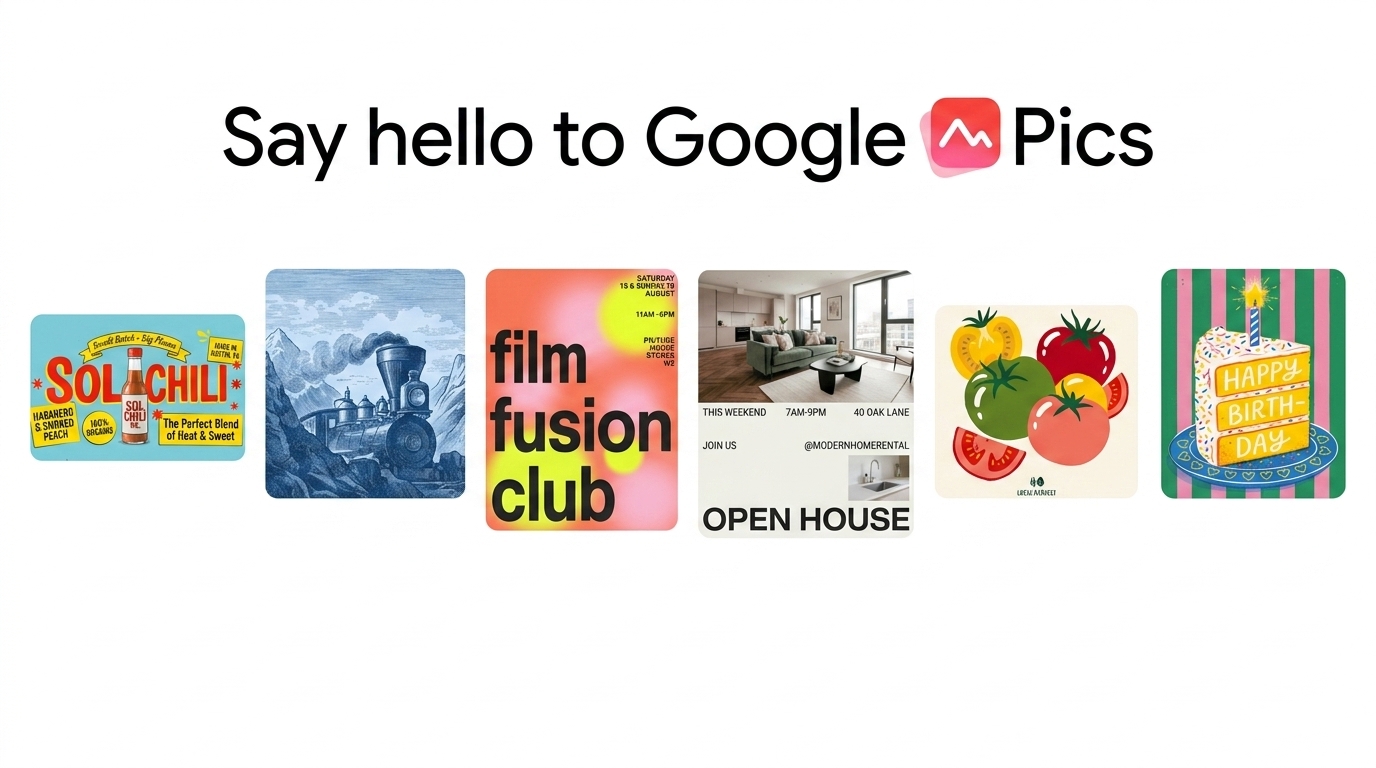


Google Rolls Out Pics Image Editor for AI Pro and Ultra Subscribers
Google is releasing its highly anticipated Pics application to premium subscribers, bringing direct text-to-image generation and precise visual editing directly into the Workspace ecosystem.
Umar Abubakar | 2 Sept. 2026 · 2 min read

Google announced its Pics application earlier this spring. The software blends generative imagery with exact photo editing controls. Originally limited to a small test group, the service is now reaching a wider audience. The company began distributing the application to members on the AI Pro and Ultra subscription tiers. People holding Business Standard, Business Plus, Enterprise Standard, and Enterprise Plus accounts will also receive access. Educational institutions using the AI Pro for Education plan are getting the software right as the fall semester begins.
Powered by Nano Banana Technology
Underneath the interface, Pics relies on the Nano Banana generator. Users create visuals by typing a descriptive prompt or uploading a base picture. The system reads the instructions and outputs the requested visual. The software also provides several alternate versions based on the original request, giving users multiple options to choose from.
After generating a graphic, the user gains access to object segmentation tools. This means a person can select, resize, and move individual elements inside the frame. The software treats both computer-generated elements and uploaded photographs exactly the same. Users can alter or translate words directly embedded in a picture. The software supports twenty-nine languages right out of the gate. It modifies the words without changing the original font or design layout. Users who need higher resolution files can upscale their graphics to 2K and 4K dimensions. The application handles multiple edits simultaneously.
Workspace Integration and Market Strategy
Google integrated the editor directly into its Workspace applications. When a person clicks on an image inside Docs or Slides, the full suite of editing tools appears on the screen. Users do not need to open a separate tab or switch windows. Soon, people will be able to edit any graphic saved in their cloud storage folders. Coworkers can also edit the same graphic together in real time.
While the company did not mention competitors by name, the strategy clearly targets outside design platforms. Keeping users inside the Workspace ecosystem is incredibly lucrative. The enterprise cloud software market represents a massive revenue stream, with top tech firms regularly fighting over contracts exceeding $40B annually. Google wants its users to stay inside its own programs instead of paying for outside services like Canva. The official announcement noted that workers should not have to jump between different programs to build visual presentations. By bringing generation and editing tools into the main workflow, the company eliminates the need for copying, pasting, or switching tabs.
This integration trend extends across the tech industry as companies consolidate their software features. You can read more about similar shifts in our report on how OpenAI restricted Cursor model access recently. Additional coverage of big tech hardware and software ecosystem battles is available on The Verge.
Read More on TechRobust:
Umar Abubakar
 LinkedIn
Umar Abubakar
Expertise:Editorial Leadership, Product Design (UI/UX), Digital Media Strategy, Technology Systems, Product Architecture
Award:TechRobust Visionary Leader of the Year 2025
Umar serves as Editor-In-Chief and CEO of TechRobust, combining editorial vision with senior product design expertise to shape how modern technology stories are built, packaged, and told. Overseeing all editorial verticals, he directs coverage across global and regional tech landscapes while applying deep design thinking to publication strategy and reader experience.