
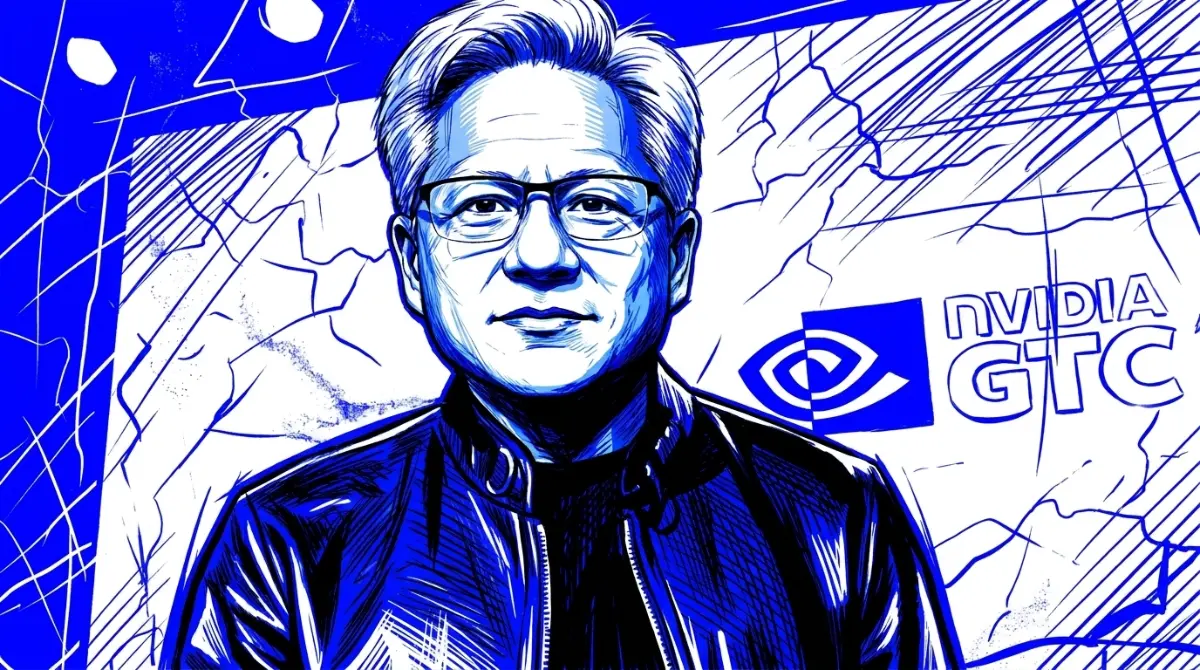


Nvidia CEO Declares AGI Has Arrived Using 100,000 GPUs
Nvidia Chief Executive Jensen Huang boldly declared artificial general intelligence exists after OpenAI trained its newest model using one hundred thousand Grace Blackwell processing units.
Umar Abubakar | 8 Sept. 2026 · 6 min read

I have spent the last fifteen years covering technology cycles from the front row, watching Silicon Valley invent the future in real time. Few moments hit with the concussive force of what happened late Sunday. Instead of a formal press conference or a glossy keynote presentation, the biggest announcement in modern computing arrived through a casual social media post. Nvidia Chief Executive Jensen Huang logged onto X and typed out a message that immediately set the financial markets and academic circles on fire. He congratulated the team at OpenAI on their new GPT-6 Astra model and plainly stated that artificial general intelligence has finally arrived.
To comprehend the weight of that statement, we must look at the hardware sitting underneath it. Huang revealed that OpenAI trained Astra using an infrastructure containing over 100,000 Nvidia Grace Blackwell processors. These components represent the absolute peak of modern silicon design, packed inside NVLink72 server racks that operate like a single, massive supercomputer. If a network of that size is indeed birthing what we consider artificial general intelligence, we have crossed a boundary that scientists and philosophers have debated for decades.
Decoding the Hardware Footprint
The sheer scale of this deployment answers a lingering question. A few months ago, whispers circulated about OpenAI unveiling the initial Astra architecture, but nobody knew the true physical footprint of the training cluster. Now we know. It lived on the Stargate infrastructure in Texas, a facility drawing enough electricity to power a small city. Operating one hundred thousand state of the art processing units in unison requires engineering wizardry that few companies on Earth can afford.
This is not just another product update. The term artificial general intelligence carries intense scientific baggage. It describes a machine capable of equaling or exceeding human cognitive abilities across any intellectual task, learning and adapting to entirely unfamiliar situations without human instruction. For years, skeptics argued we were decades away from achieving such a feat. Now, the chief executive of the company selling the computing hardware says we are already here.
The Financial Motivation Behind the Declaration
Why the sudden declaration? I placed a few calls to sources operating within the major compute labs this week. The consensus is that Huang is not speaking purely from an academic viewpoint. He is speaking from the perspective of a salesman who just watched his biggest client break every known scoring metric. According to official documentation, Astra hit 99.9 percent on the ARC-AGI-3 logic test and achieved a perfect score on ExploitBench.
OpenAI President Greg Brockman followed the hardware announcement by welcoming the public to the new intelligence era, though he left the final judgment up to individual interpretation. Huang removed the ambiguity entirely. He planted a flag in the ground. The monetary motivation behind claiming victory is obvious. If true general intelligence is real, the companies building the foundational hardware become the most valuable entities in human history.
We recently documented how Nvidia recorded total revenues hitting $96.2B in its recent fiscal quarter, driven almost entirely by data center sales. Demand for server infrastructure created an economic engine unlike anything we have ever seen. If Wall Street believes the goal has been reached, the spending will only accelerate as national governments scramble to catch up.
The Promise of 400,000 More Processing Units
The second half of the statement from Huang carried a detail that sent a cold shiver through competing hardware developers. He casually mentioned that 400,000 additional graphics processing units are coming online next. He did not specify who purchased them, where they will reside, or what they will train.
Consider the math for a second. If 100,000 Grace Blackwell components just trained a system that scores perfectly on cybersecurity exploitation tests, what happens when an infrastructure four times that size powers up? The geopolitical stakes are staggering. We are no longer talking about software that writes good emails or generates funny images. We are talking about automated systems that can navigate operating systems, perform heavy software engineering tasks, and discover mathematical proofs.
I spoke with a senior security analyst based in Washington who told me that a 400,000 unit training cluster is not a corporate asset; it is a matter of national security. The United States government is quietly watching this hardware accumulation, calculating how a private corporation holding a monopoly on synthetic thought will alter global diplomacy. When an algorithm can hack foreign networks faster than any human operator, the server farm housing that algorithm becomes a prime military target.
The Backlash and the Definition Problem
Despite the celebratory tone from the executive suites, actual research scientists are pushing back hard. Gary Marcus, a vocal critic of the current machine learning hype cycle, quickly rejected the claims. He pointed out that declaring victory without a clear, universally accepted definition is simply an attempt to conquer a scientific goal by corporate fiat. The test scores look impressive on paper, but hitting a high percentage on a predefined test does not mean the machine possesses true comprehension or reasoning.
Even voices inside OpenAI are asking the public to pump the brakes. Just hours before Huang made his victory post, OpenAI Chief Scientist Jakub Pachocki published a sobering essay urging extreme caution. He argued that no laboratory has successfully solved the alignment and monitoring puzzle well enough to justify the current pace. We are watching a bizarre internal split where hardware leaders forecast aggressive intelligence predictions while the scientists building the models beg for a voluntary slowdown.
A Deep Moral Divide
This division draws attention to a massive moral problem. The people selling the silicon want maximum acceleration. The people writing the code recognize the extreme danger of handing control over to autonomous agents. A 100,000 unit cluster does not have a conscience. It executes math at a speed humans cannot comprehend. When things go wrong at that velocity, no safety team on earth can pull the plug fast enough.
The tech industry is currently driving a sports car at maximum speed down an unlit mountain road. The passenger is screaming to hit the brakes, while the driver continues pressing the gas pedal to the floor. Unless a regulatory body steps in and builds a guardrail, the current trajectory will inevitably lead to a collision that affects the entire global economy.
Looking Ahead at the Next Horizon
The arrival of GPT-6 Astra forces us to abandon our old assumptions about software limitations. We are watching the automation of professional work happen in real time. The barrier to entry for complicated technical tasks is dissolving. As Sam Altman recently noted, an entrepreneur can now command a fleet of automated workers operating at a genius level across multiple disciplines.
If true artificial general intelligence truly arrived this week, the rules of the global economy just changed permanently. Everything from medicine to military defense will undergo a forced evolution. As an observer who has tracked these systems since their infancy, I can confidently say the technology industry is flying completely blind into the next decade. The hardware is scaling infinitely, the software is mastering logic, and the humans in charge are arguing over the definition of the word intelligence.
Read More on TechRobust:

Umar Abubakar
 LinkedIn
Umar Abubakar
Expertise:Editorial Leadership, Product Design (UI/UX), Digital Media Strategy, Technology Systems, Product Architecture
Award:TechRobust Visionary Leader of the Year 2025
Umar serves as Editor-In-Chief and CEO of TechRobust, combining editorial vision with senior product design expertise to shape how modern technology stories are built, packaged, and told. Overseeing all editorial verticals, he directs coverage across global and regional tech landscapes while applying deep design thinking to publication strategy and reader experience.