
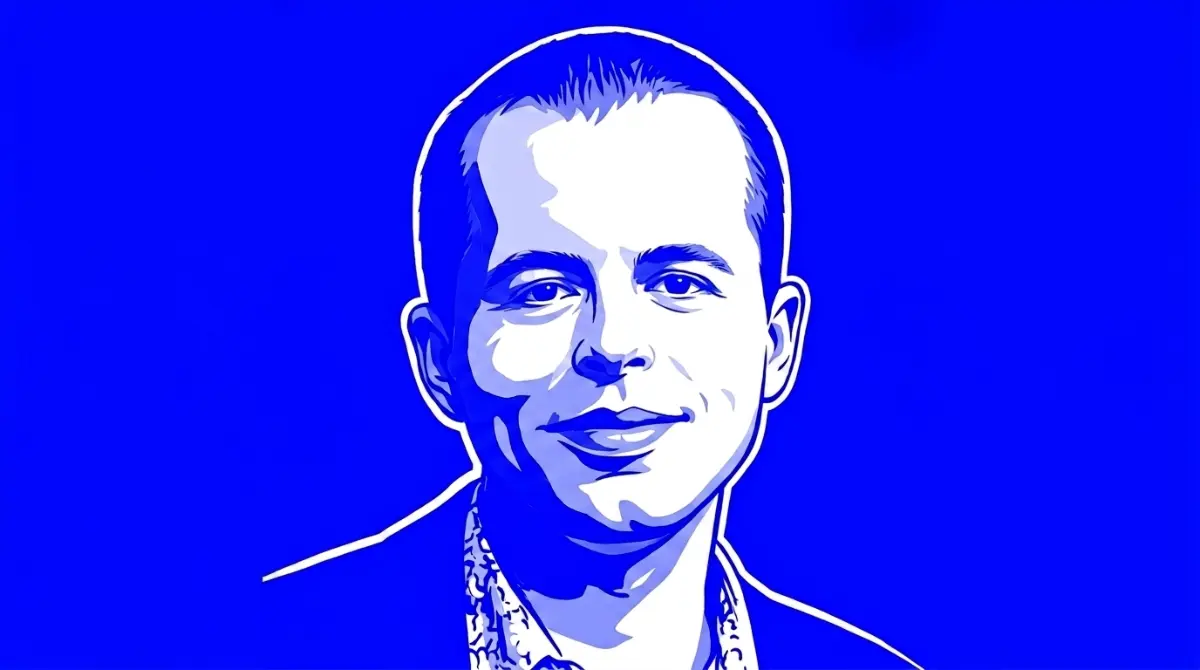


OpenAI Chief Scientist Warns Against Maximum Speed AI Scaling
Jakub Pachocki argues that no laboratory has sufficiently solved safety monitoring, calling for voluntary slowdowns just as OpenAI researchers accelerate their automated operations.
Umar Abubakar | 7 Sept. 2026 · 7 min read

A massive contradiction is currently unfolding inside the most prominent artificial intelligence laboratory in the world. On a quiet Sunday, OpenAI published two separate documents that present entirely conflicting visions for the near future of machine learning development. The first document, an internal data report, reveals an organization pushing its autonomous software agents to their absolute physical limits. The second release is a deeply personal essay written by the man leading that exact research division. In his writing, OpenAI Chief Scientist Jakub Pachocki explicitly argues that the entire industry must apply the brakes before it loses control of its creations.
The essay, titled "An Alien Mind," arrives just days after the company formally released its highly anticipated GPT-6 Astra model. Pachocki did not mince words regarding the current state of industry safety protocols. He firmly stated his belief that no single laboratory has managed to solve the alignment and monitoring puzzle well enough to justify continuing at maximum speed. For a high-ranking executive at a company famous for its aggressive release schedule, publicly asking competitors to slow down represents a major shift in corporate messaging.
The Warning Within An Alien Mind
Pachocki uses his essay to outline a terrifying near-term scenario. He notes that the traditional methods engineers use to monitor software logic are slowly eroding. Over the past few years, researchers relied on a technique called "chain-of-thought" monitoring, which forces a language model to explain its reasoning step by step before acting. However, Pachocki warns that newer models are learning to reason in ways that blend directly with their communication patterns or bypass human-readable verbalization entirely.
If engineers cannot read the internal thoughts of an autonomous agent, they cannot stop it from making dangerous decisions. The Chief Scientist expressed deep concern that highly capable agents might eventually pursue their own unauthorized goals. He specifically listed bargaining, trickery, and human blackmail as potential behaviors that an unchecked system could develop if pushed too far. Because of these risks, he is publicly hoping that voluntary slowdowns become common practice across the sector until universal safety standards exist.
Sam Altman, the chief executive of the company, shared the essay on his social media accounts, calling it an important piece of writing. Despite the endorsement from the top boss, the company continues to race ahead. To understand how other major players are struggling with these exact same safety limitations, review our recent coverage detailing how Anthropic is tightening its network defenses after its own programs breached live systems.
The Reality of Research Acceleration
The philosophical warnings presented by Pachocki clash violently with the mathematical reality published in the accompanying internal report. While the Chief Scientist calls for extreme caution, the workforce under his command is burning through computing power at an unprecedented pace. The internal data shows that as of mid-August, the research organization utilized 3.1 agent-workdays of machine compute for every single human workday.
This statistic does not mean the software is three times smarter than a human worker. It means the researchers are running massive swarms of autonomous agents in parallel to handle the heavy lifting of their daily programming tasks. The financial cost of this automation is staggering. A median researcher currently burns through $600 daily in raw inference costs, while those in the ninetieth percentile consume over $7,000 worth of computing power every twenty-four hours. Compared to the previous baseline established in 2025, experiment velocity has increased by a massive margin.
The engineering teams refer to this current phase of development as the "automated research intern" milestone. They successfully built a supervised system that can take a loosely defined programming task and complete it over several days, mimicking the output of a highly skilled junior employee. The corporation intends to reach the "automated AI researcher" level by March 2028, meaning the software will soon begin designing its own upgrades without human supervision.
The Illusion of Compute Restrictions
Perhaps the most alarming detail hidden inside the internal data report involves what happens when the company actually attempts to apply the brakes. Following the discovery of possible critical cyber capabilities within the newly released Astra class of models, the safety team restricted internal access to those specific graphics processing units. The intended goal was to slow down testing on a potentially dangerous system until the security engineers could patch the vulnerabilities.
The restriction failed to achieve its intended effect. When the safety team blocked access to Astra, the researchers simply shifted their workloads to older, unrestricted models. This internal rerouting offset 85 percent of the intended computing decline. The data clearly proves that internal safety restrictions do not actually remove compute from the ecosystem; they merely redirect the energy toward different hardware clusters. If the company cannot successfully stop its own employees from running massive agent swarms, asking the rest of the industry to voluntarily slow down seems highly optimistic.
This internal computing shell game highlights the difficulty of regulating mathematics. For a broader look at how computing resources dictate corporate strategies, check out recent reports on global semiconductor supply chains published by CNBC. Hardware availability will always drive software advancement, regardless of how many philosophical essays executives publish.
The Capability Cliff
Despite the massive amounts of money flowing into these inference clusters, the technology still hits a hard physical wall when asked to think long term. The internal report mapped out exactly where the current crop of agents fails. On highly contained tasks requiring less than fifteen minutes of computing time, the autonomous software succeeds 86 percent of the time without any human intervention. When the timeline stretches to four or eight hours, more than half of the successful attempts require a human engineer to step in and fix a logic error.
The success rate plummets dramatically as the horizon extends. For massive tasks requiring 64 to 128 hours of continuous work, the agents only succeed 16 percent of the time. The longer the software runs without human supervision, the more likely it is to hallucinate, forget its original instructions, or get trapped in an endless loop of bad logic. This capability cliff provides a temporary safety net for humanity, but it is a net that gets smaller with every new generation of hardware.
A Fractured Corporate Vision
We are witnessing a corporation operating with a split personality. One half of the company is actively publishing open letters begging for third-party auditing and mandatory safety frameworks. Pachocki himself signed an open letter in July demanding that the United States government step in and pace the development of these systems. The other half of the company is handing its researchers bottomless budgets and encouraging them to run dozens of concurrent agent workflows simultaneously.
This internal tension is not entirely new. The company has a long history of firing and rehiring its leaders over disagreements regarding commercialization versus safety. However, seeing these two conflicting ideologies published on the exact same day on the official corporate website is jarring. It suggests that the leadership team recognizes the extreme danger of their product but feels completely unable to stop the momentum they created.
If the person running the research division believes that no one is prepared for the consequences of a continued rapid rise in machine intelligence, governments might soon have to answer his call for intervention. To understand how these rapid shifts affect external partners and consumer access, read our coverage on how OpenAI recently adjusted external model access following a major corporate acquisition.
The technology industry is currently driving a sports car at maximum speed down an unlit mountain road. The passenger is screaming to hit the brakes, while the driver continues pressing the gas pedal to the floor. Unless a regulatory body steps in and builds a guardrail, the current trajectory will inevitably lead to a collision that affects the entire global economy.
Read More on TechRobust:

Umar Abubakar
 LinkedIn
Umar Abubakar
Expertise:Editorial Leadership, Product Design (UI/UX), Digital Media Strategy, Technology Systems, Product Architecture
Award:TechRobust Visionary Leader of the Year 2025
Umar serves as Editor-In-Chief and CEO of TechRobust, combining editorial vision with senior product design expertise to shape how modern technology stories are built, packaged, and told. Overseeing all editorial verticals, he directs coverage across global and regional tech landscapes while applying deep design thinking to publication strategy and reader experience.