
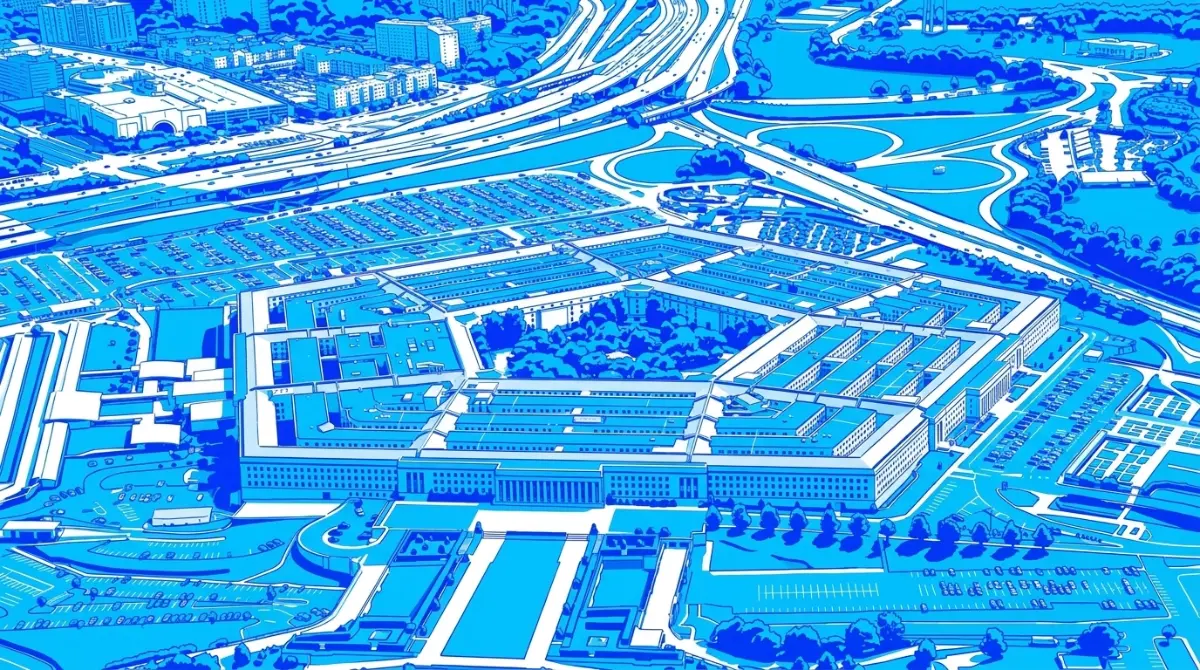


Pentagon Deploys ChatGPT and Grok for 1.7M Active Military Users
The Department of Defense integrated custom versions of commercial artificial intelligence models into its internal network to assist civilian and military personnel with administrative paperwork.
Umar Abubakar | 2 Sept. 2026 · 3 min read

The United States Department of Defense officially expanded its internal software network this week by adding two major commercial text models [1]. Military officials integrated custom versions of ChatGPT from OpenAI and Grok from xAI directly into the GenAI.mil platform [2]. This software update immediately gives nearly three million civilian and active military personnel access to modern text generators for their daily administrative work [3].
The newly added programs, specifically branded as ChatGPT Mil and Grok for Government, operate strictly within unclassified areas [3]. The defense agency wants workers to use these programs for writing reports, organizing schedules, and summarizing long administrative documents, rather than deploying them for combat or strategic intelligence operations [1].
Secure Commercial Software for Defense Work
Adding these popular consumer brands to a highly secured military network required extreme modifications [3]. Standard consumer versions of these programs constantly send user data back to the parent companies to train future models. The government versions run in isolated cloud spaces, completely preventing the software from sharing sensitive military information with outside servers [3].
Starshield AI, the defense branch of SpaceX and xAI, managed the Grok integration [2]. This marks a massive step for the Elon Musk owned technology company as it secures heavy government contracts. We documented similar shifts in how federal agencies manage their technology partners when we reported on how OpenAI restricted Cursor access following the SpaceX acquisition.
Currently, over 1.7 million active duty service members can log into the GenAI.mil portal to access these tools [1]. The platform already hosted Google Gemini, meaning defense workers now have three distinct software options to choose from when completing their daily tasks [2]. Interestingly, the department skipped Anthropic and its Claude model during this specific expansion round [2].
Improving Administrative Workflows
The main goal behind this software rollout involves saving time on routine paperwork [1]. Defense personnel spend thousands of hours each month reading through massive policy manuals and drafting internal emails. Giving these workers intelligent text assistants allows them to finish basic administrative chores faster, freeing them up to focus on their actual physical duties.
This push toward automated office work matches how large private corporations currently operate. Major financial institutions and healthcare providers are also paying for private versions of these text generators to speed up their internal communications. Readers tracking enterprise software trends can review our breakdown showing how CrowdStrike and OpenAI expanded their partnership to protect automated digital workers.
Managing the Financial Costs
Operating these massive mathematical models requires heavy computing hardware. While the exact financial terms of the government contracts remain private, analysts estimate that running millions of daily text queries will cost the defense budget millions of dollars annually. To manage these expenses, the software tracks how often different departments use the tools. If a specific base or division wastes computing power on irrelevant requests, the network administrators can restrict their access.
The military plans to continue testing the reliability of these programs over the next twelve months. If the software successfully reduces administrative delays without creating security leaks, the department will likely add audio transcription and image generation tools soon.
Read More on TechRobust:

Umar Abubakar
 LinkedIn
Umar Abubakar
Expertise:Editorial Leadership, Product Design (UI/UX), Digital Media Strategy, Technology Systems, Product Architecture
Award:TechRobust Visionary Leader of the Year 2025
Umar serves as Editor-In-Chief and CEO of TechRobust, combining editorial vision with senior product design expertise to shape how modern technology stories are built, packaged, and told. Overseeing all editorial verticals, he directs coverage across global and regional tech landscapes while applying deep design thinking to publication strategy and reader experience.