
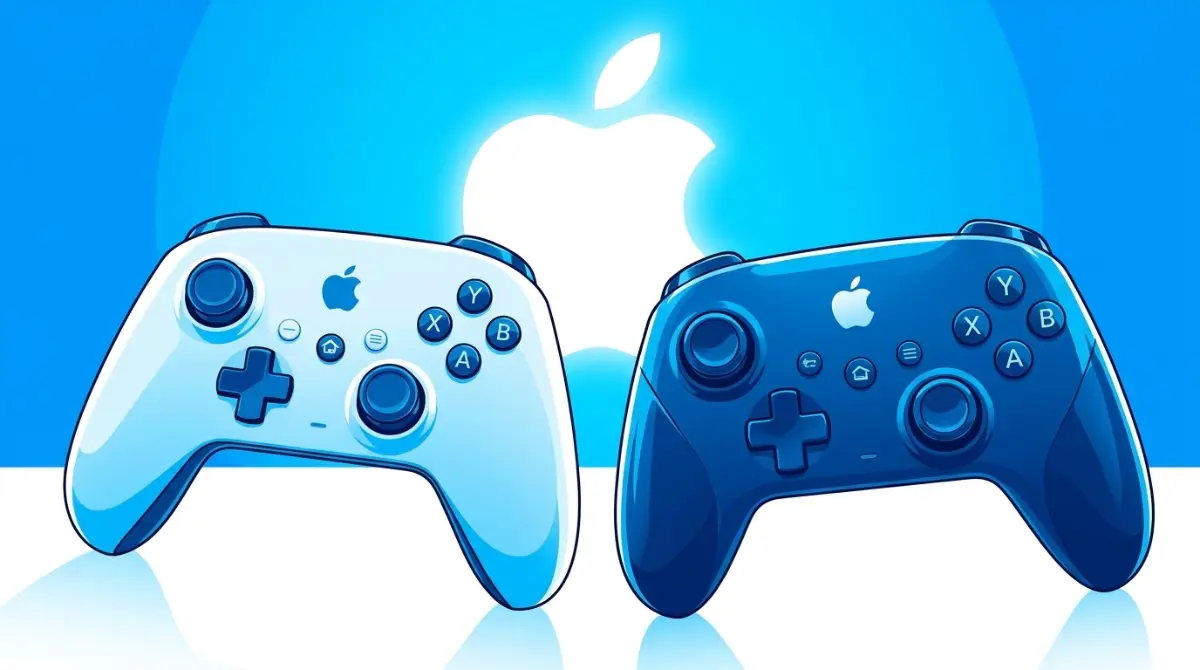


Apple Secretly Designs iPhone Game Controller Under Beats
Leaked software code reveals Apple is secretly developing a dedicated game controller, signaling an aggressive move to dominate the interactive living room economy.
Umar Abubakar | 13 Sept. 2026 · 10 min read

I remember sitting in a brightly lit diner near Cupertino last spring, listening to a hardware engineer complain about third-party accessories. We were drinking bad coffee, and he was tracing invisible lines on the table. The input delay of non-Apple gamepads bothered him immensely. The plastic felt cheap. The buttons lacked the right physical resistance. He hinted that the company would eventually stop relying on outside partners and build its own hardware to control the physics of mobile gaming. Today, that prediction crossed the line from a quiet diner conversation into public reality.
Recent discoveries buried within the latest macOS beta software code point directly to an internal hardware project. Engineers found two distinct model identifiers, labeled T6502 and T1057. These labels do not match any existing product line. Instead, the code strings describe physical attributes perfectly matching a dedicated gaming controller. The software references a directional pad, thumbsticks, haptic feedback motors, and gyroscope sensors. Bloomberg reporters corroborated these findings this morning, cementing the rumors. Apple is actively building a physical gamepad to pair directly with its mobile devices.
The Covert Hardware Play
For years, executives maintained a very specific arrangement with gaming hardware. If you walk into a retail store today, you will see shelves stocked with the Backbone One and the SteelSeries Nimbus+. These companies enjoyed a quiet monopoly over iOS gaming hardware. They benefited from direct retail placement and official software support. But technology giants rarely share lucrative categories forever.
The decision to build an in-house controller reveals a deeper ambition. Apple is no longer satisfied taking a passive role in the interactive entertainment sector. The company wants to dictate how you interact with virtual worlds, right down to the physical resistance of a shoulder button. When you control the silicon, the display, the operating system, and the input device, you own the player completely.
The Beats Branding Strategy
Mark Gurman provided a fascinating detail regarding the branding approach. The new controller might not carry the famous bitten apple logo. Instead, executives might release the device under the Beats brand. This choice makes total financial sense. The parent company normally positions its primary brand at the absolute top of the pricing tier. Gaming accessories require a different approach. A Beats-branded controller allows the parent company to target a lower price point and use less expensive materials without hurting its luxury reputation.
I have watched the Beats brand evolve since the $3B acquisition many years ago. Management uses Beats as a tactical weapon. They deploy it to capture younger demographics and price-conscious shoppers. A Beats gaming controller would compete directly on price with established players like Xbox and PlayStation controllers, which normally sell for around $60 to $70. If they slapped an Apple logo on it, the price would likely start at $129, instantly alienating the average player.
The Threat to Current Partners
Think about the current partners sitting on retail shelves today. Companies like Backbone built their entire business model around supporting the iPhone. Now, the very company that promoted them is preparing to eat their lunch. This is a classic pattern in Silicon Valley. A massive platform invites smaller hardware makers to fill a gap. Once the category proves financially viable, the platform owner builds a native version and slowly pushes the original partners out the door.
This behavior touches on serious antitrust concerns currently debated in Washington and Brussels. Lawmakers constantly argue that platform owners possess unfair advantages over smaller competitors. When Apple controls the operating system, the retail stores, and the hardware, third-party accessory makers stand very little chance of surviving the squeeze. They will find themselves competing against a product that enjoys native software integration and prioritized marketing. It is a game the smaller companies simply cannot win.
Apple and the Gaming White Whale
To understand why this hardware matters so much, we must look at the company's historical struggles with the gaming industry. Cupertino has always treated video games like an unwanted stepchild. They failed miserably with the Pippin console in the 1990s. For decades, Mac computers lacked the graphical power and developer support to run popular titles. Gaming belonged to Microsoft, Sony, and Nintendo.
But the tide turned when mobile gaming exploded. The App Store generates billions of dollars annually from casual titles and predatory microtransactions. However, the executive team wants more than just casual puzzle games. They want absolute dominance over the living room. As recent hardware events have shown, the company is aggressively upgrading its internal silicon. Modern mobile chips now possess the graphical rendering power of a dedicated home console.
Over the past two years, developers started porting massive titles directly to iOS. Games like Resident Evil and Assassin's Creed now run natively on mobile chips. Playing these intense games using a glass touchscreen is an absolute nightmare. Your thumbs block the action, and the lack of physical feedback ruins the tension. A dedicated, first-party controller solves the input problem entirely. It changes the iPhone from a casual distraction into a serious portable console.
The Apple Arcade Factor
To view this hardware in isolation is a mistake. We have to look at the software side of the equation, specifically Apple Arcade. When the subscription service launched, it promised a curated selection of premium games without advertisements or hidden fees. It was a noble effort, but the library leaned heavily toward family-friendly puzzle games and short narrative adventures. Dedicated gamers largely ignored the service, dismissing it as a casual distraction.
If Cupertino wants to justify a multibillion-dollar annual investment in Arcade, they need heavier, more graphically intense games. Those games require a proper controller. By releasing their own gamepad, they can set a baseline hardware standard for all Arcade developers. They can tell studios to assume every player has this specific controller. This guarantees a unified control scheme across all devices, making it much easier to port advanced console games directly to the subscription service.
The Cloud Gaming Conflict
There is also the ongoing war over cloud gaming. Companies like Microsoft and Nvidia spent years fighting Apple over the right to stream games directly to iOS devices. Apple blocked native cloud gaming apps for a long time, forcing players to use clumsy web browser workarounds. They cited security concerns and payment processing rules, but the underlying motivation was obvious. They wanted to protect their native App Store revenue.
If they release a native controller, it puts them in an interesting position. A Beats-branded gamepad would work wonderfully with Xbox Cloud Gaming. Apple would profit from the hardware sale, even if the player uses Microsoft software to stream the actual game. It is a brilliant hedge. Even if native iOS gaming fails to attract the enthusiast crowd, the company still makes money selling the physical tools needed to play rival services.
Connecting the Living Room
The endgame here extends far beyond the phone in your pocket. The Apple TV 4K box sits in millions of living rooms, mostly serving as a glorified Netflix machine. With a first-party controller, that tiny black box suddenly transforms into a legitimate gaming console. Families would no longer need to buy a $500 PlayStation if their existing streaming box can run the same games smoothly.
This brings us to the broader geopolitical and monopolistic picture. The modern tech industry is a battle for total integration. Hardware manufacturers want to trap you inside their walls. If you buy their phone, you buy their watch. If you buy their watch, you subscribe to their fitness service. Adding a gaming controller tightens the lock on the gate. It makes leaving the walled garden physically and financially painful.
I recently spoke with an independent game developer who expressed serious worry about this trend. He explained that hardware monopolies dictate software development. If Apple forces specific haptic feedback requirements or unique motion controls, developers must spend extra money adapting their code. Smaller studios cannot afford the extra engineering hours. Ultimately, this consolidation of power limits what types of games get made and who gets to make them.
Ergonomics and Engineering
Let us talk about the pure engineering challenge of a game controller. The human hand is incredibly sensitive to minor variations in shape and weight. A controller must fit small hands and large hands equally well. The triggers must have enough travel distance to allow for precise acceleration in racing games, but a fast enough return to allow for rapid firing in action games. It is a delicate balancing act that takes years to perfect.
Sony and Microsoft have spent decades refining their controller shapes. Microsoft spent over $100M developing the Xbox One controller alone. They tested hundreds of prototypes, measuring exactly how much muscle strain the triggers caused after four hours of continuous play. Apple has unlimited cash, but they lack this specific institutional knowledge. They tend to prioritize visual aesthetics over physical comfort. Look at the Magic Mouse. It is a beautiful piece of glass and aluminum, but it forces your hand into a flat, unnatural claw shape. A game controller cannot prioritize form over function.
The Technological Underpinnings
Let us examine the leaked specifications closely. The inclusion of haptic motors suggests a desire to match the immersive feedback found in modern Sony controllers. Haptics provide physical sensations that match on-screen actions, like the feeling of pulling a tight bowstring or steering a car over gravel. Additionally, accelerometer and gyroscope sensors indicate support for motion controls. Players might physically tilt the controller to turn a vehicle or aim a weapon.
These features require extreme precision. Third-party controllers often struggle with connection drops and software bugs. By building the hardware in-house, engineers can write custom software protocols that bypass standard Bluetooth limitations. We saw similar tight integration plans with recent iPhone models, where proprietary hardware handshakes create smoother pairing actions than anything a third party could achieve.
Will consumers actually buy it? The brand loyalty in this sector is fierce. Gamers argue aggressively over the asymmetrical stick layout of an Xbox controller versus the symmetrical layout of a PlayStation pad. Breaking into this tribal hardware market requires more than just a nice logo. The device must feel perfectly balanced in the hands. The plastic cannot squeak. The triggers must offer smooth, consistent physical resistance.
The Financial Horizon
The financial implications are massive. The global gaming accessory market generates billions of dollars annually. Capturing even a fraction of that spending would add a noticeable boost to the wearables and home accessories division. The company already commands the premium headphone market. Conquering the gaming accessory market seems like the logical next step in their expansion plan.
The regulatory storm gathering over Silicon Valley might complicate these plans. European regulators are actively forcing open closed systems. They mandated the switch to USB-C and forced the allowance of alternative app stores. Releasing a proprietary controller that artificially limits third-party competition might attract unwanted attention from anti-monopoly investigators. Lawyers in Brussels are watching every single product launch closely.
We are witnessing a slow, deliberate march toward total hardware sovereignty. Tech giants no longer want to share the physical world. They want to manufacture the screen you look at, the headphones you wear, and now, the plastic you hold in your hands when you want to relax. The convenience is incredibly tempting. The hardware will likely look beautiful and function perfectly. But we must ask ourselves what we lose when one single corporation controls every single piece of plastic in our digital lives.
The shift is happening quietly. Today it is just a few lines of code in a beta operating system. Tomorrow, it will be a polished presentation in a dark theater, promising that this new controller will change the way you play forever. And the terrifying part is that they are probably right.
Read More on TechRobust:
Umar Abubakar
 LinkedIn
Umar Abubakar
Expertise:Editorial Leadership, Product Design (UI/UX), Digital Media Strategy, Technology Systems, Product Architecture
Award:TechRobust Visionary Leader of the Year 2025
Umar serves as Editor-In-Chief and CEO of TechRobust, combining editorial vision with senior product design expertise to shape how modern technology stories are built, packaged, and told. Overseeing all editorial verticals, he directs coverage across global and regional tech landscapes while applying deep design thinking to publication strategy and reader experience.