
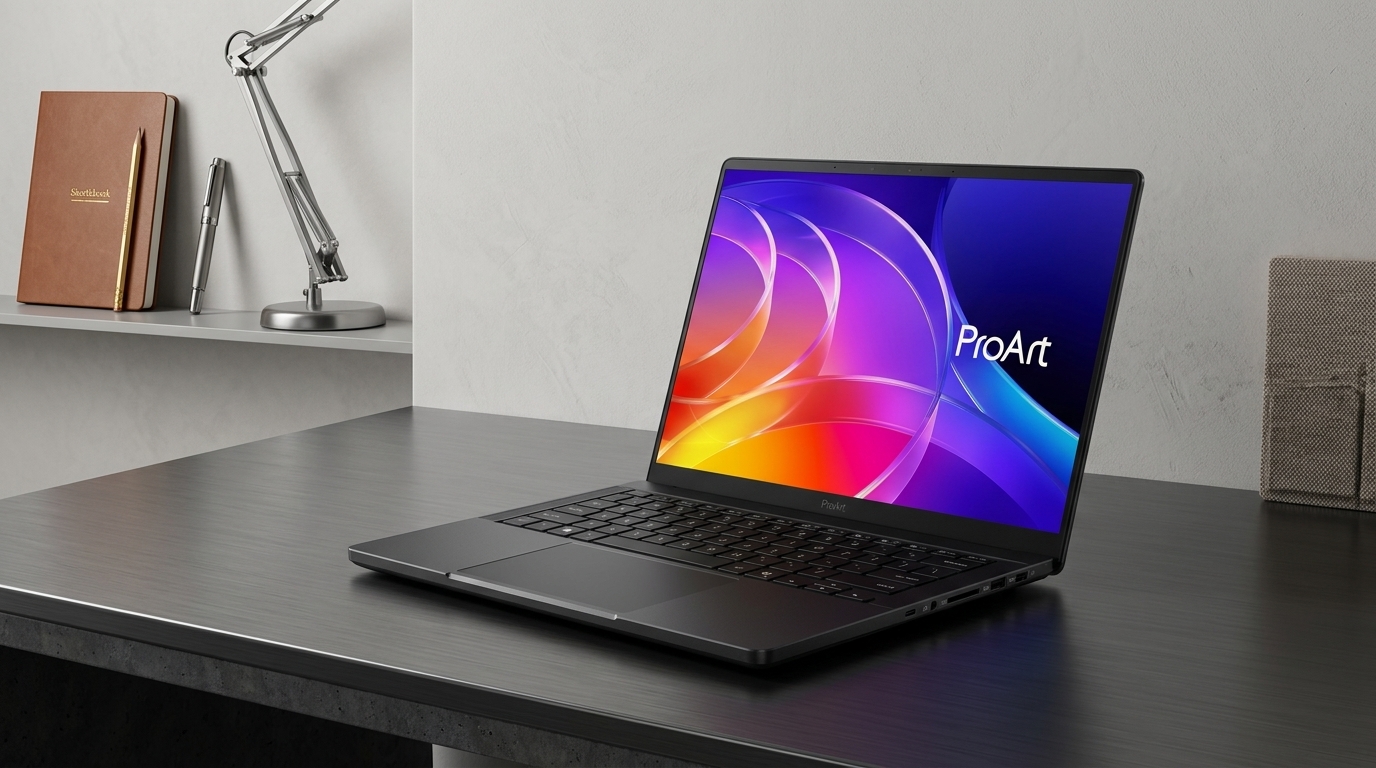


ASUS Unveils ProArt PCs Powered by NVIDIA RTX Spark at IFA 2026
ASUS introduced its newest ProArt laptops and a compact desktop at IFA 2026, featuring the powerful NVIDIA RTX Spark chip for local processing tasks.
Umar Abubakar | 2 Sept. 2026 · 6 min read

At the IFA 2026 hardware exhibition in Berlin, ASUS presented its latest generation of ProArt personal computers. The company displayed the new P16 and P14 laptops alongside the GR1X mini desktop. These machines run on the recently announced NVIDIA RTX Spark superchip, which combines graphics processing and central processing units into a single package. This hardware release focuses heavily on running complex computing tasks directly on the device, rather than relying on cloud servers. The media event provided industry professionals with a first look at how independent creators might handle heavy workloads in the near future.
The Push for Local Computing Power
For the past few years, developers and digital artists relied on distant servers to process complicated tasks. Generating images, compiling large codebases, and rendering 3D environments required a constant internet connection and paid monthly subscriptions. The new ASUS ProArt lineup changes that dynamic entirely. By integrating the NVIDIA RTX Spark architecture, these computers bring workstation performance directly to the user's desk.
Running applications locally presents several clear advantages. First, users maintain complete ownership and privacy over their data since files never leave the physical computer. Second, local processing eliminates the waiting times caused by slow internet connections or congested server queues. Finally, creators avoid the recurring costs associated with cloud computing platforms. This shift toward on-device processing represents a major trend across the entire consumer electronics sector.
Inside the NVIDIA RTX Spark Architecture
The core of these new devices is the RTX Spark superchip. This customized piece of silicon features a Blackwell graphics unit containing 6,144 cores, paired with a 20-core Grace central processor. The chip utilizes fifth-generation Tensor Cores capable of FP4 precision. ASUS engineered these computers to deliver up to one petaflop of computing performance.
One of the most impressive specifications is the inclusion of up to 128GB of unified memory. Traditional computer designs separate the system memory from the graphics memory, which creates bottlenecks when moving massive files back and forth. The unified memory approach allows both the central processor and the graphics unit to access the same data pool instantly. Having this much shared memory allows users to load massive datasets and run large language models exceeding 120 billion parameters directly on their local machines.
Such hardware capabilities allow creators to manage 90-gigabyte 3D scenes or generate 4K video files without a hitch. As local processing power increases, companies are investing heavily in these technologies. For instance, Nvidia recently posted $96B in annual revenue, indicating a massive shift toward specialized computing hardware. You can find additional context on these industry moves by reading hardware analysis from The Verge.
ProArt P16 and P14 Deliver Thinner Designs
ASUS managed to fit this immense processing power into very thin enclosures. The 16-inch ProArt P16 measures just 12.9 millimeters thick and weighs 1.77 kilograms. The company claims this is the thinnest 16-inch ProArt laptop ever produced. It includes a 99Wh battery to keep the machine running during heavy workloads away from a power outlet. That battery capacity sits right at the legal limit for commercial airline travel.
The smaller 14-inch version, the ProArt P14, measures 13.9 millimeters thick and weighs 1.48 kilograms, utilizing a 90Wh battery. Both models retain the premium build quality expected from the ProArt brand, featuring durable materials and a refined aesthetic available in Nano Black and Neo White color options.
Both laptops feature Lumina Pro OLED displays with excellent color accuracy for creative professionals. The screens support a peak brightness of 1,600 nits and come with anti-reflection coating to reduce glare in brightly lit rooms. The P16 offers a 4K resolution screen with a 120Hz refresh rate and G-SYNC support, while the P14 provides a 3K display. These high-quality screens give photo and video editors the exact color representation required for professional media production. The machines also include a wide variety of ports, so users do not need to carry external adapters for external storage drives or monitors.
ProArt GR1X Serves as a Compact Desktop Workhorse
For users who prefer a stationary setup, ASUS introduced the ProArt GR1X mini desktop. The device measures 150 by 150 by 51 millimeters, making it small enough to fit in the palm of a hand or tuck away behind a monitor. Despite the compact size, it contains the same RTX Spark superchip found in the laptops.
To keep the silicon cool during continuous operation, ASUS designed a custom dual-fan cooling system featuring 218 individual fan blades. The company prioritized thermal management to prevent the processor from slowing down due to overheating during long rendering sessions. This cooling setup provides significantly greater thermal coverage than previous designs while keeping fan noise to an absolute minimum.
The GR1X supports modern networking standards including Wi-Fi 7, Bluetooth 5.4, and 10-gigabit ethernet connections. It can output video to four separate 4K monitors simultaneously. This tiny desktop gives independent developers the ability to train localized machine learning models without paying high fees for cloud computing access. Financial analysts tracking corporate investments often highlight how important local processing has become for smaller creative agencies, as detailed in recent reports by Bloomberg Technology.
Software Integration and Creator Tools
ASUS built these computers specifically for a new wave of software tools. The machines ship with bundled applications like Zenni Claw and support open-source platforms like ComfyUI. Zenni Claw acts as a personal assistant that manages files, automates repetitive editing tasks, and helps organize media libraries.
Because the RTX Spark chip features 128GB of unified memory, developers can run applications locally that previously required remote servers. This setup bypasses the restrictive token limits often associated with cloud-based text and image generation services. The laptops also come with exclusive offers for Adobe Creative Cloud and Google Pro tools, providing buyers with immediate access to industry standard software right out of the box.
With major hardware presentations scheduled this month across the tech sector, ASUS wants to position its ProArt lineup as the default choice for professionals who need high performance in portable form factors. The integration of local processing chips into consumer laptops indicates a major shift in how the industry handles heavy computing workloads. Consumers are no longer forced to choose between portability and raw processing power.
The Road Ahead for Hardware Manufacturers
As software applications require more resources, hardware manufacturers face immense pressure to keep up. The partnership between ASUS and NVIDIA demonstrates a clear path forward for personal computing. By combining massive memory pools with highly specialized processing cores, these companies are building machines capable of handling tasks that were impossible on consumer hardware just two years ago.
The introduction of the ProArt P16, P14, and GR1X at IFA 2026 sets a high bar for competitors. Other computer manufacturers will need to answer with their own unified memory architectures if they want to capture the attention of digital artists, software developers, and video editors. For now, ASUS has delivered a compelling lineup that redefines what a portable workstation can achieve.
Read More on TechRobust:

Umar Abubakar
 LinkedIn
Umar Abubakar
Expertise:Editorial Leadership, Product Design (UI/UX), Digital Media Strategy, Technology Systems, Product Architecture
Award:TechRobust Visionary Leader of the Year 2025
Umar serves as Editor-In-Chief and CEO of TechRobust, combining editorial vision with senior product design expertise to shape how modern technology stories are built, packaged, and told. Overseeing all editorial verticals, he directs coverage across global and regional tech landscapes while applying deep design thinking to publication strategy and reader experience.