


Framework Cuts Laptop 13 Pro RAM Cost, Issues Refunds
Modular computer maker Framework drops LPCAMM2 memory prices on Laptop 13 Pro, handing automatic cash refunds to early buyers after securing cheaper Micron component batches.
Umar Abubakar | 9 Sept. 2026 · 8 min read

Standing inside an electronics recycling depot outside Boston six winters ago, I watched a forklift crush a wooden pallet stacked with three hundred slim notebooks. The aluminum chassis looked pristine, the glass screens showed zero scratches, and the keyboard letters still held their factory texture. When I asked the depot supervisor why functional machines were heading straight into an industrial shredder, he unscrewed one bottom panel and pointed to the motherboard. A single memory silicon die had developed a microscopic defect. Because the original manufacturer had permanently soldered the memory banks onto the motherboard to shave two millimeters off the device profile, the entire laptop was dead. Repair was impossible; replacement meant buying a brand-new computer. That deliberate engineering cruelty convinced me that mainstream consumer hardware had lost its moral compass, prioritizing corporate planned obsolescence over basic user respect.
Modular computer builder Framework has just delivered an unexpected blow against that industry greed. The California hardware company announced price reductions across thirty-two-gigabyte and sixty-four-gigabyte LPCAMM2 memory modules for its new Laptop 13 Pro, walking back steep price hikes instituted earlier this summer. Rather than pocketing the price difference from recent shipments, the company is issuing automatic retroactive cash refunds to buyers who paid elevated component rates. The price relief also applies directly to pending customer preorders through Batch 10, accompanied by dedicated hardware exchange channels for early recipients of DIY Edition configurations.
My career covering device manufacturing has taught me that corporate hardware brands treat customer money as a one-way street. When component wholesale prices rise, computer makers instantly slap surcharges onto retail sticker prices. When wholesale component costs drop, executives quietly keep the difference, pocketing windfall profit margins while hoping consumers never check wholesale commodity exchanges. Nirav Patel and his engineering collective at Framework discard that corporate deceit. By tracking procurement savings directly back into customer bank accounts, the venture proves that ethical hardware repairability can survive inside an unforgiving global supply network.
The Architecture of Modular Memory
To grasp why this price drop matters to everyday computer users, one must examine the quiet technical revolution occurring around laptop memory standards. For decades, mobile personal computers relied on SO-DIMM sockets, small mechanical trays that allowed owners to pop out old memory sticks and insert higher-capacity modules with a simple screwdriver. Yet as processing speeds accelerated and high-density chips emerged, conventional SO-DIMM connections hit electrical limits. The physical traces were too long, introducing signal interference and draining excessive battery power at elevated clock speeds.
Mainstream personal computer makers exploited that technical wall by soldering fast Low Power DDR memory directly beside the central processor. Apple pioneered this lockdown with its unified memory architecture, and Windows manufacturers like Dell, HP, and Lenovo quickly copied the practice. Soldered memory delivered faster transfer speeds and thinner chassis shapes, but it eliminated user sovereignty. If a student purchased sixteen gigabytes and later needed thirty-two gigabytes for software compilation, the only option was buying an entirely new computer. It allowed computer brands to charge obscene markups, demanding $400 for sixteen gigabytes of memory that cost thirty dollars on spot wholesale markets.
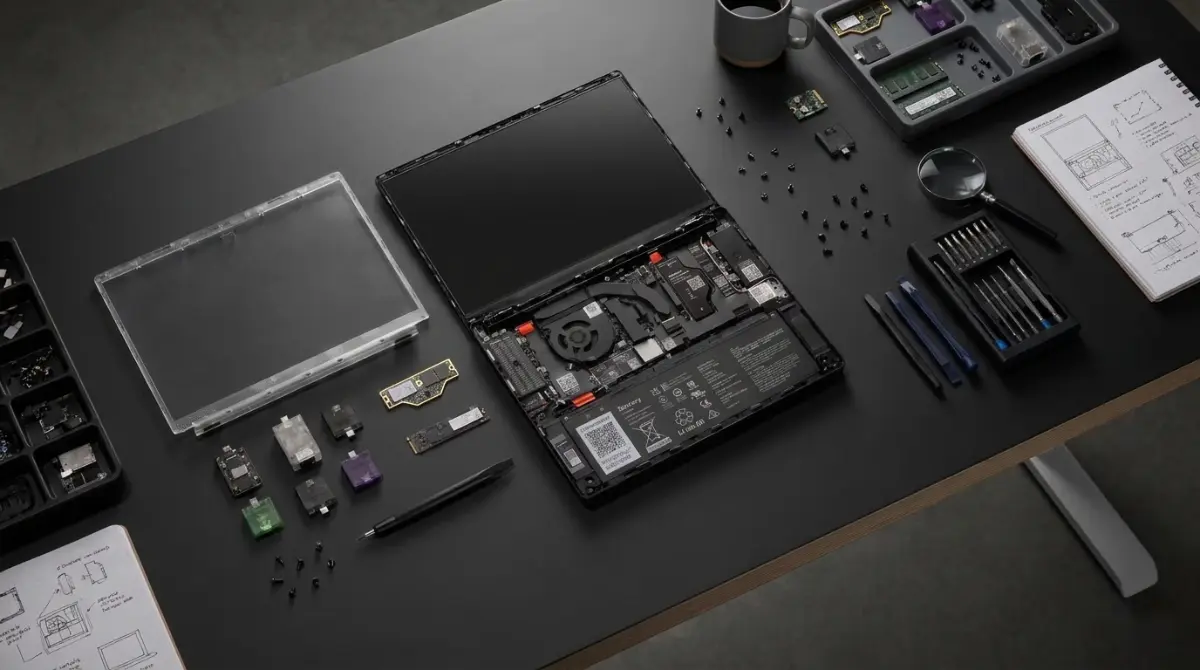
Framework rejected that consumer prison by betting on LPCAMM2, an open physical standard established by the JEDEC global standards organization. LPCAMM2 combines the blistering speed and low energy draw of mobile memory with the mechanical modularity of traditional sockets. Instead of being fused with lead solder, the compact memory board attaches through a compression socket held securely by tiny screws. If a module fails or a user requires additional capacity, swapping the memory takes five minutes at a desk. The Laptop 13 Pro was engineered around this exact architecture, establishing itself as the premier showcase for high-speed repairable computing.
The Summer Component Crunch
The honeymoon did not last long. In July, global semiconductor spot prices went through severe swings as artificial intelligence infrastructure swallowed vast amounts of DRAM wafer production. Memory producers redirected cleanroom fabrication lines toward enterprise server memory, choking off supplies of consumer silicon. Small boutique hardware builders without the multi-billion-dollar cash reserves of Apple or Dell were left fighting for leftovers on open markets.
The fallout hit Framework hard. Supplier price hikes forced the startup to nearly double retail charges on its high-capacity memory configurations. Standalone store listings shot up to $800 for a thirty-two-gigabyte LPCAMM2 module and $1,600 for the sixty-four-gigabyte version. For prospective buyers wanting an open, repairable machine, seeing memory upgrades priced higher than the base laptop chassis felt like a gut punch. Many preorder customers postponed purchases or cancelled configurations, questioning whether independent modular hardware could remain economically viable during global component shortages.
Behind the scenes, the company’s supply procurement staff refused to accept those inflated broker rates. Months of aggressive vendor discussions yielded a major sourcing win: Framework secured a limited quantity of thirty-two-gigabyte and sixty-four-gigabyte LPCAMM2 modules directly from Micron at substantially reduced wholesale expenses. While the newly adjusted pricing remains above the laptop's original launch baseline, it substantially lowers the financial barrier compared to the July peak.
Automated Refunds Over Corporate Retention
What sets this announcement apart from standard corporate public relations is how the savings reach the consumer. Most technology companies that secure cheaper component batches quietly roll out lower prices to future buyers while leaving previous customers stranded at the higher price point. Framework took the opposite path.
Customers whose Laptop 13 Pro orders already shipped at the inflated July price are receiving automatic cash refunds for the exact difference, returned straight to their original payment cards without requiring customer service tickets. For preorders currently queued up through Batch 10, system balances have been modified downward automatically. Buyers waiting in those queues also gain the option to modify their configuration summaries, jumping from base specifications up to thirty-two or sixty-four gigabytes at the reduced price level.
For modular tinkerers who bought the DIY Edition and already received their machines, the company established a dedicated support channel. Owners who wish to swap existing lower-capacity memory for the cheaper high-capacity modules can request an exchange through an online portal, with the manufacturer providing prepaid return shipping labels for the original hardware. If component inventory remains after servicing Batch 10, the company will open the lower pricing to later production batches before making it accessible to fresh orders, which currently extend into Batch 20.
The Processor Squeeze and Hardware Tradeoffs
The news is not entirely celebratory across every silicon component. Running parallel with the memory announcement, Framework disclosed that it managed to secure an additional allocation of Intel Core Ultra X9 388H processors for the Laptop 13 Pro. The flagship processor option had sold out almost immediately during the initial preorder rollout, leaving power users clamoring for replenishment.
However, securing those top-tier processors from Intel came at a noticeably higher procurement price. Unlike the memory modules, where costs fell, the replacement processor stock arrived with a steep invoice, forcing Framework to raise pricing on the X9 configuration. Preorder customers up through Batch 10 receive first access to enter the updated X9 production queue, with shipments scheduled for this November. Those choosing to upgrade their central processor accept both the price increase and a delayed delivery date.
This stark divergence between cheaper memory and pricier silicon exposes the fragile tightrope independent computer makers walk every day. When an enterprise does not own fabrication facilities, it remains at the mercy of semiconductor titans that reallocate production lines and manipulate pricing on a whim. While giants can absorb supplier hikes through massive corporate margins, independent builders must expose those supply swings to the consumer.
The Moral Necessity of Right to Repair
This memory episode illustrates why the right to repair movement extends far beyond hobbyist pride or DIY vanity. It is fundamentally about corporate accountability, waste reduction, and consumer ownership. When multinational hardware corporations prevent users from fixing their own property, they create artificial scarcity that pads executive bonuses while filling municipal landfills with hazardous electronic refuse.
The entire personal technology industry has spent twenty years pushing disposable devices disguised as luxury lifestyle statements. We saw similar shifts when evaluating industrial hardware design in our Dell 14s laptop MacBook Neo alternative IFA 2026 coverage, where manufacturing simplicity often clashes with long-term user maintainability. When brands make hardware difficult or impossible to service, customers lose the financial security that comes with durable capital goods. This philosophy also surfaces across smartphones, as seen during our Nothing Phone 4a and 4a Pro midrange review, where aesthetic transparency does not always translate into internal modularity.
By issuing retroactive refunds and keeping repairable modularity front and center, Framework demonstrates that another industrial model is viable. A computer should be an open tool that serves its owner for eight to ten years, receiving modular processor updates, battery replacements, and memory upgrades as personal needs change. The company’s willingness to pass cost savings back to early adopters proves that transparency is the ultimate antidote to corporate cynicism.
For tech enthusiasts and everyday professionals who refuse to let Silicon Valley dictate when their computers expire, the Laptop 13 Pro remains a bold declaration of hardware independence. Framework has proven that respecting the customer's wallet is not just good ethics; it is the only way to build an enduring hardware brand in a cynical world.
Read More on TechRobust:

Umar Abubakar
 LinkedIn
Umar Abubakar
Expertise:Editorial Leadership, Product Design (UI/UX), Digital Media Strategy, Technology Systems, Product Architecture
Award:TechRobust Visionary Leader of the Year 2025
Umar serves as Editor-In-Chief and CEO of TechRobust, combining editorial vision with senior product design expertise to shape how modern technology stories are built, packaged, and told. Overseeing all editorial verticals, he directs coverage across global and regional tech landscapes while applying deep design thinking to publication strategy and reader experience.