
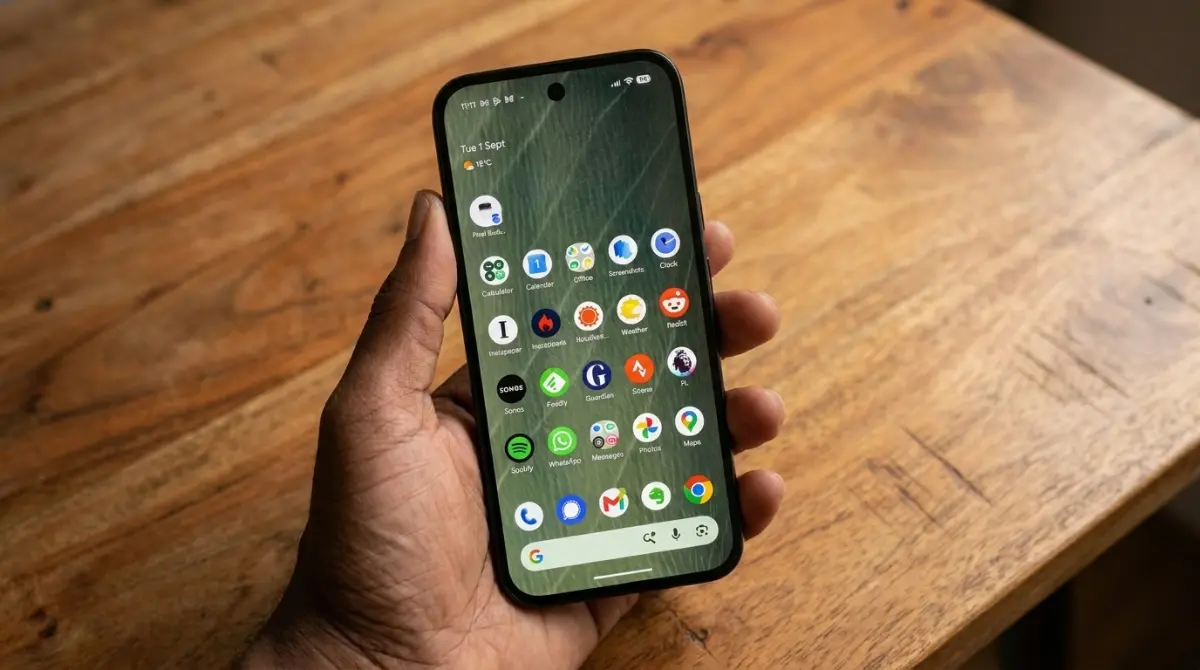


Google Hides Secret Pause Point Feature Inside Pixel 11
The search giant quietly slipped a powerful anti-addiction tool into its newest flagship devices without mentioning it during the official hardware presentation.
Umar Abubakar | 12 Sept. 2026 · 3 min read

I was digging through the settings menus of the newly released Google flagship when I stumbled across an interesting addition. During the massive hardware presentation earlier this month, executives spent hours discussing new camera sensors and artificial intelligence upgrades. They completely skipped over a software addition that might actually change how you interact with your device every single day. Buried inside the Android 17 Digital Wellbeing menu is a tool called Pause Point, and it is quietly serving as the most effective anti-addiction software the company has ever shipped.
We all know the feeling of unlocking a phone to check an email and suddenly losing thirty minutes to endless video feeds. Hardware manufacturers build these screens to capture our attention, creating a difficult psychological cycle to break. Google decided to attack this behavioral loop directly. When you activate this hidden setting, you choose the specific applications that eat up your free time, such as Instagram or TikTok. The next time your thumb taps that app icon, the operating system throws up a strict ten-second roadblock before the feed loads.
Breaking the Dopamine Loop
That ten-second window is not just a blank loading screen. The software forces you to interact with a mindfulness prompt. Users can configure the interruption to make them take a deep breath, review a personal daily plan, or even divert their attention to a different application entirely, like a language learning tool or a puzzle. You can configure multiple prompts and let the operating system cycle through them randomly. This tiny moment of friction breaks the automatic muscle memory that keeps us staring at our screens.
The engineering team made sure you cannot simply bypass the prompt when your willpower fades. If you decide the barrier is too annoying and try to switch it off, the operating system requires a complete device restart to apply the change. That hard reboot acts as a final psychological hurdle, preventing users from impulsively tearing down their own safety rails just to check another social media post. Finding ways to manage digital consumption is becoming a priority for hardware buyers, matching the consumer behavior we analyzed when testing the Oura Ring over a ninety-day honest review period.
Hardware Exclusivity and Strategy
The frustrating catch to this helpful software is its strict hardware limitation. Even though the tool relies entirely on Android 17, Google locked the feature exclusively to the Pixel 11, Pixel 11 Pro, and Pixel 11 Pro Fold. If you own an older model or a competing device from Samsung, you are completely out of luck. Keeping software additions locked to the newest hardware generation is a classic strategy to push consumer upgrades, even when older processors could easily handle the background task. It sends a clear message that digital health is a premium feature, available only to those willing to buy the latest device.
Third-party developers have offered similar application blockers on the Play Store for years. Tools like One Sec provide almost identical functionality for older Android devices and iPhones, proving the limitation is artificial rather than technical. Smartphone makers face increasing pressure to prove they care about user health without completely destroying their own screen time metrics. As manufacturers experiment with new physical form factors, they also have to rethink the software experience. We saw similar hardware friction when reviewing how Apple faced manufacturing delays regarding its foldable smartphone hinge durability.
Omitting this tool from the main launch event suggests Google wants to test the waters quietly. If users respond well to the forced friction, we might see it expand across the broader Android ecosystem. Until then, it remains a brilliant, silent guardian living inside the newest hardware.
Read More on TechRobust:
Umar Abubakar
 LinkedIn
Umar Abubakar
Expertise:Editorial Leadership, Product Design (UI/UX), Digital Media Strategy, Technology Systems, Product Architecture
Award:TechRobust Visionary Leader of the Year 2025
Umar serves as Editor-In-Chief and CEO of TechRobust, combining editorial vision with senior product design expertise to shape how modern technology stories are built, packaged, and told. Overseeing all editorial verticals, he directs coverage across global and regional tech landscapes while applying deep design thinking to publication strategy and reader experience.