
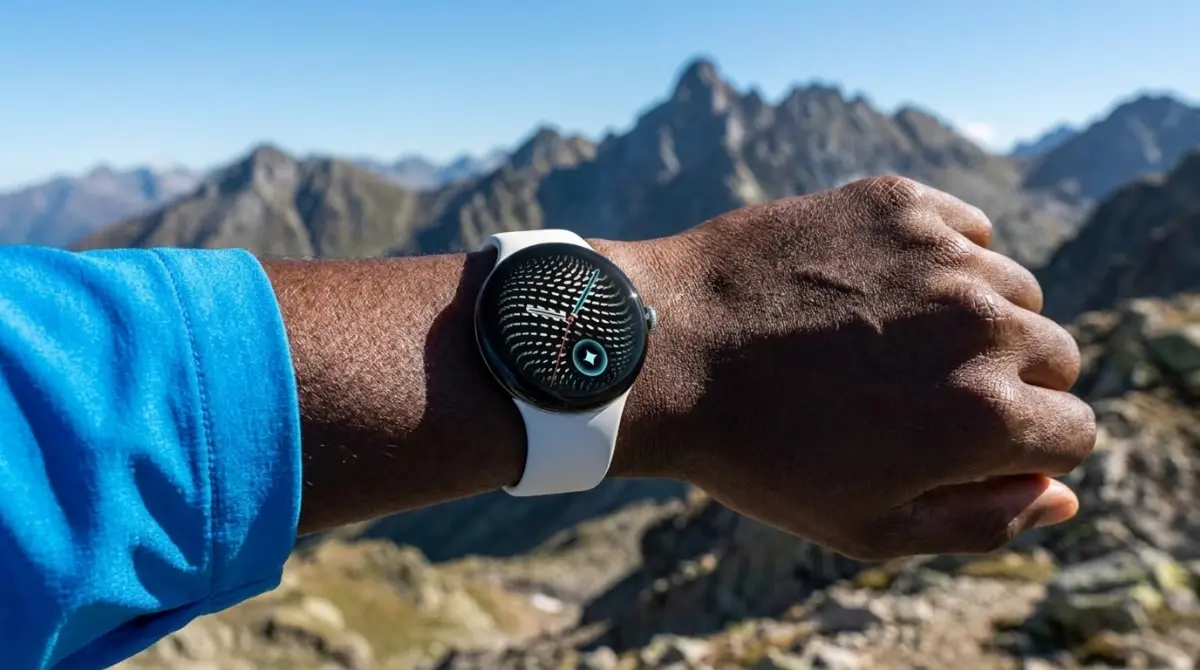


Google Updates Pixel Watch 5 With Gemini AI and Hand Gestures
The recent September software rollout brings offline artificial intelligence commands, advanced physical gesture controls, and highly accurate GPS route tracking to Google's newest smartwatch.
Umar Abubakar | 3 Sept. 2026 · 5 min read

Google recently introduced a massive software update for the newly released Pixel Watch 5. Identified as build CP3A.260905.002, this September package arrives shortly after the hardware hit store shelves. The manufacturer packed several major software changes into this release, focusing heavily on artificial intelligence and physical interaction. The most noticeable change involves how the wearable handles automated requests through Gemini.
Traditionally, wearable devices rely heavily on an active smartphone connection to process spoken commands. The new update changes this dynamic by introducing offline artificial intelligence processing directly on the watch hardware. Users can now set timers, start physical workouts, and activate the "Do Not Disturb" mode without needing an internet connection. Processing these commands locally speeds up the response time instantly.
To make interactions smoother, the engineering team improved the physical motion detection system. Raising the wrist to speak with the digital assistant works much more reliably now. This prevents the frustrating experience of lifting an arm and waiting for a microphone that never activates. The focus on reliable hardware interactions matches trends seen across the consumer electronics market. You can read our long term analysis in the Oura Ring review after a 90 day test.
Deep Integration With Personal Accounts
While offline processing handles simple tasks, the system switches to online retrieval for complicated questions. The software now looks directly into a user's wider digital footprint. If someone asks about an upcoming flight or a package delivery, the watch searches through connected applications like Gmail, Calendar, and Photos to find the exact answer.
This personalization creates a highly capable assistant on the wrist. Instead of pulling generic answers from search engines, the software provides answers that apply directly to the person wearing the device. The system mixes a local profile with live internet searches to deliver these responses quickly. You can read more about how the company develops these language models by visiting the official Google artificial intelligence blog.
The manufacturer also added a feature called Proactive Suggestions. This tool anticipates what a user might want to do next and presents a shortcut on the screen. This function carries a strict hardware requirement. To use proactive prompts, the watch must remain paired exactly with a Google Pixel 11 smartphone that has the proper settings activated.
Expanding Physical Gesture Controls
Touching a small screen while walking or carrying groceries is often difficult. To solve this problem, the September update heavily expands the list of physical hand gestures available to owners. A simple double pinch of the fingers now triggers several different actions depending on what is happening on the screen.
From the main clock display, double pinching opens the notification center or the daily summary screen. If the user is reading a long text response from the digital assistant, the same finger motion scrolls through the text automatically. The gesture also works inside the digital wallet to cycle through saved credit cards and inside the fitness application to cycle through running metrics. It even switches map views during active navigation and controls the audio recorder.
Alongside the pinching motion, turning the wrist now functions as a universal back command. This allows someone to exit a menu or close an application using only one hand. Google has slowly added physical shortcuts to its wearable operating system over the last year. This update represents the most aggressive push toward hands-free operation we have seen on the platform. Competitors in the mobile space are also adjusting how users interact with hardware, a trend we noted when covering the Apple September hardware event schedule.
Fixing Location Tracking Accuracy
Smartwatches live and die by their ability to track physical movement accurately. The new software brings major changes to how the device records location data during runs, bicycle rides, and hikes. The internal dual-frequency tracking chip now pairs with a much heavier post-processing system.
When a user finishes a workout, the software does not just draw a simple line on a map. It compares the raw location data against three-dimensional building models and atmospheric data to correct any signal errors. This background processing removes the jagged lines that often appear when running through dense city streets or under heavy tree cover.
Getting clean data in urban environments is notoriously hard for small electronics. Tall buildings bounce signals around, making the watch think the runner is zig-zagging across the street. The new processing tools attempt to filter out these bounces, resulting in a cleaner map and a much more accurate reading of total distance and running pace.
Missing Health Tools
Despite the heavy list of additions, a few promised tools did not make it into this release. When the hardware launched, executives promoted a new Health Guardian software suite. This package included tools meant to track blood pressure trends and insulin resistance patterns over time.
Neither of these medical features appears in the September notes. The company stated earlier that these medical tracking systems would arrive later in the year. Hardware reviewers expect these additions to roll out in a separate patch during October or November, once they clear any remaining regulatory testing. Even without the medical tools, the current software package gives buyers a highly capable piece of hardware that acts less like a simple screen and more like an independent computing device.
Read More on TechRobust:
Umar Abubakar
 LinkedIn
Umar Abubakar
Expertise:Editorial Leadership, Product Design (UI/UX), Digital Media Strategy, Technology Systems, Product Architecture
Award:TechRobust Visionary Leader of the Year 2025
Umar serves as Editor-In-Chief and CEO of TechRobust, combining editorial vision with senior product design expertise to shape how modern technology stories are built, packaged, and told. Overseeing all editorial verticals, he directs coverage across global and regional tech landscapes while applying deep design thinking to publication strategy and reader experience.