
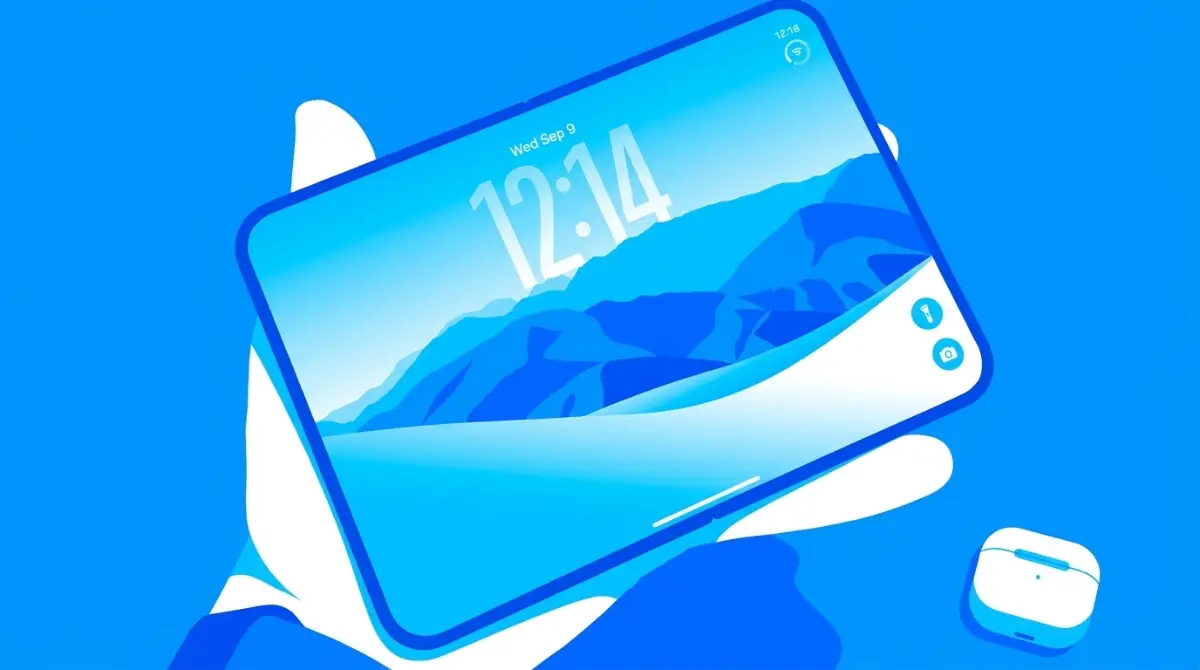


Hands-On With iPhone 18 Pro And The $2,000 iPhone Duo
TechRobust tests Apple’s inaugural foldable phone and updated flagships, revealing why polished animations outshine Samsung hardware despite steep prices and compromised cameras.
Umar Abubakar | 10 Sept. 2026 · 6 min read

Standing inside the Steve Jobs Theater demonstration area several seasons ago, I watched crowds of tech reviewers jostle for position around illuminated tables, holding identical glass rectangles against the studio lights. Year after year, the mobile industry fell into a comfortable ritual: minor camera bumps, incremental silicon bumps, and slightly adjusted chassis finishes designed to persuade shoppers to sign twenty-four-month carrier financing plans. The smartphone had become a solved problem, an appliance as predictable as a microwave. Yet walking through that same space as Apple unveiled its autumn lineup, the air felt genuinely charged for the first time in a decade. Tucked between refreshed pro handsets was something Cupertino resisted for seven long years: a folding phone carrying a jaw-dropping $2,000 price tag.
Veteran technology creator Marques Brownlee got hands-on time with the hardware directly following the keynote presentation, evaluating both the flagship iPhone 18 Pro series and the headline-grabbing iPhone Duo. The initial analysis, shared across his channels and documented on YouTube, points to an unusual split in product development. While standard pro handsets receive calculated internal upgrades, the folding device introduces an entirely new physical form factor to the iOS universe, taking direct aim at Samsung’s dominance across high-end international markets.
My years inspecting consumer hardware have made me cynical regarding manufacturer launch claims. Hardware brands excel at staging pristine keynote demonstrations where mechanical hinges glide smoothly and software transitions appear instantaneous. In real-world pockets, those same devices often suffer from creaky mechanical joints, fragile plastic layers, and awkward software scaling. Brownlee’s direct impressions provide a much-needed reality check on what Cupertino got right and where accounting compromises crept in.
Refining The Traditional Slab Handset
Before examining the foldable hardware, we reviewed the standard iPhone 18 Pro and Pro Max. From a physical distance, these devices look nearly identical to preceding editions, retaining established screen footprints, titanium rails, and overall chassis dimensions. The starting prices, however, took another step upward, beginning at $1,199 for the baseline pro and $1,299 for the pro max model. Older inventory still listed on store shelves also saw quiet $100 price increases across the board.
The internal improvements center around the new A20 Pro processor, fabricated on a cutting-edge 2-nanometer architecture with fifty percent greater memory bandwidth. Apple claims significant battery gains, asserting that the standard pro model matches the endurance of last season's pro max. The physical display cutout saw a twenty-five percent reduction in size, achieved by shifting the infrared biometric hardware beneath the active display pixels in the upper corner, freeing up horizontal space to support three concurrent live status activities.
On the back, the primary camera module incorporates a four-stop physical variable aperture lens. Rather than being permanently fixed wide open, physical blades inside the lens barrel contract and expand to regulate incoming light and natural depth of field. While Samsung experimented with dual-aperture mechanics on the Galaxy S9 nearly eight years ago, Apple’s implementation allows granular manual selection across four distinct stops on a modern, high-resolution sensor. The chassis color selections introduce a deep burgundy flagship tone, a glacier light blue, an updated uniform silver, and a requested true matte black finish.
The Anatomy of the Foldable Duo
The centerpiece of the showcase was unquestionably the iPhone Duo, marking the brand’s first fundamental form factor departure since the original smartphone debuted in 2007. The device adopts a passport-style book layout, featuring a 5.4-inch external display that unfolds along a titanium spine to reveal an expansive 7.6-inch interior panel. In hands-on handling, the device functions as a compact phone when shut and transforms into an iPad mini when opened flat.
Cupertino discarded standard facial recognition on the folding model entirely, placing a physical fingerprint scanner directly onto the right-hand power rail. The external screen features an asymmetric outline, rounded on the right flank while squared off on the folding hinge side. The operating system places its primary application dock along the right rail rather than anchoring it across the bottom bezel, optimizing thumb navigation for right-handed single-hand grips.
Opening the device triggers a fluid progressive crossfade animation that seamlessly transfers running applications to the interior canvas. The internal 7.6-inch panel features an anti-reflective matte coating that minimizes harsh ambient glare while masking the mechanical screen crease. Supported by carbon fiber internal backing plates and stiff ultra-thin flexible glass, the physical crease proved almost imperceptible under direct studio illumination, matching the smooth standards set by top-tier Asian folding handsets.
Software Polish Over Raw Spec Sheets
We compared the device directly against Samsung’s Galaxy Z Fold8, noting that while both devices share similar specifications like dual cameras, flagship processors, and slim profiles, Apple pulled ahead in interface polish. The transitions between external and internal panels execute instantly without the brief display stutter that frequently plagues competing Android foldables.
Clever hardware details stand out throughout the chassis. Volume switches reside along the top rail rather than the side edges, ensuring volume commands naturally track left-to-right orientation. The speaker enclosures are split diagonally, placing one driver on the front top and the second on the rear base, preserving balanced stereo separation whether the unit is held upright or propped on a desk. The device also achieved an unexpected IP68 environmental ingress certification, offering verified dust and water protection rarely found on folding hinges.
The internal software incorporates responsive split-screen multitasking gestures, allowing users to run tablet-optimized apps side by side. Propping the chassis half-open activates an ambient nightstand clock display, while upcoming firmware updates will add input support for the USB-C pencil accessory across both internal and external glass surfaces.
The Reality of Missing Flagship Features
Despite its $2,000 retail sticker, the foldable model makes several glaring technical compromises. To achieve an unbroken edge-to-edge canvas on the interior display, Apple hid the front selfie camera beneath the screen pixels. Hands-on video testing confirmed that the resulting image quality remains muddy and washed out, repeating the same image degradation that led competing phone brands to abandon under-screen optics on their own flagship devices.
The rear camera module lacks a dedicated optical telephoto lens, settling for a 48-megapixel main camera paired with a standard ultrawide sensor. Fast battery charging speeds and newer silicon-carbon battery chemistries were omitted entirely. The interface also enforces rigid limitations: the side dock remains locked to four applications without user expansion, and interface controls cannot be moved to the left rail for left-handed users.
These compromises reflect broader commercial friction across consumer electronics. Market demand for foldable devices has remained lukewarm among domestic shoppers, as tracked when Americans remained indifferent to purchasing foldable smartphones due to elevated costs. Production teams also navigated persistent factory hurdles, highlighted when reports confirmed Apple faced foldable iPhone manufacturing delays over hinge durability before greenlighting commercial assembly lines.
The timing carries corporate significance, arriving shortly after Apple appointed John Ternus as chief executive officer to oversee the post-Cook hardware era. Releasing an ambitious luxury folding device demonstrates technical bravado, but its commercial success will rely on international buyers, particularly in Chinese markets where foldable form factors outsell the rest of the globe combined.
With retail availability scheduled for October, the iPhone Duo stands as an impressive, flawed showcase of industrial design. It delivers the smoothest software integration and cleanest hinge mechanics the category has produced, but at $2,000, buyers must weigh sleek interface animations against missing camera zoom lenses and fragile flexible glass.
Read More on TechRobust:

Umar Abubakar
 LinkedIn
Umar Abubakar
Expertise:Editorial Leadership, Product Design (UI/UX), Digital Media Strategy, Technology Systems, Product Architecture
Award:TechRobust Visionary Leader of the Year 2025
Umar serves as Editor-In-Chief and CEO of TechRobust, combining editorial vision with senior product design expertise to shape how modern technology stories are built, packaged, and told. Overseeing all editorial verticals, he directs coverage across global and regional tech landscapes while applying deep design thinking to publication strategy and reader experience.