


iPhone Duo: The Foldable Copycat Crisis Android Faces
Apple finally released a foldable phone. Instead of pushing hardware boundaries, the iPhone Duo threatens to force Android competitors into a boring era of imitation.
Umar Abubakar | 13 Sept. 2026 · 9 min read

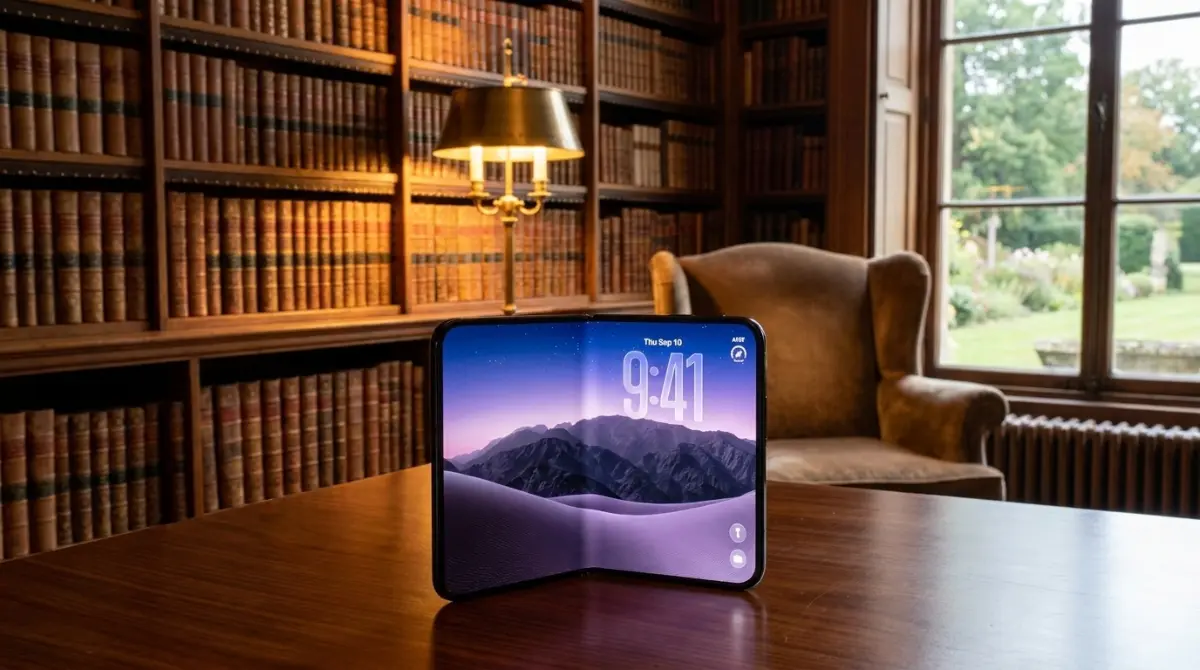
I stood in the packed demonstration room in Cupertino last Tuesday watching the global tech press lose their collective minds over a hinge. Apple finally debuted the iPhone Duo. After half a decade of watching Samsung and Huawei experiment in public, the California giant entered the foldable arena. The device feels heavy in the hand. The closing mechanism clicks with satisfying precision. Yet staring at the screen, I felt a heavy sense of disappointment. The physical engineering offers absolutely nothing new. Samsung released an identical form factor years ago. My fear does not stem from Apple releasing a boring product. My fear comes from what the rest of the industry will do in response.
Look at the financial mechanics behind this launch. The device retails for $2,000. Consumers are staring at a price point that rivals high-end laptop computers. Our recent tests with the iPhone Duo alongside the iPhone 18 Pro confirmed that Apple makes zero apologies for this premium. The executives know their audience will pay it. The ripple effect across the supply chain is what we must watch closely. Apple sets the financial ceiling for consumer electronics. When they prove that people will happily hand over two thousand dollars for a telephone, every other hardware manufacturer adjusts their spreadsheets immediately.
The Supply Chain Reality Check
Apple did not invent the flexible glass bending under my thumb. They simply bought it. My contacts inside the Asian component markets confirmed the uncomfortable truth that Apple writes massive checks to its biggest rival to make this phone possible. We recently reported that Apple pays Samsung roughly $250 for every single iPhone Duo screen. This creates a bizarre dynamic. Every time Apple sells their new flagship, Samsung accountants smile. The geopolitical balance of hardware manufacturing remains entirely tilted toward South Korea and China, no matter what PR spin comes out of California.
The reliance on Samsung Display exposes a massive vulnerability in American technological independence. Politicians in Washington draft legislation to curb foreign hardware dominance, but the most valuable company in the United States remains chained to overseas fabrication plants. If a trade dispute escalates between the United States and foreign powers, the production lines for the iPhone Duo halt immediately. Apple cannot source these flexible panels domestically. They simply do not have the infrastructure. The $40B valuations we see in American tech companies rely entirely on the manual labor and chemical engineering happening half a world away.
This is where the story shifts from a simple product review into a broader geopolitical narrative. Hardware is no longer just a consumer good. It represents national capability. Chinese factories can iterate on flexible glass formulas in weeks. American companies take years to approve a minor design tweak. The iPhone Duo is safe. It takes zero engineering risks. Apple waited for Samsung to suffer the embarrassing early failures with peeling screen protectors and breaking hinges. Once the Asian supply chain perfected the durability, Apple wrote a check and placed their logo on the back.
Software Supremacy vs Hardware Mediocrity
The physical phone might be a derivative piece of engineering, but the software tells a very different story. We have to give credit where it belongs. Android manufacturers spent five years throwing random floating windows onto large screens and hoping users could figure it out. It never worked smoothly. Apple took a completely different approach. They forced strict split-screen rules that feel intuitive immediately. You drag a photo from a message thread directly into an email with zero stutter. The transition feels perfectly natural.
This creates a massive problem for the competition. Google and Samsung now look like amateurs in the software department. Apple waited patiently for the underlying silicon to catch up with their software ambitions. They refused to release a foldable when the batteries drained in four hours. They waited until they could guarantee a full day of usage. This discipline makes the iPhone Duo infuriatingly good to use, even if the hardware looks like a carbon copy of a Galaxy Z Fold from three years ago.
Let us talk about the Google Pixel Fold for a moment. When Google released their own hardware, the tech press assumed it would serve as the ultimate showcase for Android software. It failed to do so. Apps refused to span the screen correctly. Social media feeds displayed massive black bars on either side of the content. Apple simply does not allow this broken experience on their platforms. They forced developers to update their code months ago under the guise of iPad updates. When the Duo launched, the ecosystem was already prepared. The software execution is flawless.
The Shenzhen Contrast
While American consumers debate the merits of a standard folding screen, the real hardware war wages in Shenzhen. I spent last month speaking with hardware engineers working in the Chinese supply chain. They view the iPhone Duo as a safe, almost timid product. Just days before Apple took the stage, Huawei announced the Mate XT. That device folds three times. It expands into a massive tablet and utilizes internal silicon that directly challenges American export restrictions.
The contrast speaks volumes about global risk tolerance. Chinese hardware companies operate with a chaotic, rapid prototyping mentality. They release wild concepts to the public and refine them in real time. Apple operates like a luxury watchmaker. They refuse to take risks. They prefer to let other companies spend billions in research and development, suffer the product recalls, and educate the consumer base. Once the market establishes a clear desire for the product, Apple steps in and claims they invented the category.
I find this strategy exhausting. As a journalist covering mobile gadgets for over a decade, I crave the weird prototypes. I miss the era when companies took massive swings and failed publicly. Apple has successfully convinced the world that slow, methodical refinement is superior to bold experimentation. The financial results prove them right. The profit margins are staggering. But from a pure technology enthusiast perspective, it feels incredibly sterile.
The Copycat Contagion
This brings me to my absolute biggest fear regarding this launch. Historically, the Android ecosystem suffers from a severe inferiority complex. We saw this when Apple removed the headphone jack. Samsung and Google mocked the decision publicly, ran television advertisements making fun of the choice, and then quietly removed their own headphone jacks twelve months later. We saw the exact same cycle with the screen notch. Android makers laugh first, then copy immediately.
Now that the iPhone Duo exists, I predict a catastrophic loss of creativity across the entire smartphone industry. Android companies that were experimenting with rollable screens, weird hinge designs, and distinct aspect ratios will panic. Their executive boards will demand that their engineering teams scrap years of distinct research just to build a cheaper clone of the iPhone Duo. The physical proportions of the Apple device will become the default template for every factory in Asia.
We are going to witness a complete homogenization of the foldable market. Companies like OnePlus and Motorola will look at the sales figures for the iPhone Duo and realize they do not need to invent anything new. They just need to make an Android version of exactly what Apple built. The unique, tall, narrow screens will vanish. The strange camera bumps will flatten out to match Cupertino. The entire industry will fall in line.
Why The Consumer Loses
When the entire industry rushes to copy a single manufacturer, the consumer eventually pays the price. We lose the fascinating devices that push the boundaries of what a portable computer can be. We enter an era of boring conformity. You will walk into a carrier store next year and see a wall of glass slabs that bend in the exact same spot, run the exact same proportions, and offer the exact same everyday utility. The only difference will be the logo stamped on the back.
The $2,000 price tag also creates a dangerous new ceiling. Because Apple normalized spending two thousand dollars on a telephone, you will see every other brand inflate their pricing structure. A company like Xiaomi or Oppo no longer needs to price their foldable at $1,200 to compete. They can raise the price to $1,600, claim it is a bargain compared to Apple, and pocket the difference. The barrier to entry for high-end hardware just became permanently higher for the average buyer. The entire market moves upmarket, leaving budget-conscious buyers with stale, outdated slab phones.
I also worry about the right-to-repair movement. Foldable phones are notoriously fragile. The internal screens scratch if you press a fingernail too hard. Dust enters the hinge and grinds the gears to a halt. Apple holds a notorious track record regarding independent repair shops. They lock components to the motherboard using software checks. If your $2,000 iPhone Duo breaks, you are entirely at the mercy of the Genius Bar. If Android makers copy this aggressive hardware lockdown strategy alongside the physical design, independent repair shops will face extinction within five years.
The Final Verdict
I left the demonstration room feeling a mix of respect and deep frustration. The device will sell millions of units. Wall Street analysts will praise the profit margins. Teenagers will beg their parents for one during the holiday season. The strategy worked perfectly. Apple executed their playbook with terrifying precision. They let their rivals bleed capital to build the foundation, and now Apple owns the house.
As someone who covers the intersection of global trade and consumer hardware, the launch feels like a white flag. It signals the end of the wild west era for flexible displays. The rules are now written. The template is locked in place. The iPhone Duo did not reinvent anything, but it will absolutely dictate everything. The copycats are already firing up their assembly lines, and we are about to endure a very long, very boring decade of smartphone design.
The only hope lies in the rebellious engineering labs located far away from Silicon Valley. Perhaps Huawei will refuse to conform. Perhaps a small startup will secure $40M in venture capital to build something completely unexpected. Until that happens, we must accept the reality of the market. Apple spoke. The rest of the industry will now echo their voice. The foldable revolution is officially over. The era of the foldable commodity has begun.
Read More on TechRobust:

Umar Abubakar
 LinkedIn
Umar Abubakar
Expertise:Editorial Leadership, Product Design (UI/UX), Digital Media Strategy, Technology Systems, Product Architecture
Award:TechRobust Visionary Leader of the Year 2025
Umar serves as Editor-In-Chief and CEO of TechRobust, combining editorial vision with senior product design expertise to shape how modern technology stories are built, packaged, and told. Overseeing all editorial verticals, he directs coverage across global and regional tech landscapes while applying deep design thinking to publication strategy and reader experience.