


Loft Orbital And Marlan Space Plan $1B AI Satellites
Loft Orbital and Abu Dhabi's Marlan Space formulate a $1B venture with Mistral to run autonomous reasoning clusters across low Earth orbit.
Inioluwa Ademidun | 11 Sept. 2026 · 6 min read

Standing on the observation gantry overlooking the launch pads at Cape Canaveral four autumns ago, I watched an engineer tighten an insulated thermal shroud around a commercial imaging satellite. He looked toward the telemetry dishes lining the coast and told me that the entire space data economy was handcuffed to the ground. Satellites captured terabytes of rich planetary imagery every single hour, yet ninety-nine percent of that data stayed trapped in flight recorders because microwave downlinks could only transmit tiny fractions of information while passing over ground receiver dishes. By the time an orbital photograph landed on an analyst's workstation, was decoded, and passed through image algorithms, forest fires had crossed highways and maritime vessels had sailed into contested straits. The space industry was pouring billions into building faster orbital cameras while leaving the brain on Earth. That operational mismatch broke down this morning as two international aerospace operators joined hands with Europe's premier model builder.
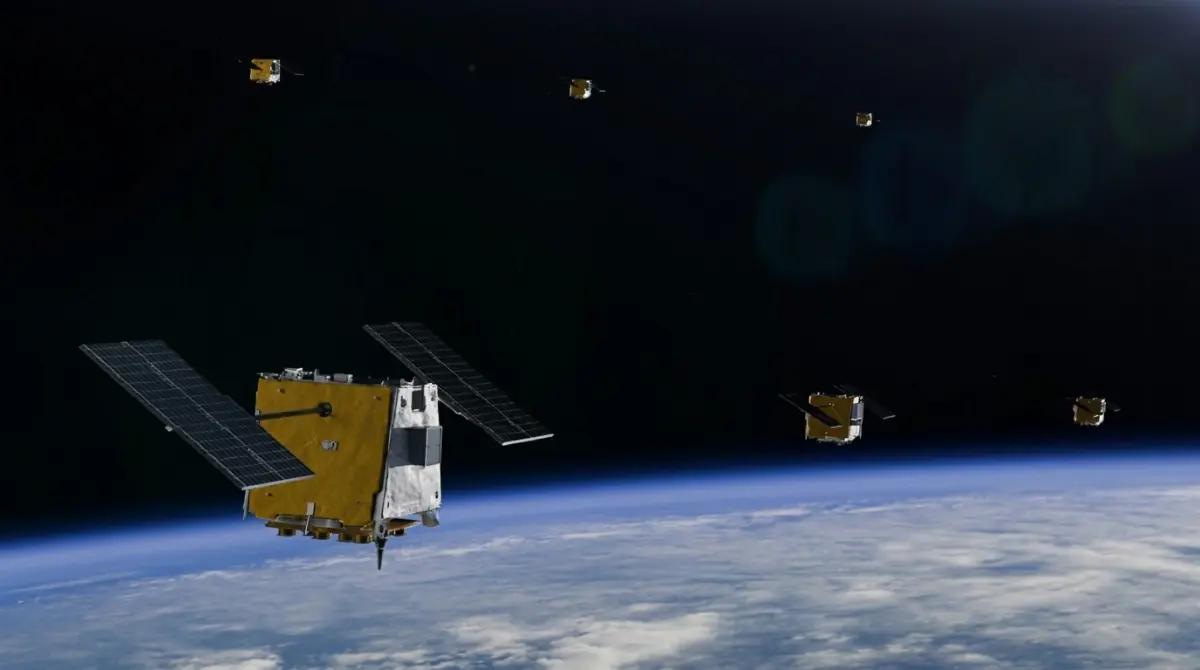
San Francisco space infrastructure company Loft Orbital has entered a joint venture pact with United Arab Emirates aerospace venture Marlan Space to construct a commercial constellation of compute-heavy satellites, according to reporting from The Next Web. The program targets a $1B capital deployment across multiple launch phases, designing fifty small satellites fitted with space-hardened graphics chips and edge servers. Steered by Loft Orbital chief executive Pierre-Damien Vaux and Marlan Space leadership, the initiative incorporates models from French software builder Mistral, installing localized reasoning weights straight onto satellite processors to analyze Earth observation streams in orbit.
My work investigating hardware financing and defense space programs has shown me how cautiously aerospace founders approached onboard computing. For decades, space agencies treated commercial silicon as too fragile for vacuum environments, relying on obsolete processors built thirty years ago because they could withstand cosmic radiation. That reluctance created an enormous commercial bottleneck. As optical sensors jumped in resolution, downlinks choked. Vaux and his partners understand that modern orbital operators cannot wait for ground stations to clear transmission queues. By placing generative reasoning models directly behind camera lenses 500 kilometers above the atmosphere, the coalition is moving satellite operations from passive data ferrying to real-time orbital intelligence.
The Architecture of Low-Orbit Compute Enclaves
To grasp why financial syndicates are backing a $1B orbital network, one must examine the physical realities of satellite communication. Standard Earth observation platforms gather high-resolution optical, hyperspectral, and synthetic aperture radar data. Transmitting those raw image files back to terrestrial servers requires establishing direct radio-frequency lines of sight with ground antennas. In typical low Earth orbits, a satellite passes over an authorized ground receiver station for only ten to fifteen minutes every ninety minutes, limiting data transmission windows.
The joint venture eliminates that communications bottleneck through edge processing. Each fifty-satellite bus carries space-rated hardware accelerators running quantized Mistral model checkpoints. Instead of beaming petabytes of uncompressed imagery down to terrestrial data centers, the onboard system processes visual pixels at the sensor interface. If an optical sensor photographs an ocean sector, the local software inspects the frames, detects dark shipping vessels moving without transponders, generates a structured incident summary, and beams an immediate tactical notification down through narrow telemetry links.
The system transforms satellite operations into an on-demand software environment. Commercial enterprises, defense commands, and humanitarian agencies can upload custom task directives directly to the orbiting cluster through standard web programming interfaces. Rather than purchasing bulk satellite photography that requires manual human evaluation, users receive finished analytic answers within minutes of an orbital pass.
This technical jump reflects wider industry movements to relocate computing workloads into orbit. We tracked similar industrial milestones when Kepler Aerospace secured $8M seed funding for autonomous military satellites to protect space communications, and when orbital manufacturing took root as Helogen raised $7.1M seed funding for in-orbit medical manufacturing. Moving complex computing from terrestrial server rooms into orbital altitudes is turning low Earth orbit into an active industrial district.
Sovereign Capital Meets Western Space Tech
The financial architecture supporting this $1B program illustrates the deepening ties between Western technology builders and Gulf sovereign investment syndicates. Abu Dhabi-backed Marlan Space brings substantial capital resources and Middle Eastern institutional support, while Loft Orbital contributes flight-tested satellite bus engineering and payload integration pipelines honed through commercial deployments with NASA and the European Space Agency.
The involvement of Mistral adds an important European deep-tech dimension. Founded by former researchers from DeepMind and Meta, the Paris-based model builder has championed efficient, open-weight language and multimodal architectures designed to maximize reasoning power per watt. Running computing workloads in space imposes unforgiving electrical limits: satellite solar wings generate limited watts, and dissipating operational heat in a vacuum requires complex thermal radiators. Deploying lightweight, highly optimized model weights is the only way to run generative software inside small satellite enclosures without cooking internal circuit boards.
This cross-border collaboration arrives as early-stage hardware founders face a rationalized venture environment. With traditional venture firms pulling back from capital-intensive hardware projects, partnering with sovereign aerospace operators provides young deep-tech ventures with the long-term balance sheet stability needed to finance rocket launches and cleanroom assembly lines.
The alliance mirrors broader strategic infrastructure alignments across the technology landscape. We observed massive capital mobilization when Crusoe secured a $3B funding round at a $30B valuation for data centers to lock down long-term energy supplies. Whether securing gigawatt grid connections on the ground or deploying solar-backed compute clusters into orbit, securing access to physical resources decides which platforms survive.
The Harsh Physics of Orbital Data Processing
While the commercial promise of orbital computing is vast, executing a fifty-satellite constellation presents unforgiving engineering hurdles. The low Earth orbit environment is notoriously hostile to modern silicon. High-energy solar protons and cosmic rays cause single-event upsets, flipping memory bits and corrupting neural weights during operational runs. Over prolonged mission lifespans, total ionizing radiation degrades transistor gates, causing catastrophic processor burnout.
Thermal regulation in space is equally brutal. Terrestrial data centers use high-volume air blowers and chilled water to cool server racks. In the vacuum of space, convection does not exist; heat can only be radiated away through physical radiator plates pointed toward cold deep space. Running high-intensity model evaluations generates intense localized heat spikes, requiring sophisticated thermal conductive loops to channel heat away from processing chips before silicon junction limits are breached.
Market competition is also accelerating. Established defense primes and commercial space giants are launching proprietary constellations, while telecommunications startups rush to deploy satellite broadband. Loft Orbital and Marlan Space must move rapidly from blueprinting to factory fabrication, proving their satellite buses can maintain continuous uptime in harsh orbital environments while delivering cost-effective analytic outputs to paying enterprise buyers.
The Next Frontier of Sovereign Compute
The $1B pact between Loft Orbital, Marlan Space, and Mistral marks an unmistakable shift in how human society handles spatial information. The era of treating satellites as dumb orbital mirrors that merely bounce light and signals back to terrestrial switchboards is coming to an end. The sky is filling with autonomous computing nodes capable of observing, interpreting, and reacting to global events as they happen.
By marrying Silicon Valley space engineering, Parisian algorithmic research, and Abu Dhabi sovereign capital, this joint venture is establishing the blueprint for the next generation of aerospace infrastructure. If the team delivers its fifty-satellite fleet on schedule, it will build an orbital nervous system for the planet, proving that the future of computing is no longer anchored to Earth.
Read More on TechRobust:

Inioluwa Ademidun
 LinkedIn
Inioluwa Ademidun
Expertise:African Tech Ecosystem, Early-Stage Startups, Emerging Market Dynamics, Venture Capital & Tech Reporting, Product Management
Award:TechRobust Contributor of the Year 2025
Inioluwa is a Senior Product Manager by day and an investigative technology reporter by night, bridging the gap between scalable software architecture and high-impact journalism. She delivers deep-dive analysis on venture-backed founders, regulatory shifts, and grassroots tech ecosystems across Africa and global emerging markets.