
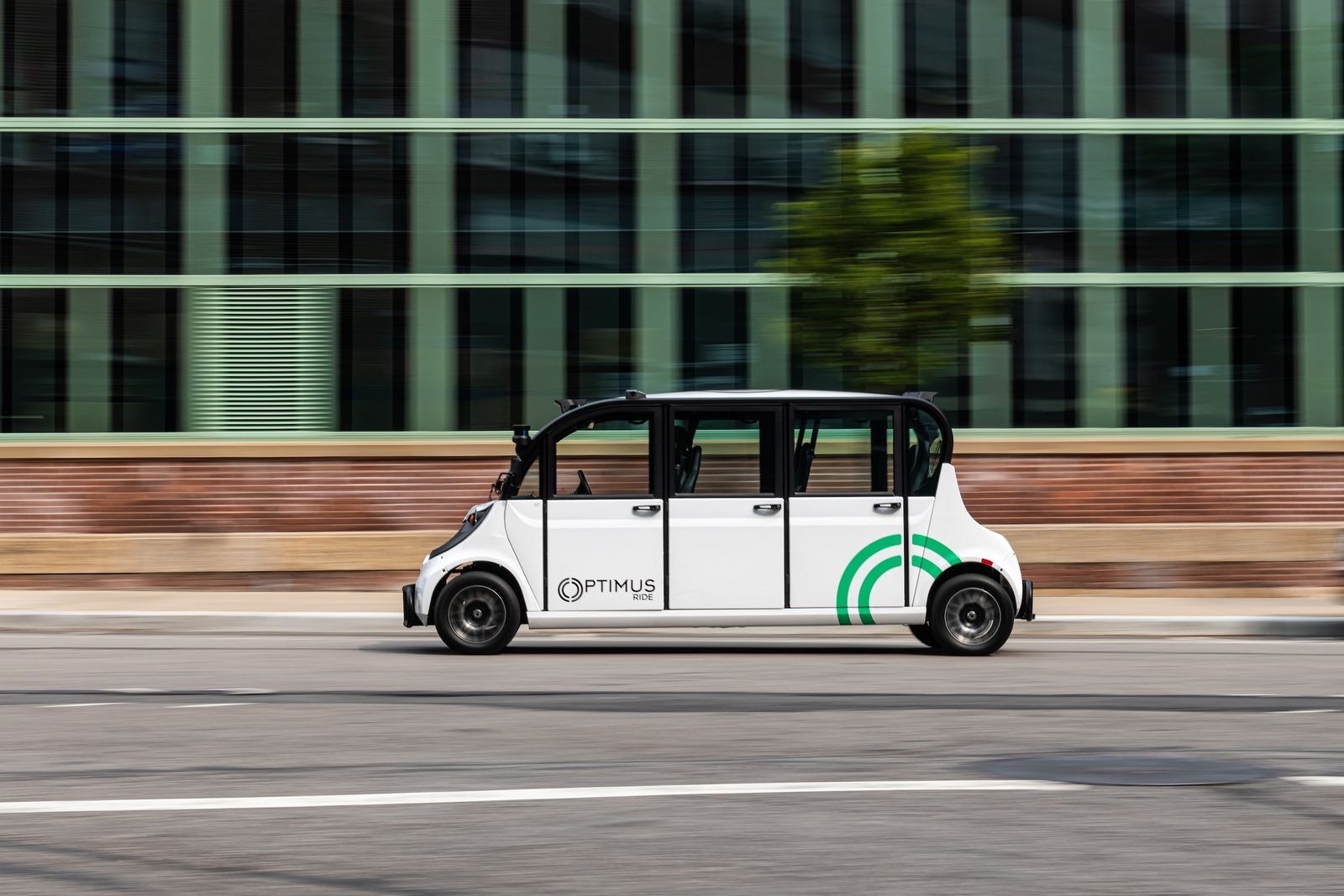


Optimus Ride to Launch Self-Driving Shuttle Service in Virginia Development
Optimus Ride is launching a small fleet of self-driving shuttles in a private Virginia development, signaling a more cautious approach to autonomous transport.
Umar Abubakar | 20 Mar. 2026 · 3 min read

A small-scale robot taxi rollout in Reston highlights a more grounded approach to autonomous vehicles.
A Boston-based startup, Optimus Ride, is preparing to introduce a limited self-driving shuttle service in Reston, Virginia. The company plans to operate a small fleet within a private development later this year, offering rides to tenants in the area.
The rollout is intentionally restrained. Only three vehicles will run on a fixed route connecting buildings to a parking facility. This controlled setup reflects a growing trend among autonomous vehicle companies to start with smaller, contained deployments rather than large public launches.
A Controlled Environment for Early Deployment
Optimus Ride, which originated from research at MIT, will keep its vehicles within a defined zone at Halley Rise, a newly built mixed-use development. The system relies on geofencing, meaning the vehicles are restricted to a mapped area and cannot operate beyond it.
Each shuttle will include a human safety operator as a precaution. While the company says its system can manage driving tasks within its designated area, these operators are present to step in if needed. The vehicles are also limited to speeds of 30 miles per hour.
Partnership with Brookfield Properties
The project is part of an agreement with Brookfield Properties, a global real estate company that owns and manages a wide range of commercial and residential spaces. If the Reston deployment proves successful, similar services could be introduced at other Brookfield locations.
Halley Rise itself is a large-scale development valued at $1.4 billion. Built on a 36-acre site, it is designed to include residential units, office space, retail areas, and public spaces for events and community use. The site is also expected to host a Wegmans Food Market in Fairfax County.
Following a Growing Pattern in the Industry
This type of limited rollout mirrors similar projects already underway in the United States. Startups have been introducing low-speed autonomous vehicles in places like retirement communities and suburban districts, where traffic conditions are more predictable and easier to manage.
Companies such as Voyage and Drive.ai have taken this approach, operating vehicles in tightly controlled areas with continuous monitoring. Other players, including May Mobility, Udelv, and Nuro, are also testing compact, low-speed autonomous vehicles on public roads.
Why Smaller Pilots Are Gaining Ground
Developing self-driving systems for busy city environments remains a major technical challenge. Even well-funded companies have faced delays as they work to ensure their vehicles can safely handle complex traffic situations and interact smoothly with pedestrians and other drivers.
While larger firms like Waymo, Uber, Ford, and GM Cruise continue to work toward broader launches, smaller startups are making steady progress through focused pilot programs that carry less risk.
More Testing Expected in the DC Area
Optimus Ride is not alone in bringing autonomous vehicles to the Washington, DC region. Argo AI, which is backed by Ford, has also announced plans to begin testing its technology in the area.
As more companies test their systems in controlled settings, these early deployments may play a key role in shaping how self-driving services expand in the years ahead.

Umar Abubakar
 LinkedIn
Umar Abubakar
Expertise:Editorial Leadership, Product Design (UI/UX), Digital Media Strategy, Technology Systems, Product Architecture
Award:TechRobust Visionary Leader of the Year 2025
Umar serves as Editor-In-Chief and CEO of TechRobust, combining editorial vision with senior product design expertise to shape how modern technology stories are built, packaged, and told. Overseeing all editorial verticals, he directs coverage across global and regional tech landscapes while applying deep design thinking to publication strategy and reader experience.