
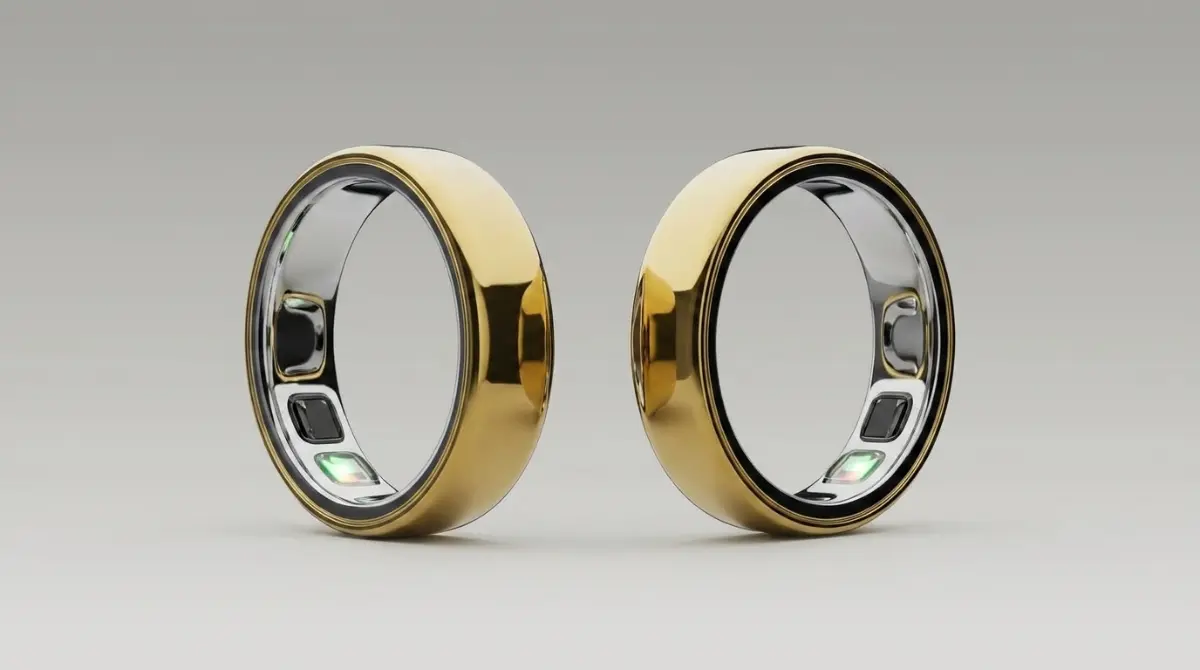


Oura Faces Rivals as Massive $16B Smart Ring IPO Approaches
Smart ring manufacturer Oura plans a massive public offering this year, but aggressively expanding hardware rivals want to steal its lucrative wearable technology market dominance.
Umar Abubakar | 6 Sept. 2026 · 5 min read

The wearable technology market is experiencing a massive shift as Oura prepares for a highly anticipated initial public offering. Recent reports indicate the Finnish health hardware maker could secure a valuation exceeding $16B when it hits the United States stock exchanges later this year. This financial event marks a major transition for the company that practically invented the modern smart ring category. While management finalizes their financial paperwork, a wave of well funded competitors is aggressively working to steal their customer base.
For nearly a decade, Oura operated without serious competition. The company built a dedicated following of athletes, executives, and health enthusiasts who preferred tracking their sleep from their fingers rather than wearing bulky watches to bed. The business recently closed a massive $875M Series E funding round last year, pushing its private valuation to roughly $10.9B. The upcoming public offering aims to capitalize on that momentum. If you want to understand how the actual hardware performs in daily life, you can read our recent ninety day testing of the Oura Ring to see why it originally captured so much attention.
The Heavyweight Challenger Enters
The biggest threat to the impending public offering comes from South Korea. Samsung recently entered the smart ring category with its Galaxy Ring, bringing massive manufacturing capabilities and an existing user base of millions. Unlike smaller startups, Samsung does not need to build brand recognition from scratch. They can market their new wearable directly to people who already own their smartphones and wireless earbuds.
The Galaxy Ring offers a distinct financial advantage over the market leader. Oura requires customers to pay a recurring monthly fee to access their detailed health data. Samsung decided to skip the subscription model entirely. Buyers pay a higher initial price for the hardware, but they never have to pay another dime to view their daily sleep scores or heart rate metrics. This decision puts immense pressure on Oura to justify its recurring fees right as it asks Wall Street investors to buy its stock.
Major electronics manufacturers are realizing that the finger provides better biological data than the wrist. We are seeing intense product scheduling across the entire electronics industry right now. You can see similar competitive pressure building in the smartphone sector, especially as Apple schedules its own hardware presentations to maintain its grip on consumer hardware sales.
Startups Pushing the Technical Limits
Beyond massive corporations like Samsung, a group of hardware startups is also fighting for market share. Companies like Ultrahuman and RingConn are releasing devices that directly challenge the technical specifications of the market leader. The Ultrahuman Ring Air focuses heavily on comfort, offering an incredibly lightweight titanium shell that users barely notice while sleeping. RingConn prioritizes battery life. Their second generation device can last up to fourteen days on a single charge, nearly double what Oura currently offers.
These smaller competitors are also adopting the subscription free model. By offering comparable biological tracking without monthly fees, these brands appeal to cost conscious shoppers who refuse to add another recurring charge to their credit cards. To defend its premium pricing, Oura continues to add highly specialized software features. They recently introduced advanced cardiovascular tracking and detailed reproductive health insights, hoping these specialized tools will convince users that the monthly fee is worth the money.
Why the Finger Beats the Wrist
The sudden rush to build rings rather than watches stems from simple human biology. Blood vessels located in the fingers sit much closer to the surface of the skin compared to the wrist. This anatomical difference allows optical sensors to capture a much cleaner pulse signal. When a person wears a smartwatch, wrist movement often introduces noise into the data. A properly fitted ring stays perfectly aligned with the capillaries, providing highly accurate heart rate variability and blood oxygen readings.
Scientists and medical researchers consistently prefer finger based tracking for sleep studies. The palmar side of the finger features less melanin and more consistent skin thickness, making it easier for infrared sensors to penetrate the tissue. The only downside is that a ring must fit perfectly. While a watch strap can easily adjust to a swelling wrist, a ring made of solid titanium cannot change its size. This sizing requirement forces manufacturers to send plastic sizing kits to customers before shipping the actual electronics, adding a complicated step to the purchasing process.
The Financial Stakes for Investors
As Oura files its confidential paperwork for a public listing, institutional investors are analyzing these competitive threats closely. The company employs nearly one thousand people and requires massive capital to keep its software algorithms updated. If competitors successfully pull away a large percentage of potential buyers using subscription free models, Oura might struggle to maintain the revenue growth required to justify a $16B valuation.
The wearable technology sector has a history of brutal hardware wars. Companies that once dominated the fitness tracker market eventually folded or sold themselves to larger technology firms when profit margins collapsed. Oura must prove to Wall Street that its software ecosystem, established clinical partnerships, and massive database of historical biological data create a defensive wall that competitors cannot easily breach.
The next few quarters will determine whether Oura can hold onto its crown or if the smart ring market will fragment into a dozen different brands fighting for the same fingers. Hardware manufacturing is notoriously difficult, and the company must now balance the demands of public shareholders with the relentless pressure of international competition.
Read More on TechRobust:
Umar Abubakar
 LinkedIn
Umar Abubakar
Expertise:Editorial Leadership, Product Design (UI/UX), Digital Media Strategy, Technology Systems, Product Architecture
Award:TechRobust Visionary Leader of the Year 2025
Umar serves as Editor-In-Chief and CEO of TechRobust, combining editorial vision with senior product design expertise to shape how modern technology stories are built, packaged, and told. Overseeing all editorial verticals, he directs coverage across global and regional tech landscapes while applying deep design thinking to publication strategy and reader experience.