
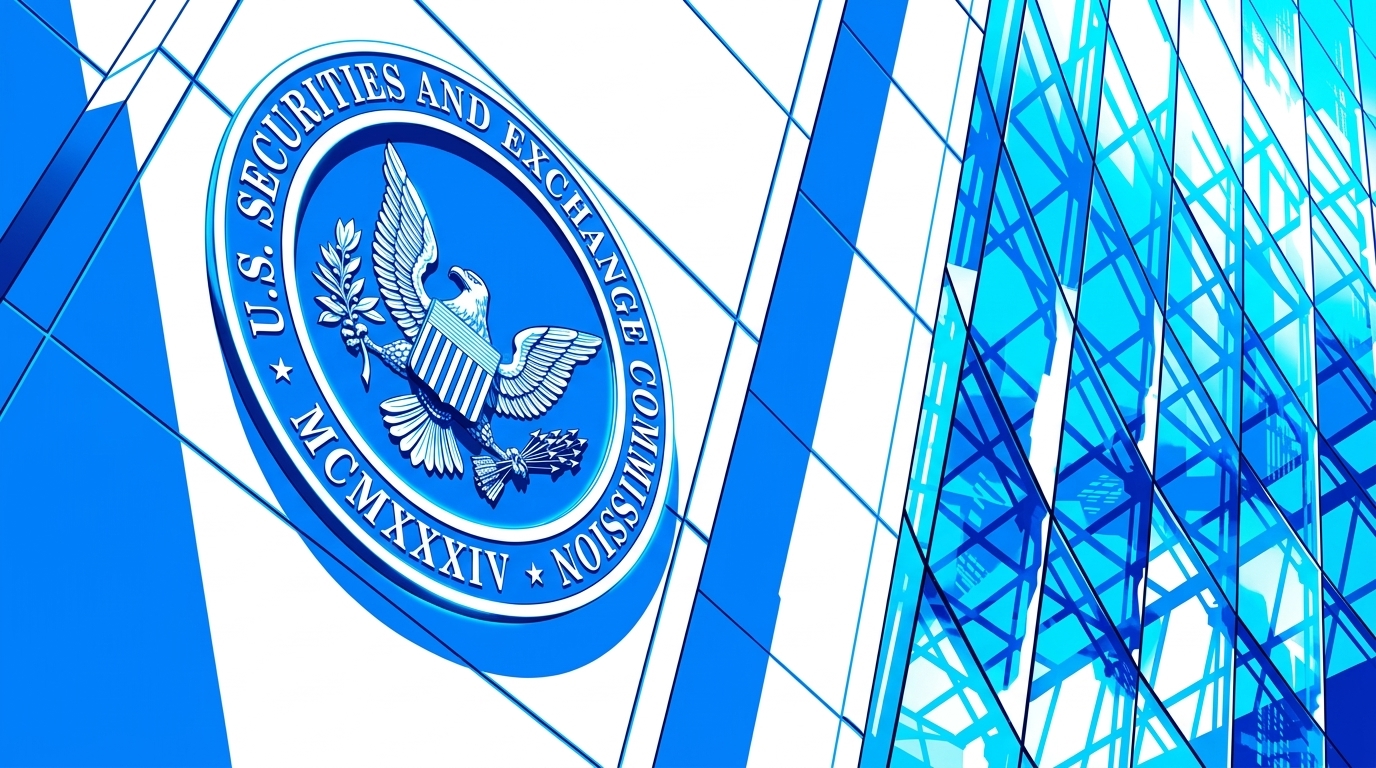


SEC Demands Investment Firms Prove Ownership of Private Startup Shares
The United States Securities and Exchange Commission is aggressively investigating secondary investment funds to verify actual ownership of highly sought shares in private technology startups.
Umar Abubakar | 1 Sept. 2026 · 6 min read

The demand for private technology equity reached extreme levels over the past two years. Retail buyers and institutional funds desperately want early access to major companies before they hit public stock exchanges. Heavyweights like SpaceX, Anthropic, and Perplexity remain entirely private, forcing eager buyers to look for alternative entry points. This desperation birthed a massive secondary market built on special purpose vehicles and complex holding structures. Now, federal regulators are stepping in to ask a very simple question. Do these investment funds actually hold the stock they claim to sell?
The United States Securities and Exchange Commission recently launched a targeted crackdown on firms operating within this pre-IPO space. Regulators want financial institutions to prove they possess the underlying assets promised to their clients. In back to back legal actions filed in August 2026, the federal agency charged two separate fund operators with severe violations. These legal actions highlight the massive risks associated with buying unofficial tech equity through third party intermediaries.
The Spaventa Group Investigation
One of the most prominent cases involves a Long Island financial institution called The Spaventa Group. Federal regulators sued the firm and its founder, Andrew Spaventa, alleging they misled hundreds of people looking for early access to technology startups. Between late 2020 and mid-2025, the firm collected more than $74M from over 800 investors. The sales teams reportedly used aggressive cold calling tactics to attract buyers, promising direct exposure to companies like SpaceX, Anthropic, and Anduril.
The federal complaint outlines a disturbing pattern regarding how these transactions actually worked. The firm allegedly told clients there were no hidden fees attached to their investments. Regulators claim the reality looked much different. Entities controlled by Spaventa reportedly bought the private shares first, then immediately resold them to their own managed funds at massive markups.
The price differences proved staggering. According to the federal filings, Anthropic shares originally purchased between $32.62 and $41.53 were resold to the client fund at $58.50. SpaceX stock acquired at $595 was allegedly flipped to clients for $975. In some instances, the markup reached as high as 91 percent above the original acquisition cost. The agency estimates the defendants collected roughly $23M in undisclosed charges through these aggressive pricing strategies.
What makes this detailed case alarming is the target demographic. Out of the 800 individuals who invested money, more than 650 contributed $100,000 or less. Over 100 of these buyers were retirees. These are exactly the types of vulnerable buyers regulators try to protect from high pressure sales tactics. The government noted that some of the collected money was allegedly used for luxury vehicles, personal travel, and home renovations. Spaventa officially denies the allegations.
Adit Ventures and Hidden Spreads
The crackdown did not stop in Long Island. Just days before the Spaventa lawsuit, regulators charged Adit Ventures Management and its chief executive, Eric Munson, with similar violations. The federal agency accused Munson of falsely telling clients that his fund held private company equity that it did not actually possess.
The complaint details allegations of self dealing and unauthorized loans. In one isolated transaction highlighted by the agency, a general partner acquired an interest equal to roughly 13,100 shares of SpaceX at $420 per share. Just weeks later, that exact same interest was sold to a client fund for $498 per share. This quick flip generated a spread of approximately $1M, and the true acquisition cost remained hidden from the people actually providing the capital.
These enforcement actions expose a widespread issue within alternative investment circles. Sellers are utilizing special purpose vehicles to group individual buyers together. A buyer thinks they are purchasing SpaceX or OpenAI equity, but they are actually buying a small slice of a limited liability company that holds a contract to acquire that equity later.
The Disconnect Between Contracts and Actual Ownership
This layered structure creates a massive gap between perceived ownership and legally accepted ownership. Unlike public stocks traded on massive exchanges, private company equity is not freely transferable. Technology startups carefully guard their capitalization tables. They impose strict transfer restrictions, require formal board consent, and enforce rights of first refusal before any shares can change hands.
Secondary market brokers often attempt to bypass these restrictions by writing forward contracts or derivative agreements. The buyer assumes they own the stock, but the startup issuing the shares does not acknowledge them as a legitimate owner. The capitalization table remains unchanged, and the buyer only possesses a contractual claim against the intermediary firm.
If the underlying transfer never receives official approval, the investor holds nothing but an empty promise. When scaled across thousands of transactions, this systemic issue creates massive legal liabilities. You can read more about how federal agencies oversee private markets by reviewing recent financial enforcement updates from Reuters.
Tech Companies Fight Back
The startups themselves are growing tired of these unauthorized secondary sales. High profile issuers like Anthropic and OpenAI are actively pushing back against intermediaries who try to bundle and sell exposure to their companies. These technology giants are threatening to void any stock transfers that occur without their direct permission.
If a company officially voids a transfer, the special purpose vehicle holding the investment suddenly becomes worthless. The end buyer loses their entire principal, and the intermediary firm faces a wave of civil lawsuits from angry clients. By cracking down on unauthorized trades, startups hope to regain control over who gets to profit from their success before an initial public offering takes place.
The Tokenization Question
Some financial engineers suggest moving private equity onto blockchain networks to solve these ownership disputes. The theory is that tokenizing the shares would provide a transparent, immutable ledger showing exactly who owns what. Smart contracts could automatically enforce transfer restrictions, guaranteeing that trades only process if the buyer meets accredited status and the startup grants approval.
Yet, regulators remain highly skeptical of this proposed solution. Federal officials recently stated that moving a security onto a blockchain does not alter how federal laws apply to that asset. Tokenization alone does not guarantee actual ownership of the underlying stock. The federal agency is less concerned with the technological structure of the investment product and far more focused on whether the seller actually holds the equity they are promising to deliver.
Protecting Retail Capital
These recent lawsuits serve as a loud warning to the entire alternative investment industry. Fund managers relying on certain exemptions must verify that they are investing directly in qualifying assets. If a fund operates entirely by buying secondary shares through intermediary networks, they might need to formally register with federal authorities.
Firms must also establish completely independent valuation methods for unlisted equity. Transparency regarding true acquisition costs and management fees is no longer optional. Every markup, transaction fee, and administrative charge must be clearly disclosed in the original offering documents.
For retail buyers, the message is equally clear. The excitement surrounding artificial intelligence and aerospace technology makes it incredibly tempting to jump at the first available investment opportunity. Buyers must demand proof of actual ownership before wiring money to an unlisted fund. If a broker promises guaranteed access to a private unicorn without explaining exactly how they secured board approval for the transfer, buyers should walk away immediately.
None of the technology companies mentioned in these federal complaints, including Perplexity and Anduril, have been accused of any wrongdoing. The fraud allegations rest entirely on the fund operators who allegedly misrepresented their fees and asset holdings to unsuspecting clients. As the government continues digging into these secondary trading networks, more enforcement actions will likely surface before the end of the year.
Read More on TechRobust:

Umar Abubakar
 LinkedIn
Umar Abubakar
Expertise:Editorial Leadership, Product Design (UI/UX), Digital Media Strategy, Technology Systems, Product Architecture
Award:TechRobust Visionary Leader of the Year 2025
Umar serves as Editor-In-Chief and CEO of TechRobust, combining editorial vision with senior product design expertise to shape how modern technology stories are built, packaged, and told. Overseeing all editorial verticals, he directs coverage across global and regional tech landscapes while applying deep design thinking to publication strategy and reader experience.