
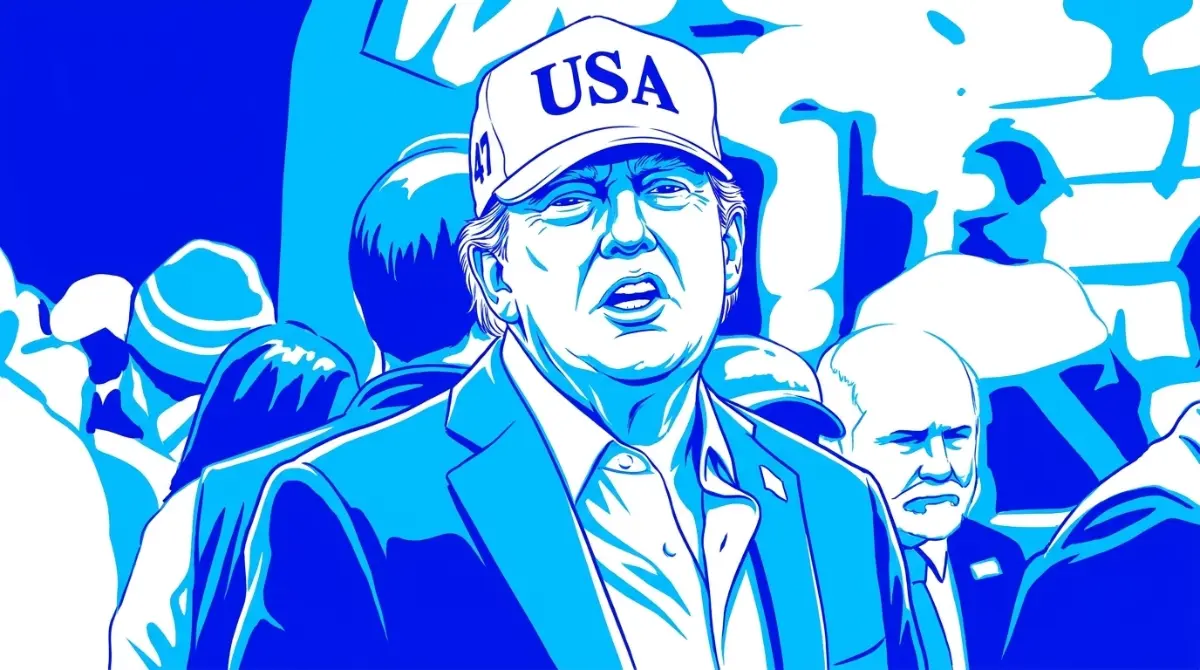


Trump Blasts Exaggerated AI Safety Fears and Doomers
Former President Donald Trump dismissed mounting artificial intelligence safety warnings, accusing specific detractors of intentionally stifling American technological dominance through coordinated fearmongering campaigns.
Umar Thariwat | 13 Sept. 2026 · 8 min read

I sat in a crowded Washington press room early Sunday morning when the rhetoric around machine intelligence changed entirely. The political establishment usually treats technology policy with measured caution. Politicians read prepared statements about balancing innovation and security. Donald Trump threw that playbook out the window. During a sprawling morning address, he pointed a finger directly at the rising chorus of technology executives demanding regulatory intervention. He called their warnings exaggerated. He claimed "very negative forces" were using the guise of safety to intentionally sabotage American commercial dominance.
We are witnessing a massive ideological collision. For the past fifteen years, my time covering Silicon Valley has revealed a predictable pattern. Tech founders build aggressively, break old systems, and then apologize when Congress hauls them in for hearings. Today, the script is reversed. Leaders at companies building advanced neural networks are begging for government oversight. Top researchers actively urge a slowdown in training future systems, citing existential risks to humanity. Trump is effectively telling them to stop whining and keep building.
The War Against the Doomers
The former president did not name specific companies, but my sources close to his advisory circle confirm the intended targets. The comments arrive directly after highly publicized internal debates at major laboratories. Just days ago, leaked communications showed leadership at leading firms floating the idea of pausing development. The argument centers on the sheer unpredictability of models scaling at an exponential rate. Detractors argue that without strict guardrails, we invite catastrophic biological or cyber warfare scenarios.
Trump views this entire narrative through a strictly transactional and geopolitical lens. He sees international trade and technological superiority as a zero-sum game. If researchers in San Francisco pause their server clusters to debate ethics, he argues, state-sponsored engineers in Beijing will simply keep their foot on the gas.
"They want you to be afraid," he announced to the crowd, leaning into the microphone. "These very negative forces tell you the machines will take over. It is a scam to make you stop building. They want to tie our best companies up in red tape while other countries steal our lunch."
The Billions on the Line
Let us examine the money involved. Building a frontier intelligence system is no longer a small startup endeavor. It requires massive physical infrastructure. Companies are securing funding rounds north of $40B just to construct the necessary data centers and secure advanced silicon. We are talking about capital expenditures that rival the gross domestic product of small nations. When a political figure of Trump's magnitude signals that he opposes regulatory speed bumps, Wall Street listens immediately.
I spent the afternoon texting investment bankers who handle technology mergers and acquisitions. The reaction was electric. Financial institutions hate uncertainty. The constant threat of a sudden federal freeze on algorithm development has kept some conservative capital sitting on the sidelines. A promise of unrestricted commercial expansion acts like a green light. One managing director told me the speech alone might push several pending initial public offerings across the finish line before the fiscal year ends.
The geopolitical stakes make this debate incredibly volatile. You cannot discuss algorithm policy today without analyzing the global chessboard. Foreign state media outlets recently urged high-level bilateral talks to establish mutual safety guidelines. The underlying tension is palpable. The United States currently holds a commanding lead in raw computational power and engineering talent. Why would American leadership agree to self-imposed limitations?
Inside the Accelerationist Movement
Trump's aggressive stance perfectly mirrors the accelerationist movement brewing in the Bay Area. A growing faction of engineers and venture capitalists actively despise the doomer mentality. They believe that hyper-scaling machine intelligence will cure diseases, solve energy crises, and usher in unprecedented economic abundance. They view anyone demanding a pause as a coward or a stealth agent working for competing foreign powers. When Trump references negative forces, he is directly speaking the language of these high-profile investors.
We must look closely at the timing of this rhetoric. Federal agencies are currently investigating the market dominance of several big tech partnerships. Regulators want to know if the multi-billion dollar agreements between established cloud providers and smaller startups violate antitrust laws. The current administration has taken a harsh, skeptical view of these arrangements. By positioning himself as the ultimate champion of unhindered development, Trump is actively courting the wealthiest political donors in California. He is offering them a very simple trade. Give me your support, and I will keep the federal government out of your server farms.
The Reality of the Threat
Let us review what happens behind closed doors. I recently spoke with a former defense intelligence officer who now consults for major tech firms. He painted a terrifying picture of the actual threats facing these systems. We are not talking about rogue robots taking over the world. We are talking about hostile nation-states using open-source models to generate hyper-specific phishing attacks at scale. We are talking about automated systems mapping out vulnerabilities in the national power grid in seconds. These are the concerns keeping serious security professionals awake at night.
When politicians dismiss these warnings as exaggerated fearmongering, they create a dangerous permission structure. Engineers feel less pressure to stress-test their products before shipping them to the public. The focus shifts entirely to releasing the model faster than the competitor. I have seen this movie before during the early days of social media. The mantra was to move fast and break things. We are still dealing with the societal fallout of that philosophy. Applying that same reckless mentality to systems that write code and synthesize chemical formulas is a massive gamble.
Yet, the populist appeal of Trump's message is undeniable. Average citizens are tired of wealthy tech executives acting like self-appointed philosophers. When a billionaire CEO tells the public that his own product is too dangerous for normal people to use, it sounds incredibly arrogant. It sounds like gatekeeping. Trump taps into that exact resentment. He frames the safety debate as a conspiracy by elite insiders to hoard the benefits of the technology for themselves.
"They tell you it is too complicated for you," Trump stated, drawing loud cheers. "They want to lock it up in a little room and only let their friends use it. We are not going to let that happen. We are going to make it massive, and it will be American."
Physical Limits and Labor Realities
To truly grasp the magnitude of Sunday’s rhetoric, we must look at the supply chain. Building a single gigawatt data center requires copper, specialized cooling equipment, and thousands of highly skilled technicians. I spoke with a logistics director at a major contractor managing these builds. The bottleneck is no longer money; it is physical reality. The power grid in several states can barely handle the current load. Yet, the political messaging now demands that we push harder and build faster. When a political mandate matches corporate greed, environmental impact studies suddenly disappear from the conversation.
We also have to consider the labor market. The fear of mass automation is a very real political issue. Millions of workers worry that their jobs will be replaced by software within the next three years. By framing the expansion of technology as a patriotic duty, politicians can sidestep the uncomfortable conversations about displaced workers. The argument becomes simple. Yes, the transition might be tough, but if we do not win this race, a foreign adversary will control our economy.
This brings us back to the original point of contention. Are the safety concerns actually exaggerated? I have interviewed dozens of head researchers over the past decade. The truth is usually found somewhere in the muddy middle. The apocalyptic scenarios involving autonomous weapons systems deciding to wipe out humanity are likely overblown. They make for great movie scripts but poor policy discussions.
However, the immediate threats are completely valid. We are already seeing a massive increase in synthetic media designed to manipulate elections. Financial fraud is becoming incredibly sophisticated because scammers can clone voices and generate realistic video on demand. The systems are hallucinating false legal precedents and providing dangerous medical advice. Funding rounds for hardware infrastructure companies routinely exceed $40M in their very early stages, pouring gasoline on a fire that nobody knows how to extinguish.
The Global Trade Rift
I want to take you inside a specific dinner conversation I had last month in Palo Alto. The table included two founders of unicorn-status software companies and a prominent venture capitalist. After the third round of drinks, the masks came off. They openly mocked the safety boards at their rival organizations. They viewed any delay in product shipping as a fatal weakness. Their entire worldview is based on dominance. If you are not first to market, you are dead.
That is the exact energy Trump is channeling. He is validating the most aggressive impulses of the technology sector. He is giving them political cover to ignore the critics and push the physical limits of their hardware.
The international community will react poorly to this development. European regulators have spent years drafting strict laws to restrict high-risk applications of machine intelligence. They want to set the global standard for ethical software development. If the United States completely abandons any pretense of caution, it will cause a massive trade rift. We could see a fractured internet, where American models are banned in foreign jurisdictions because they refuse to comply with safety audits.
The stakes are incredibly high. We are not debating the features of a new smartphone. We are deciding the architecture of the next fifty years of human communication, warfare, and commerce. The assertion that negative forces are simply making up safety concerns is a dangerous oversimplification. It reduces a complex scientific debate into a cheap political talking point. Unless a massive, catastrophic failure occurs to prove the critics right, the money will continue to flow into unregulated expansion.
Read More on TechRobust:

Umar Thariwat
 LinkedIn
Umar Thariwat
Expertise:Tech News Reporting, Tech Business Analysis, Economic Foundations, Market Trends, Digital Economy
Award:Rising Voice of the Year 2025
Thariwat is a Staff Writer and Reporter covering tech news and enterprise trends at TechRobust. Blending daily reporting with her ongoing academic background in economics, she analyzes earnings, digital market, and the commercial strategies powering the global tech sector.