
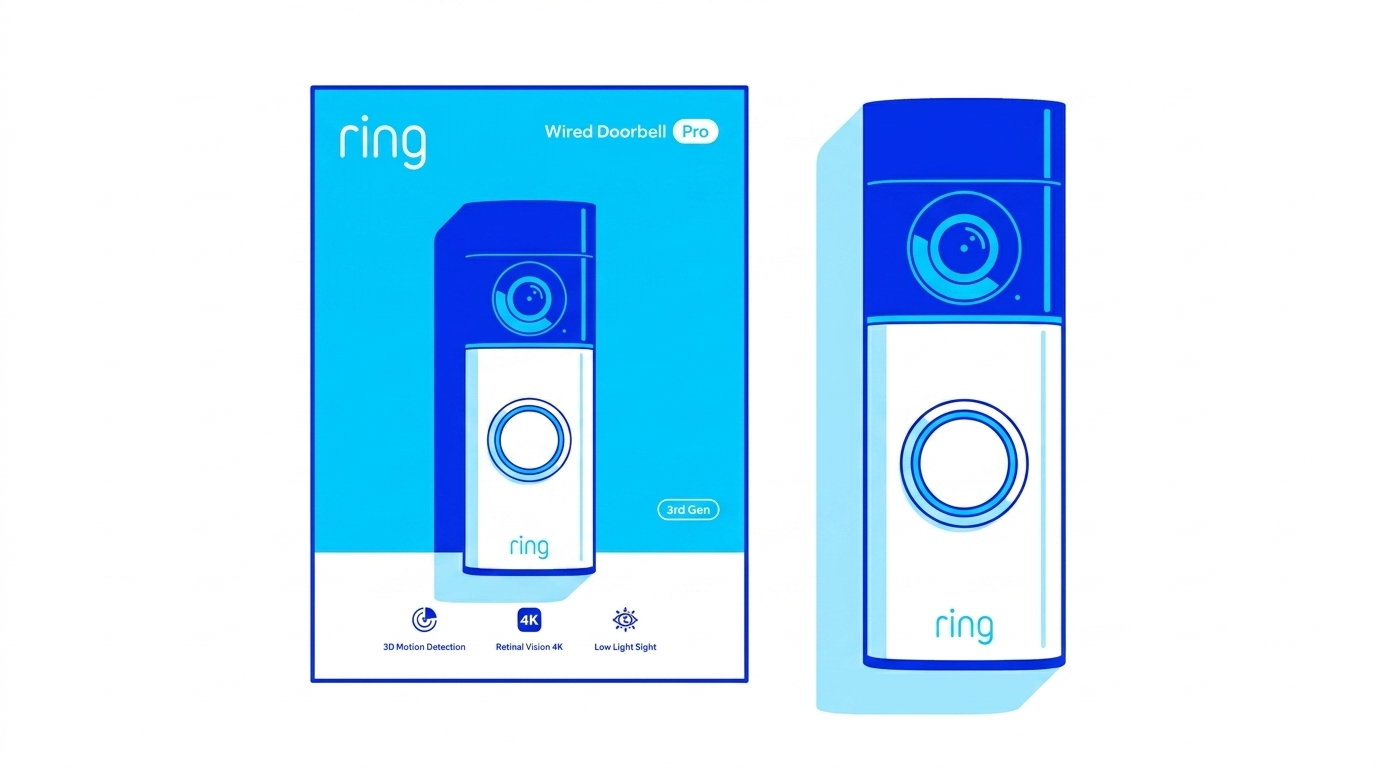


Amazon Ring Introduces New Privacy Default to Ease Surveillance Fears
Ring announced a new default security system that promises better privacy for users without sacrificing the smart features that make its video doorbells so popular.
Umar Abubakar | 30 Aug. 2026 · 5 min read

Amazon owned Ring is updating how it handles recorded video. On August 26, 2026, the company introduced a new default setting for its cameras and doorbells. The updated system goes by the name TAKE. Beginning in September, all cameras connected to the network will switch to this setup automatically. Management hopes the change will reassure customers who worry about their daily routines being monitored or handed over to police departments.
The updated security model sits somewhere between standard cloud storage and total lockdown. Under the new rules, every camera scrambles its footage using numerical codes that rotate every few minutes. A temporary copy of the code lives inside a protected cloud server. The company holds onto this access token just long enough to process artificial intelligence tasks. These tasks include identifying packages, spotting specific people, or making videos searchable. After 24 hours, the company permanently deletes its copy of the decryption code.
How the 24-Hour Window Works
Once those first 24 hours pass, the manufacturer loses all ability to decrypt the video files. Only the person holding the main account retains the required decryption code on their personal device. If the police or government officials arrive with a warrant on day three, the company physically cannot provide readable video. In those situations, they can only supply general subscriber details.
This technical shift addresses years of public scrutiny. Privacy advocates previously criticized the company for its close relationships with local police. In early 2024, the business stopped letting police ask users directly for footage through the Neighbors app. The introduction of the TAKE system pushes that separation even further. By deleting the access codes, the company removes itself from the middle of legal requests for older recordings. If authorities want video from last week, they must serve the warrant directly to the homeowner.
Past Security Issues and Public Trust
The brand spent the last few years repairing its public image. Back in 2023, the Federal Trade Commission fined the company nearly six million dollars. The federal agency discovered that some employees had improper access to customer video feeds. Following that settlement, the hardware maker completely rewrote its internal security protocols. They restricted employee access and forced all customers to use two-factor authentication.
Despite those changes, many privacy groups felt the company still held too much power over the recordings stored on its servers. Because the company held the master codes for standard cloud storage, they could theoretically view any video at any time. The new protocol removes that theoretical possibility for anything older than a single day. For more context on how the business previously handled government requests, you can review Reuters coverage of the 2024 policy change detailing the end of direct police requests.
Comparing TAKE to Total Lockdown
While the new default is an improvement, it does not mean complete isolation. True end to end encryption means the manufacturer never sees the access codes at all. Ring still offers this total lockdown as an optional setting. When a customer turns on full encryption, the company cannot see the video, even during the first 24 hours.
Choosing total lockdown comes with a heavy cost. Users who choose full encryption lose access to most of the reasons they bought the camera in the first place. The camera will stop identifying faces. Users cannot share the live feed with family members. The system also stops recording continuously. The new TAKE default tries to find a middle ground. It lets the cloud servers peek at the video just long enough to run the smart notifications, then locks the door behind it.
Understanding Device Compatibility
Starting next month, anyone with an active subscription will receive the update automatically. The way the update works depends heavily on the age of the hardware installed at the house. Older camera models will encrypt the files once they reach the cloud servers. Newer models will handle the scrambling process directly on the device before the video ever leaves the home network.
For most households, the update means they can keep getting alerts about arriving packages while knowing their weekly archives are safe from outside eyes. Customers who refuse to pay the monthly subscription fee will not notice any difference, as their cameras do not record or save video to the cloud anyway. Unsubscribed devices only show a live feed.
What Happens During an Emergency
One lingering question involves emergency situations. The company maintains an emergency request protocol that allows them to hand over data without a warrant if they believe someone is in immediate physical danger. Because the servers hold the decryption code for 24 hours, the company can still fulfill these emergency requests for recent events. If an active kidnapping occurs and the footage is less than a day old, the internal security team can still decrypt the file and send it to the police.
After the 24-hour mark, that capability vanishes. If the emergency involves footage from three days ago, the internal team will not be able to help, regardless of the severity of the situation. The homeowner will have to manually download and share the file with the authorities.
This massive update shifts the burden of evidence gathering back onto local police departments. Instead of sending digital subpoenas to Amazon headquarters, detectives will have to knock on physical doors to ask for camera footage. For people who felt uncomfortable installing a camera that reported back to a massive corporation, this change might offer enough peace of mind to finally mount one next to their front door.

Umar Abubakar
 LinkedIn
Umar Abubakar
Expertise:Editorial Leadership, Product Design (UI/UX), Digital Media Strategy, Technology Systems, Product Architecture
Award:TechRobust Visionary Leader of the Year 2025
Umar serves as Editor-In-Chief and CEO of TechRobust, combining editorial vision with senior product design expertise to shape how modern technology stories are built, packaged, and told. Overseeing all editorial verticals, he directs coverage across global and regional tech landscapes while applying deep design thinking to publication strategy and reader experience.