
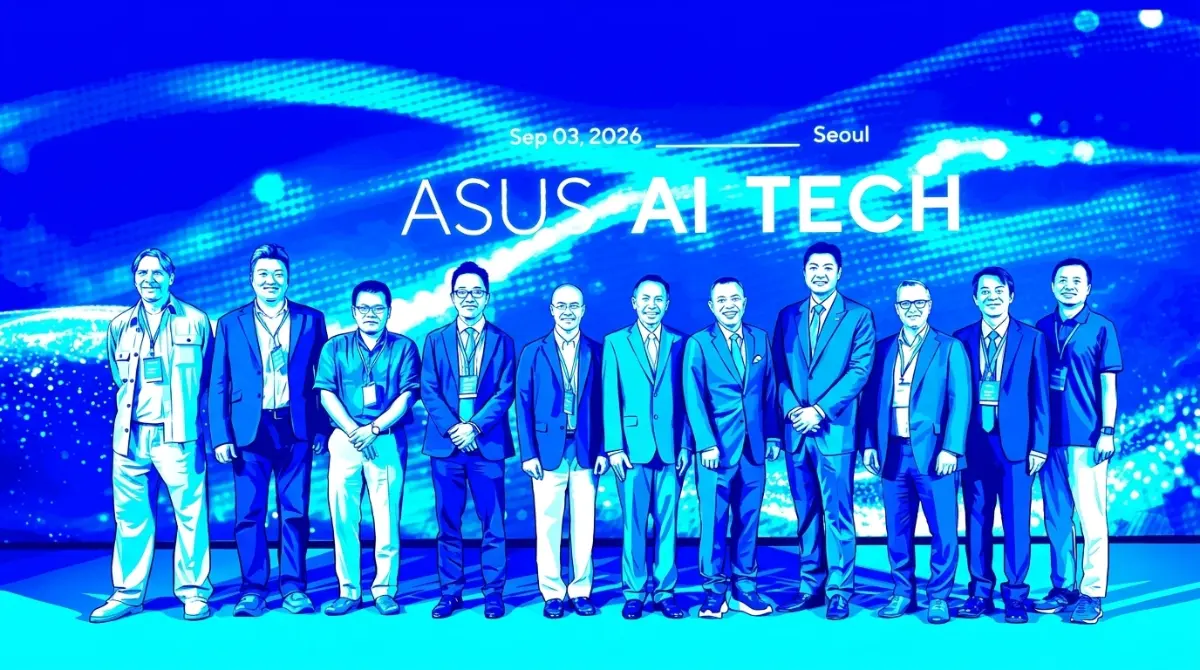


ASUS Expands AI Server Architecture Connecting Central Clouds and Industrial Edges
Hardware maker ASUS introduced specialized server lines and ruggedized computers built to process machine learning calculations in localized industrial environments.
Umar Abubakar | 3 Sept. 2026 · 3 min read

Hardware developer ASUS broadened its commercial computing catalog this week by revealing server systems engineered to support machine learning tasks across central data centers and localized factory facilities. Unveiled during an industry showcase in Seoul, the lineup combines enterprise-grade rack units with hardened local computers designed to analyze incoming sensor feeds directly on facility floors. The announcement reflects growing enterprise interest in running automated models close to physical operations rather than sending sensitive operational feeds over public network connections.
Enterprise data teams often struggle to maintain low response times when transmitting high-resolution video and manufacturing logs back to central facilities. Off-site processing also creates regulatory headaches for hospitals and precision assembly plants that must comply with strict privacy laws. By deploying dedicated silicon directly inside production plants, plant managers can detect equipment defects instantly without exposing internal network logs to external internet traffic. You can see how hardware manufacturers adapt mobile hardware to similar computing tasks by reading our review of the Asus ProArt laptops powered by dedicated graphics silicon.
High-Density Central Compute Systems
At the center of the expanded portfolio sit several high-capacity rack units powered by contemporary enterprise microprocessors. The RS700 and RS720 lines incorporate Intel Xeon 6 chips designed to handle massive parallel calculations and scientific simulation tasks. For organizations seeking higher compute density, the company demonstrated a six-rack-unit system configured to support multiple accelerator cards simultaneously. These machines feature modular power supplies and balanced air routing to manage the thermal output generated by modern model training.
The company also introduced complementary systems powered by AMD EPYC processors and dedicated PCIe accelerator cards intended for local inference runs. Dividing processing tasks between central training clusters and dedicated local inference units prevents server bottlenecks, helping organizations control power consumption. Balancing heavy computing loads across specialized processing silicon aligns with technical shifts analyzed when Anthropic pursued custom silicon designs to manage server workloads.
Ruggedized Silicon for Hazardous Operating Environments
Deploying sensitive computing hardware onto factory floors introduces physical hazards absent from standard air-conditioned server rooms. Manufacturing facilities expose electronics to airborne dust, extreme ambient temperatures, physical vibrations, and electrical interference from heavy industrial motors. Standard desktop and server enclosures quickly overheat or suffer component damage when operated under these harsh conditions.
To withstand these operational hazards, the new industrial edge units utilize sealed, fanless metal enclosures that dissipate heat entirely through passive exterior fins. The compact RUC-2000 series embedded computer houses Intel Core Ultra processors capable of executing up to 180 trillion operations per second for automated optical inspection and mobile vehicle tracking. These fanless chassis eliminate moving parts, preventing premature hardware breakdowns on factory floors. Managing decentralized hardware installations across harsh physical environments mirrors the operational challenges highlighted in our analysis of how NuRAN Wireless expands rural connectivity and edge computing.
Strengthening Strategic Component Partnerships
Building a multi-tiered computing catalog requires close collaboration with upstream component suppliers. ASUS coordinated with memory fabricators, storage vendors, and power equipment makers including Samsung and Schneider Electric to verify that all server components operate reliably under continuous enterprise workloads. Standardizing these component pairings helps corporate IT buyers install new hardware racks without experiencing unexpected driver errors or power instability.
As industrial automation spreads across manufacturing plants, logistics hubs, and medical centers, hardware manufacturers that supply both high-density central computing and ruggedized edge units will secure significant enterprise accounts. The transition toward localized machine intelligence ensures that physical manufacturing plants can continue operating safely even during sudden public internet disruptions.
Read More on TechRobust:

Umar Abubakar
 LinkedIn
Umar Abubakar
Expertise:Editorial Leadership, Product Design (UI/UX), Digital Media Strategy, Technology Systems, Product Architecture
Award:TechRobust Visionary Leader of the Year 2025
Umar serves as Editor-In-Chief and CEO of TechRobust, combining editorial vision with senior product design expertise to shape how modern technology stories are built, packaged, and told. Overseeing all editorial verticals, he directs coverage across global and regional tech landscapes while applying deep design thinking to publication strategy and reader experience.