


Bluesky Introduces Algorithmic Opt Out Feature to Prevent Unwanted Viral Posts
The decentralized social network added a new privacy setting that allows users to hide their public posts from algorithmic recommendation feeds to avoid unwanted attention.
Umar Abubakar | 30 Aug. 2026 · 3 min read

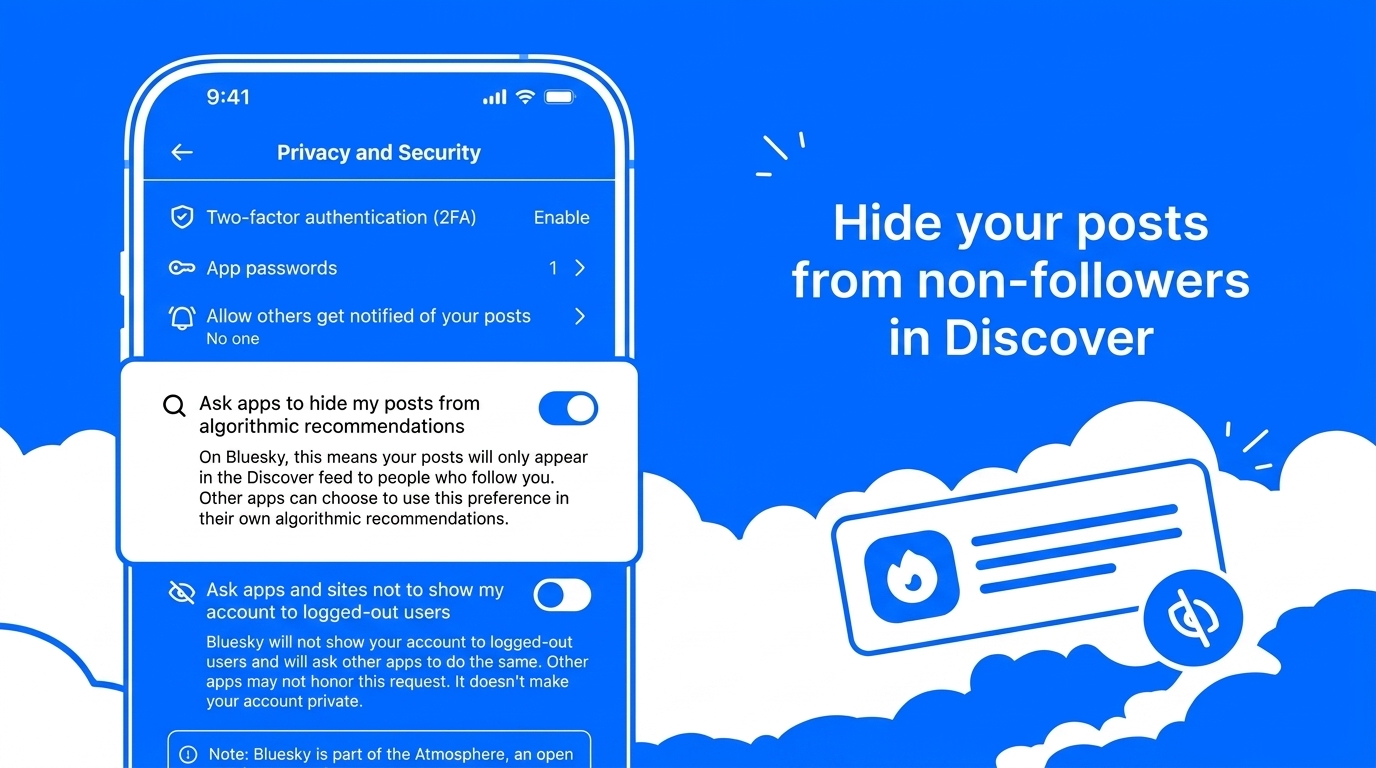
Bluesky has introduced a new option for users who want to share content with their followers without the risk of suddenly reaching millions of strangers. The company recently rolled out an algorithmic opt-out setting designed specifically to give individuals more say over how widely their thoughts circulate across the decentralized network. This tool prevents user posts from appearing in the main Discover feed, curbing the likelihood of casual updates being picked up by recommendation systems and pushed to unfamiliar crowds. By toggling this setting, individuals can keep their conversations contained within their existing audience, creating a more intimate and manageable social media presence without disappearing from the network entirely.
Finding the new tool is simple and accessible directly from the account dashboard. Users just need to open the application, head to the Privacy and Security settings menu, and select the option labeled "Ask apps to hide my posts from algorithmic recommendations." The development team noted that the change operates at the account level rather than on a post-by-post basis, meaning it applies uniformly across all published updates once enabled. However, the update can take up to an hour to fully register across the entire system. Once active, the platform stops pushing those specific updates to people who do not already follow the account, helping users avoid becoming an accidental "main character" during polarizing online moments.
How the AT Protocol Handles Preferences
Because Bluesky operates on the decentralized AT Protocol, this preference attaches directly to the user account rather than just the official application interface. If a person logs in through a third-party client using the same protocol, their request to avoid algorithmic feeds travels with them across the wider federated ecosystem. However, independent developers building those third-party applications still hold the power to respect or ignore the signal, as enforcement relies on individual client compliance rather than a hard cryptographic block at the network level.
While this update gives people more control over who sees their thoughts, it does not act as a complete privacy shield. Bluesky still lacks a dedicated private account system, meaning every post on the network remains public by default and visible across open web indexes. Anyone with a direct link or someone visiting the specific user profile can still read the content, and followers can continue to share updates freely. The new toggle simply stops the internal systems from actively amplifying the material to a wider audience, offering a pragmatic middle ground for users who want visibility limits without full network isolation.
Recent Feature Rollouts
This release arrives during a busy week of development for the platform as it accelerates its broader product roadmap. Just one day before announcing the algorithm controls, the social network introduced support for video uploads lasting up to 10 minutes, significantly upgrading its multimedia capabilities to rival established video platforms. By combining better media hosting with tighter visibility controls, the company is attempting to attract internet users who are looking for alternatives to older social platforms like X. Adding audience management features gives people a way to participate in public conversations without becoming the center of attention by accident, proving that decentralized networks can offer nuanced tools that prioritize user comfort alongside public discourse.

Umar Abubakar
 LinkedIn
Umar Abubakar
Expertise:Editorial Leadership, Product Design (UI/UX), Digital Media Strategy, Technology Systems, Product Architecture
Award:TechRobust Visionary Leader of the Year 2025
Umar serves as Editor-In-Chief and CEO of TechRobust, combining editorial vision with senior product design expertise to shape how modern technology stories are built, packaged, and told. Overseeing all editorial verticals, he directs coverage across global and regional tech landscapes while applying deep design thinking to publication strategy and reader experience.