
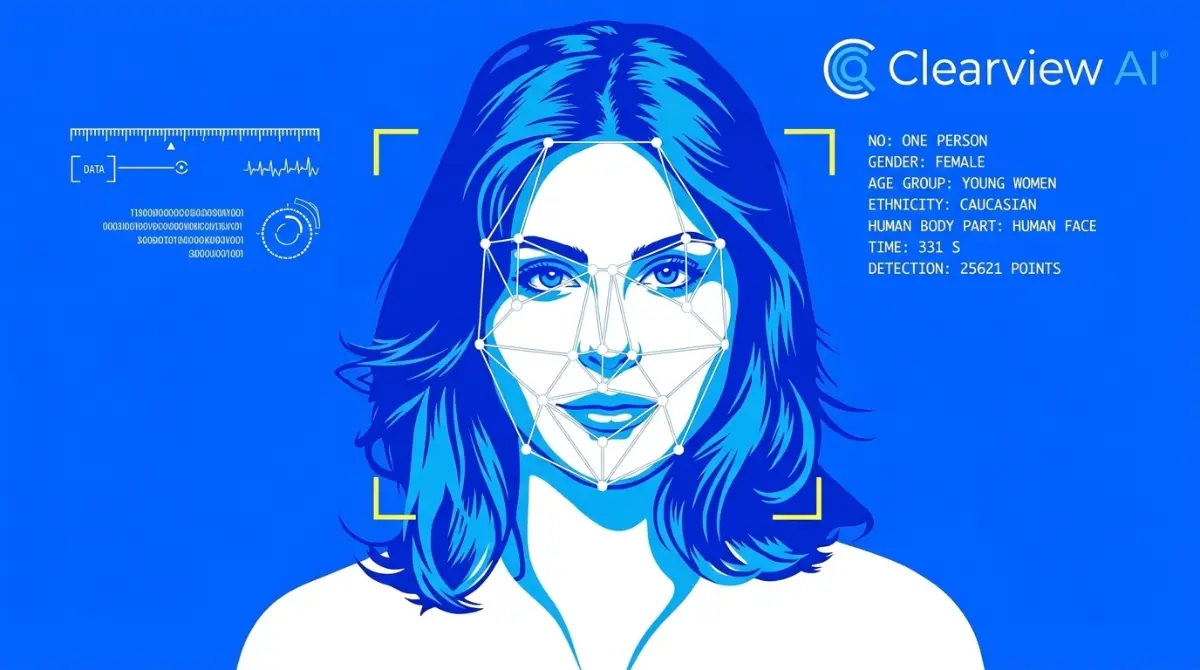


Clearview AI Tests InquiryIQ To Scan Citizens Online
Clearview AI builds an investigative tool called InquiryIQ using xAI technology, assembling detailed online dossiers on citizens to hand law enforcement unprecedented search capability.
Umar Abubakar | 10 Sept. 2026 · 7 min read

Sitting in a crowded coffee shop across from police headquarters in downtown Chicago several years ago, an off-duty detective slid his phone across the wooden table. On screen was an interface I recognized instantly. He had photographed a young bystander waiting near an intersection thirty minutes earlier, uploaded the crop, and watched the software pull up twelve matching images from public web profiles, college sports rosters, and photo albums. He smiled, tapped the glass, and told me that anonymity in public spaces had ceased to exist. At the time, that system could only identify faces. Today, that invasive mechanism is mutating into something far more pervasive: an automated engine that combs through a person's digital footprints, relationships, and online existence within minutes.
Surveillance contractor Clearview AI is experimenting with an unreleased profiling application named InquiryIQ, built to allow police officers to generate background dossiers from scattered internet data. According to investigative records published by Wired, the prototype taps neural models, including technology developed by Elon Musk's research venture xAI, to assemble detailed personal files. Rather than stopping at facial matching, the experimental software gathers employment histories, familial connections, social affiliations, and behavioral footprints to map the personal life of any investigated citizen.
My career reporting on civil liberties and digital surveillance has taught me that surveillance firms always follow an identical playbook. They enter the market promising narrow, defensive utility, claiming their tools will only apprehend violent fugitives or rescue endangered children. Then, once police departments grow dependent on the software, the perimeter expands. With InquiryIQ, the boundary separating targeted law enforcement queries from dragnet digital surveillance has been erased completely.
From Photo Indexes to Behavioral Graphs
To understand the danger InquiryIQ presents, one must understand how the vendor built its empire. Founded in 2017, the firm amassed billions of personal portraits by systematically crawling social networks, professional directories, and public websites without user consent. That image repository grew from 3B pictures in 2020 to more than 70B records today. More than 2,000 police departments and federal law enforcement branches across the United States run routine facial searches against that index every single day.
Yet traditional photo matching still required human detective work. When an officer received a candidate match, they had to sit down, open independent browser tabs, review social accounts manually, verify employment histories, and determine whether the person of interest possessed connections to a crime scene. That manual verification took hours or days of painstaking investigation, providing a natural speed bump against arbitrary police harassment.
InquiryIQ automates that investigative labor away. When an investigator feeds an initial query into the software, the program generates what internal documentation calls a Candidate Graph. The system scours public databases, corporate directories, discussion boards, and digital platforms to connect isolated data points into a unified dossier. Within minutes, the investigator receives an itemized breakdown of where the target works, who they associate with, what forums they frequent, and where they spend their personal hours.
The vendor tested this automated profiling mechanism against advanced neural systems, including Grok from xAI. While the company claims the software remains an early prototype that has not seen formal field deployment, the technical trajectory is unmistakable: law enforcement officers will soon wield autonomous software agents capable of tracking private individuals across the open web on command.
The Disintegration of Fourth Amendment Protections
The constitutional issues raised by automated digital profiling are horrifying. Under established American legal precedent, citizens retain a reasonable expectation of privacy regarding their personal papers, effects, and private associations. Law enforcement agencies traditionally require a judicial warrant supported by probable cause before executing wiretaps, demanding bank statements, or accessing private communications.
Surveillance vendors bypass these constitutional protections through an end-run around the law. Because the software crawls information posted to public web pages, corporate spokespersons claim that citizens surrender all privacy claims. Yet scattered public facts do not equal a unified surveillance dossier. An individual might share a family photo on one platform, post a political opinion under a pseudonym on another, and maintain an employment biography elsewhere. Under normal circumstances, those fragments remain separate, shielded by the natural friction of the web.
InquiryIQ destroys that natural friction. By weaving disparate digital footprints into an instant timeline, the software grants police officers access to personal biographies without requiring them to convince a neutral judge that a crime occurred. An investigator can profile protest organizers, investigate journalists, or scrutinize romantic rivals without creating an official warrant record. This mirrors broader vulnerabilities in consumer privacy, similar to concerns raised when Amazon Ring introduced encryption updates to protect consumer video from unauthorized access, proving how fragile citizen protections remain against digital overreach.
The software also allows users to filter online investigations using demographic categories like age, gender, and racial markers. Embedding demographic filters into algorithmic search tools risks amplifying historical biases in policing. When automated systems use demographic tags to assemble candidate lists, minority communities inevitably face elevated rates of false investigative leads and aggressive street stops.
Automating the Mechanics of Misidentification
Beyond privacy erosion sits an equally urgent danger: the unreliability of automated language models. Modern neural reasoning tools are notorious for inventing details, misattributing statements, and creating plausible fabrications when connecting ambiguous data points. When an automated model synthesizes text from five different individuals who share identical names, it frequently merges their biographies into a single confused profile.
In an academic or creative setting, an algorithmic error produces minor confusion. In a police department, an algorithmic error leads directly to armed SWAT raids, wrongful arrests, and ruined lives. If InquiryIQ mistakenly links an innocent citizen's social account to a criminal syndicate because of a shared nickname or overlapping location tag, that citizen becomes an active target of state surveillance. By the time human investigators uncover the software's mistake, the damage to the individual's reputation and livelihood is complete.
Chief executive Amos Kyler insisted that InquiryIQ operates strictly as an investigative assistant, arguing that human detectives must independently verify every lead before taking action. But experience proves that human oversight in high-volume police departments is largely an illusion. When overworked detectives manage dozens of active case files, they routinely accept algorithmic outputs as indisputable truth, deferring to the computer rather than performing rigorous independent checks.
A Closed Corporate Ecosystem for State Power
The alliance between controversial surveillance startups and frontier computing laboratories reveals an unsettling corporate convergence. Tech founders frequently present their research as a public good intended to expand human potential. Yet behind the scenes, frontier models are migrating into military commands, intelligence programs, and domestic surveillance apparatuses.
This dynamic was visible when Pentagon authorities deployed modern language models for active military personnel, confirming that defense institutions view frontier architectures as foundational infrastructure. Similarly, national security discussions are becoming central to international diplomacy, as seen when US and China diplomatic friction intensified over artificial intelligence leadership. When sovereign states and policing institutions become the primary paying customers for frontier software, researchers will optimize their systems for state control rather than civil liberties.
Clearview has already survived multiple regulatory fines across Europe, where privacy watchdogs declared its web-scraping practices illegal under the General Data Protection Regulation. Yet in the United States, an absence of comprehensive federal data privacy legislation has allowed the vendor to flourish. By agreeing to restrict commercial sales while selling directly to government agencies, the company secured a protected government monopoly, insulating its business model from consumer boycotts.
The Death of Everyday Obscurity
Human society has always depended on practical obscurity. We live our lives assuming that our minor errors, past relationships, and everyday movements fade into background noise over time. That obscurity allows individuals to reinvent themselves, outgrow youthful indiscretions, and participate in civic protests without fearing permanent retaliation from the state.
InquiryIQ threatens to make every online action permanent, searchable, and weaponized. Every comment left on a message board, every picture taken in a public park, and every professional change becomes raw material for a corporate dossier accessible to any officer with a badge. If society permits private contractors to construct digital panopticons for law enforcement, the open internet will cease to function as a space for free expression.
The battle over InquiryIQ is not an abstract debate about software architecture; it is a direct confrontation over whether democratic citizens can exist without being cataloged by the state. Lawmakers must act before these prototypes leave testing environments. Federal authorities must enact binding bans on automated police profiling, prohibit government agencies from buying scraped citizen databases, and hold corporate executives legally accountable when their algorithms violate constitutional boundaries. Without strict statutory guardrails, the line between an open democracy and an algorithmic police state will disappear entirely.
Read More on TechRobust:

Umar Abubakar
 LinkedIn
Umar Abubakar
Expertise:Editorial Leadership, Product Design (UI/UX), Digital Media Strategy, Technology Systems, Product Architecture
Award:TechRobust Visionary Leader of the Year 2025
Umar serves as Editor-In-Chief and CEO of TechRobust, combining editorial vision with senior product design expertise to shape how modern technology stories are built, packaged, and told. Overseeing all editorial verticals, he directs coverage across global and regional tech landscapes while applying deep design thinking to publication strategy and reader experience.