
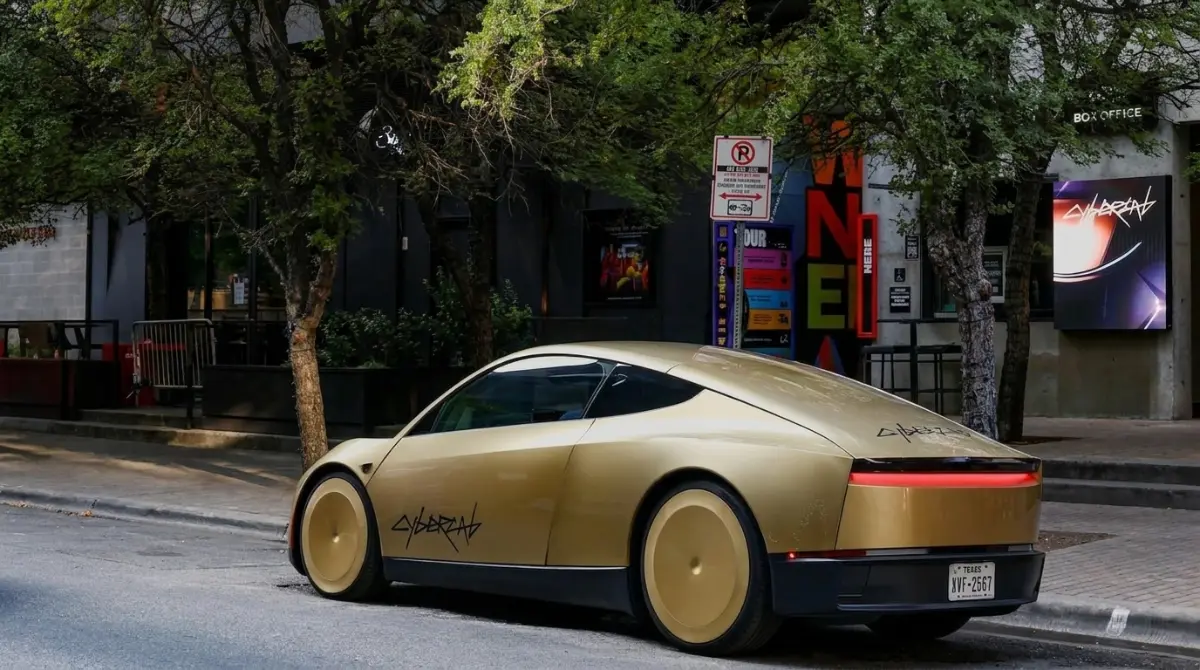


Tesla Rolls Out Commercial Cybercab Robotaxi Rides for Public Testing
The electric vehicle manufacturer initiated its long-awaited autonomous taxi service, allowing everyday passengers to book driverless trips through the mobile app.
Umar Abubakar | 4 Sept. 2026 · 2 min read

Tesla officially commenced its commercial robotaxi service this week, deploying a fleet of custom-designed Cybercab vehicles onto public streets for general passenger transport. The rollout marks a major operational milestone for the automaker, shifting its automated driving software from closed testing grounds into live urban environments. Residents in participating metropolitan areas can now open the mobile application, request a vehicle without a steering wheel or pedals, and travel across town using entirely automated navigation.
The two-seater vehicles rely exclusively on high-definition computer vision cameras and neural network processing to interpret complex road conditions. Unlike competing autonomous fleets that depend on expensive lidar sensors and pre-mapped laser grids, Tesla's approach processes visual data in real time. This camera-first architecture allows the vehicles to scale operations into new neighborhoods much faster. You can read our detailed breakdown of how hardware manufacturers adapt vehicle software by reviewing our report on how Optimus Ride expanded its self-driving shuttle operations.
Navigating Complex Urban Streets
Operating a driverless vehicle without human backup drivers presents serious logistical and regulatory hurdles. During initial public testing, the onboard computer systems successfully handled unexpected pedestrian movements, aggressive lane mergers, and heavy construction zones without requiring remote operator intervention. The cabin features a minimalist interior with a large entertainment screen mounted in the center console, giving passengers complete control over music, climate settings, and route tracking during their journey.
Safety monitors sit inside backup control rooms to oversee the fleet remotely, stepping in only if a vehicle encounters an unresolvable obstruction. The transition toward autonomous transit is reshaping how urban planners think about parking spaces and public commuting. Similar transportation shifts are occurring across global markets, a trend we tracked when reporting on how Uber shut down operations in Nigeria and Uganda during a major restructuring phase.
Scaling the Fleet and Managing Regulations
Following this initial rollout, the company plans to expand the service footprint to neighboring cities over the coming months. Securing operational permits from local transit authorities remains a slow process, as municipal regulators demand extensive safety data before granting full commercial licenses. Fleet operators must prove their software can handle severe weather conditions, nighttime visibility drops, and unexpected emergency vehicle encounters safely.
As competition within the autonomous vehicle market intensifies, automakers are racing to lower production costs to make driverless transit affordable for daily commuters. The success of this initial launch will heavily influence investor confidence and future capital allocation across the automotive sector. You can explore how enterprise platforms secure their digital networks by reading our coverage of how CrowdStrike and OpenAI expanded their partnership to protect automated workers.
Read More on TechRobust:
Umar Abubakar
 LinkedIn
Umar Abubakar
Expertise:Editorial Leadership, Product Design (UI/UX), Digital Media Strategy, Technology Systems, Product Architecture
Award:TechRobust Visionary Leader of the Year 2025
Umar serves as Editor-In-Chief and CEO of TechRobust, combining editorial vision with senior product design expertise to shape how modern technology stories are built, packaged, and told. Overseeing all editorial verticals, he directs coverage across global and regional tech landscapes while applying deep design thinking to publication strategy and reader experience.